
360-degree content creation tools for immersive experiences
Modern spatial media production relies heavily on 360-degree content creation tools to design fully immersive digital environments, interactive virtual tours, and engaging spatial video experiences across headsets.
Digital storytellers, real estate marketers, and enterprise educators utilize panoramic capture hardware alongside real-time spatial rendering engines to build hyper-realistic virtual spaces for global audiences.
Transitioning from flat two-dimensional media toward interactive three-dimensional imagery demands specialized stitching software, spatial audio processing tools, and spatial video editing suites tailored for spatial computing headsets.
Understanding how hardware capture devices integrate with cloud-based stitching platforms empowers creators to publish immersive virtual reality narratives efficiently while maintaining strict professional image fidelity standards.
What software engines power modern spatial interactive production?
Real-time 3D creation engines like Unreal Engine 5 and Unity form the backbone of interactive spatial rendering, allowing developers to construct fully navigable environments with dynamic lighting.
These robust production environments allow creators to import raw equirectangular video, overlay spatial user interfaces, and program interactive hot-spots for virtual training and architecture walkthroughs.
Generative artificial intelligence tools assist rendering pipelines by automatically filling zenith and nadir tripod gaps, eliminating tedious manual painting tasks during post-production image cleanup workflows.
Choosing high-performance rendering engines guarantees that 360-degree content creation tools convert raw multi-camera feeds into fluid, high-frame-rate spatial experiences without causing motion disorientation for headset users.
How do multi-lens hardware systems capture seamless panoramic media?
Consumer and professional dual-lens cameras utilize ultra-wide fisheye lenses paired with high-resolution CMOS image sensors to record overlapping hemisphere perspectives simultaneously.
Internal firmware algorithms align the overlapping boundaries instantly, blending exposure variances and correcting chromatic aberration to output unified equirectangular projection video files in real time.
Professional cinema rigs employ multi-camera arrays featuring full-frame sensors, capturing uncompressed raw footage that offers extreme dynamic range for complex lighting environments.
Precision optical alignment combined with onboard spatial audio micro-arrays ensures that visual depth matches surrounding acoustic orientation, creating convincing sensory immersion for digital audiences.
Immersive Media Production Software & Hardware Comparison
| Solution Category | Key Hardware / Software Features | Primary Output Format | Best Use Case Application |
| Dual-Lens Capture | Compact 8K sensors, active stabilization | Equirectangular MP4 / JPG | Action sports, mobile vlog capture, quick tours |
| Professional Rigs | Multi-sensor arrays, uncompressed RAW | Multi-stream Cinema DNG | Feature VR films, high-end commercial sets |
| 3D Rendering Engines | Real-time ray tracing, spatial UI creation | Executable VR Apps / OpenXR | Interactive games, enterprise simulations |
| Spatial Audio Tools | Higher-order Ambisonics, head tracking | B-format / Spatial Audio WAV | Immersive soundscapes, live concert recordings |
Why is spatial audio engineering critical for immersive storytelling?
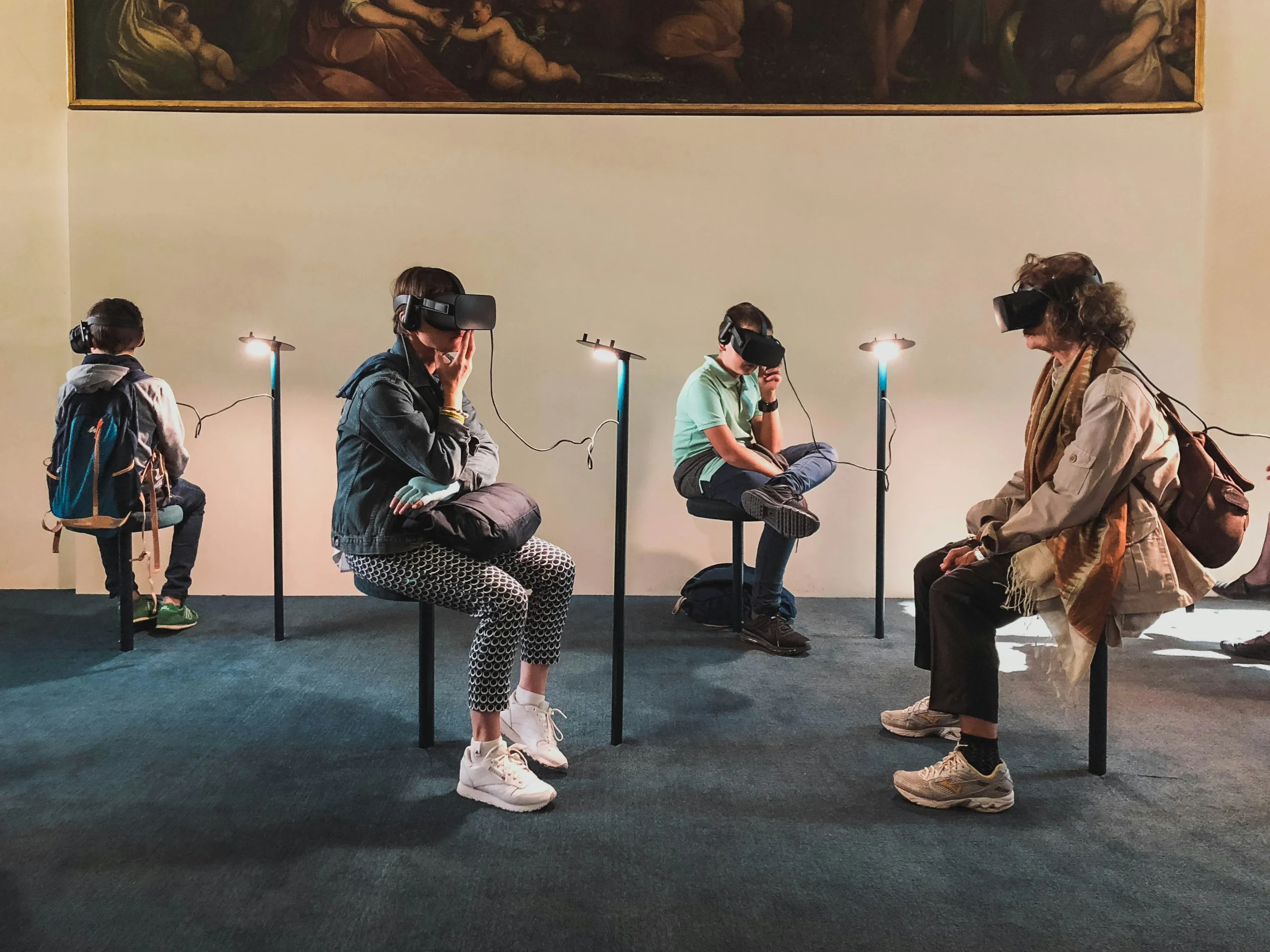
Visual immersion fails without directional audio, making ambisonic sound engineering an essential component when assembling realistic three-dimensional interactive environments for spatial computing headsets.
Higher-order ambisonics record sound waves across three-dimensional spatial coordinates, allowing soundscapes to shift dynamically as viewers rotate their heads within virtual environments.
Learn more: Immersive wildlife experiences supporting conservation projects
Specialized digital audio workstations encode directional sound cues, leading spectator attention toward specific narrative events occurring outside their immediate field of view.
Examine spatial media standards and open spatial computing development frameworks provided by the Khronos Group (OpenXR) to align your immersive workflows with industry interoperability baselines.
Which post-production workflows optimize 8K spatial video editing?
Editing high-resolution panoramic video requires proxy workflows, substituting compressed working copies during timeline construction to maintain liquid-smooth playback frame rates inside editing suites.
Color grading spatial media demands specialized equirectangular scopes, ensuring luminance levels remain uniform across seamless projection boundaries without creating distracting vertical edge seams.
Read more: Virtual campus tours for international student recruitment
Exporting finalized spatial files requires injecting specific spherical metadata tags, enabling web browsers and video streaming platforms to recognize interactive panoramic playback controls automatically.
Mastering these post-production editing techniques demonstrates how 360-degree content creation tools bridge raw camera capture with polished, commercial-grade virtual reality distribution platforms.
When should creators choose interactive tours over linear video?
Static architectural spaces, historic museum exhibits, and real estate showcases benefit significantly from self-paced interactive virtual tours offering free movement navigation nodes.
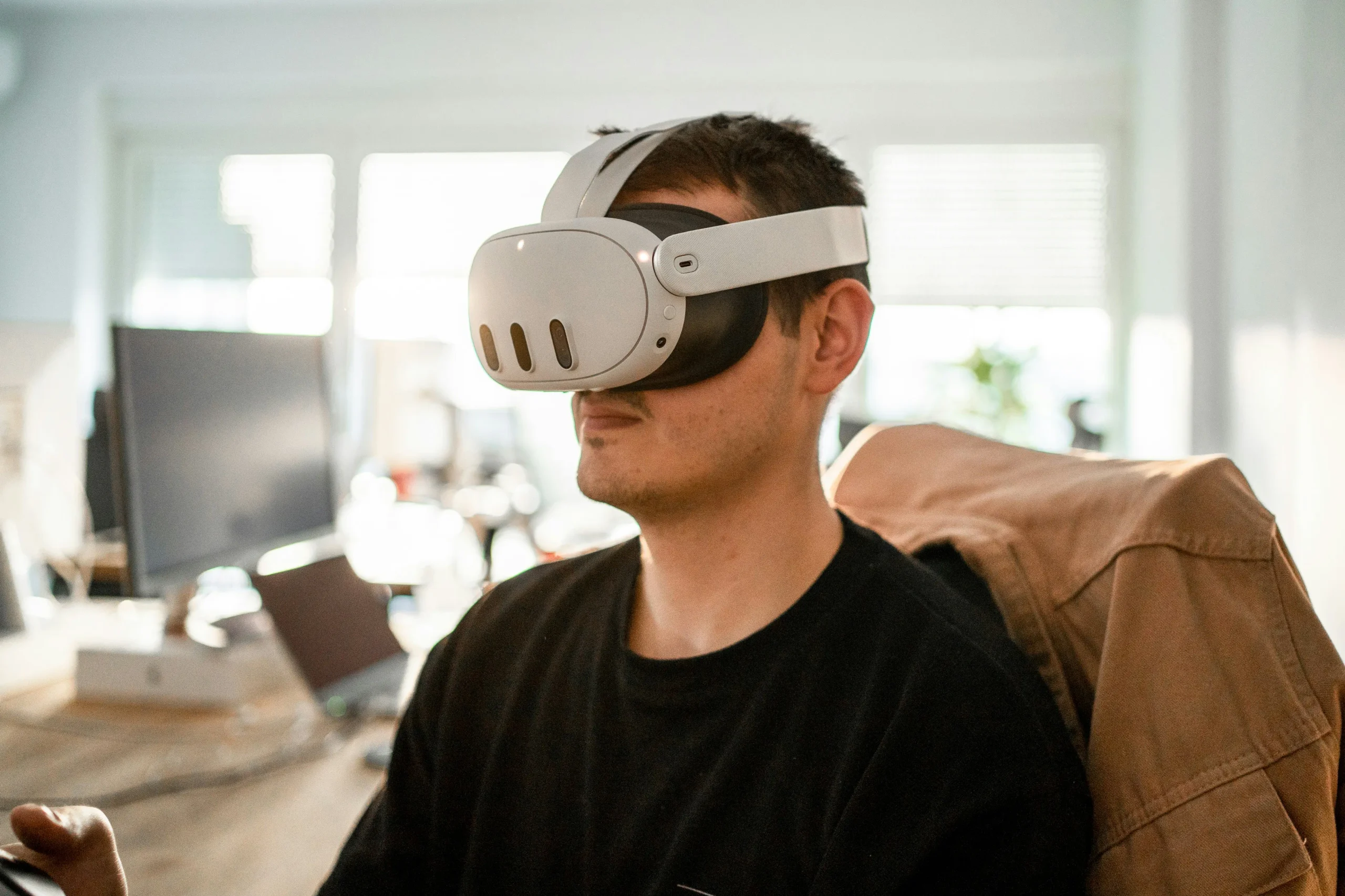
Linear spatial video excels at driving fixed narrative stories, live music performances, and intense action sequences where controlled cinematic pacing heightens audience engagement.
Learn more: VR marine exploration bringing ocean science to classrooms
Integrating interactive spatial menus within linear video broadcasts gives viewers agency over camera angles, creating personalized entertainment experiences tailored to individual user preferences.
Explore comprehensive spatial video publishing guidelines and immersive hardware accessibility standards published by the World Wide Web Consortium (W3C) to build compliant WebXR experiences.
Frequently Asked Questions (FAQ)
What camera resolution is necessary for clear virtual reality playback?
An 8K capture resolution is recommended for panoramic video because the pixels stretch across a full 360-degree sphere, yielding roughly 1080p effective resolution per eye.
Can traditional video editing software handle spherical panoramic media?
Yes, modern mainstream video editors include native plugins for spherical video editing, spatial color correction, dynamic horizon leveling, and ambisonic audio pan controls.
How does spatial video differ from standard 360-degree video?
Standard 360 video provides a monoscopic or stereoscopic panorama from a fixed point, while spatial video incorporates depth mapping to allow natural head translation movement.
Do spatial media experiences require expensive VR headsets to view?
No, viewers can interact with panoramic media on standard smartphones, tablets, and desktop web browsers using touch gestures or gyro-based device rotation.
Utilizing advanced 360-degree content creation tools allows digital storytellers to build deeply engaging virtual environments that transcend traditional flat screens.
By combining high-resolution capture hardware, robust stitching software, and spatial audio engineering, creators build memorable spatial experiences that transport audiences anywhere in the world.
