
How Smart Appliances Communicate With Each Other
Understanding how smart appliances communicate with each other unlocks the true potential of modern home automation, transforming isolated gadgets into a unified, energy-efficient residential ecosystem.
For years, fragmented wireless standards created isolated brand silos, forcing consumers to manage separate mobile applications for their refrigerators, washing machines, ovens, and climate control units.
Universal connectivity frameworks have fundamentally revolutionized domestic hardware networking, allowing multi-brand hardware devices to exchange operational data seamlessly without complex custom programming or proprietary hubs.
Exploring the underlying technical architecture reveals how inter-device messaging reduces household energy waste, enhances physical safety, and streamlines daily domestic chores through automated coordination.
What wireless protocols allow smart appliances to exchange operational data?
Modern connected households rely on standardized wireless technologies like Wi-Fi, Thread, and Bluetooth Low Energy to transmit command payloads across local networks efficiently.
Wi-Fi handles bandwidth-heavy data transfers like firmware updates, while low-power mesh networks ensure continuous communication between battery-operated sensors and primary home appliances.
Thread creates a self-healing mesh network, allowing devices to route messages through nearby hardware nodes without overloading your central internet router or slowing down connections.
Local communication ensures that smart appliances communicate with each other reliably even during unexpected internet outages, maintaining critical automation routines without cloud server reliance.
How does the Matter standard unify cross-brand appliance connectivity?
Developed by the Connectivity Standards Alliance, the Matter protocol establishes an open-source application layer that eliminates compatibility barriers between competing smart home brands.
This unified language allows a Samsung refrigerator, an LG washing machine, and an Amazon smart display to discover and control one another locally.
Matter operates over existing Internet Protocol networks, utilizing Thread and Wi-Fi to deliver secure, encrypted, end-to-end device communication without needing complex third-party software bridges.
Interoperability guarantees that purchasing decisions depend on hardware quality rather than brand ecosystem lock-in, simplifying long-term home technology investments for modern homeowners.
Smart Home Interoperability: Protocol Comparison
| Wireless Protocol | Primary Network Structure | Power Consumption | Ideal Appliance Use Case |
| Matter over Thread | Self-healing IP Mesh | Ultra-Low | Smart locks, sensors, thermostats |
| Wi-Fi 6 / 6E | Star Topology (Central Router) | Moderate to High | Smart refrigerators, ovens, robot vacuums |
| Bluetooth LE | Point-to-Point / Mesh | Very Low | Proximity sensing, initial onboarding |
| Zigbee / Z-Wave | Dedicated Proprietary Mesh | Low | Legacy lighting hubs, smart plugs |
Why is edge computing essential for real-time appliance automation?
Processing automation routines directly on local hub hardware eliminates server latency, enabling instant responses when environmental sensors trigger domestic safety or operational actions.
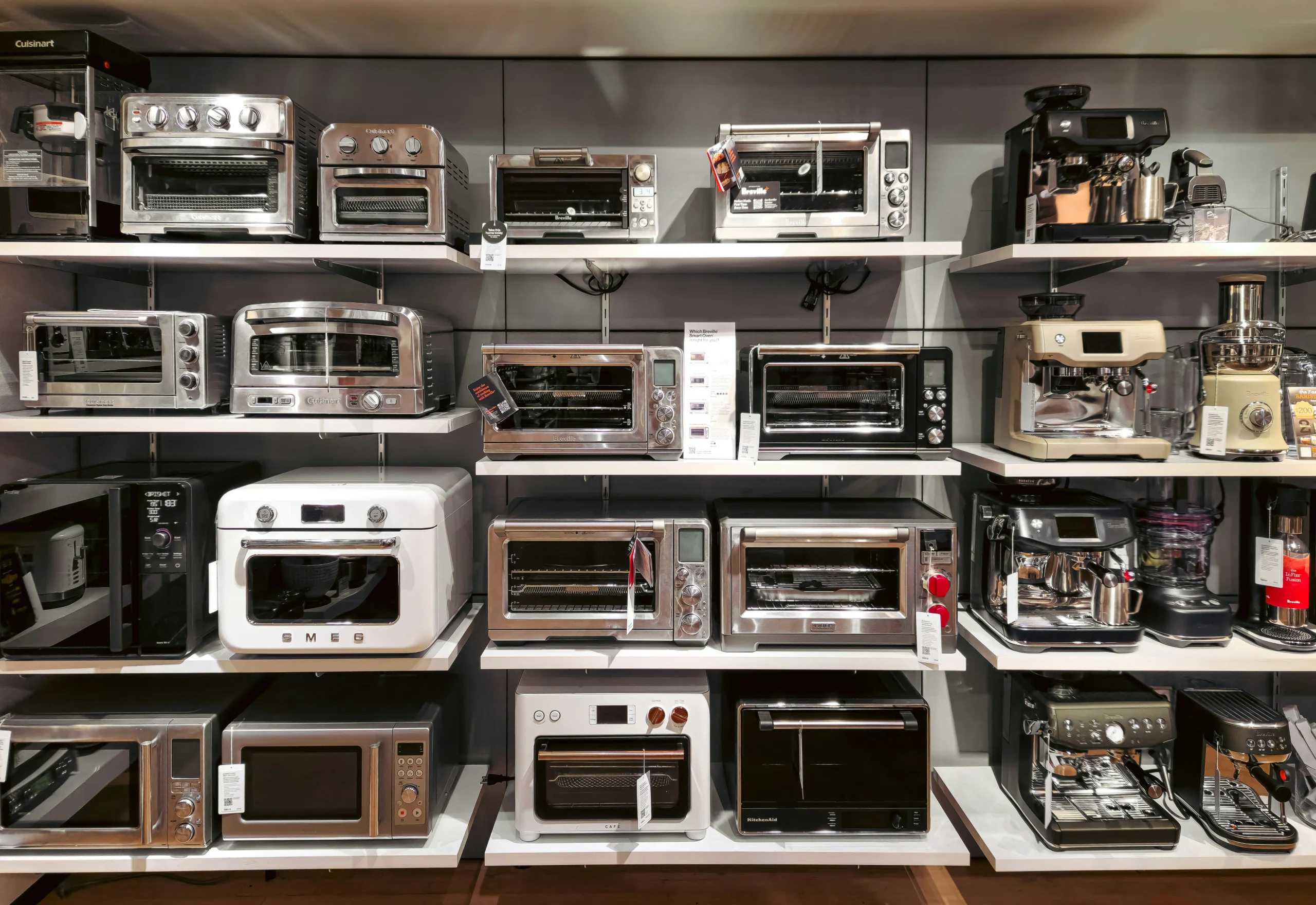
When an oven sensor detects excessive heat, it transmits an immediate local signal to the smart range hood to activate ventilation fans instantaneously.
Learn more: Smart Kitchen and Laundry: Appliances That Automate Tasks for You
Local data handling prevents sensitive personal usage habits from leaving your home network unnecessarily, strengthening personal privacy protections against external cloud data breaches.
Review technical connectivity specifications and open IoT interoperability benchmarks maintained by the Connectivity Standards Alliance (CSA) to evaluate certified cross-brand hardware compatibility.
Which practical automation scenarios showcase inter-appliance collaboration?
Integrated laundry setups showcase seamless collaboration when your washing machine sends cycle characteristics directly to the matching tumble dryer to pre-select optimal heat settings.
Smart electricity meters communicate real-time grid pricing tariffs to dishwashers, automatically delaying power-intensive hot water wash cycles until off-peak overnight rates begin.
Read more: Smart Kitchen Appliances That Make Life Easier
HVAC systems coordinate with smart window blinds and ceiling fans, adjusting interior temperatures dynamically based on real-time solar heat gain and localized room occupancy levels.
These coordinated interactions demonstrate that smart appliances communicate with each other to actively lower monthly utility bills while extending overall household mechanical equipment lifespans.
When should homeowners upgrade their network infrastructure for smart appliances?
Expanding your smart appliance network past a dozen connected devices often saturates basic ISP routers, causing packet drops, delayed commands, and intermittent device offline states.
Upgrading to Wi-Fi 6 mesh routers providing dedicated IoT sub-networks ensures smooth data traffic separation between streaming devices and critical smart home appliances.
Implementing robust network security practices, such as isolating smart hardware on a segregated guest network, protects your broader personal digital ecosystem against malicious unauthorized intrusion attempts.
Learn more: Connected Kitchen: Smart Appliances Worth Investing In
Examine guidelines on consumer IoT device security and wireless networking standards published by the Federal Communications Commission (FCC) to ensure secure home automation deployment.
Frequently Asked Questions (FAQ)
Do smart appliances require an active internet connection to talk to each other?
No, modern standards like Matter allow appliances to communicate locally over your home Wi-Fi or Thread mesh network even if your internet connection goes down.
Can old appliances be retrofitted to communicate with new smart devices?
Legacy appliances can gain basic connectivity through smart plugs, external vibration sensors, or secondary temperature probes integrated into your broader home hub ecosystem.
Is my private data safe when appliances share information locally?
Local communications using Matter or Thread utilize AES-128 encryption, keeping operational commands strictly within your home network rather than transmitting raw data to external servers.
Will buying appliances from different brands break my home automation routines?
Not anymore; choosing devices certified with the Matter logo ensures cross-brand compatibility across platforms like Apple Home, Google Home, Amazon Alexa, and SmartThings.
Understanding how smart appliances communicate with each other marks the shift toward truly intelligent living environments. Standardized protocols, local edge processing, and mesh networking allow modern home electronics to work in harmony, delivering unmatched energy savings, enhanced security, and daily convenience.
