
Wearable haptic devices expanding sensory feedback in VR
Modern wearable haptic devices transform virtual reality from a purely visual spectacle into a deeply tactile experience that engages human touch receptors directly.
Early virtual environments relied heavily on high-resolution displays and spatial audio while leaving users physically disconnected from digital objects they attempted to grasp.
Engineers now bridge that longstanding sensory gap by integrating miniature actuators, pneumatic bladders, and electroactive polymers into lightweight gloves, vests, and full-body suits.
Such responsive tactile interfaces simulate surface textures, physical resistance, impact forces, and thermal variations with remarkable precision during interactive simulations and training exercises.
Understanding how these advanced systems operate helps developers, enterprises, and enthusiasts evaluate realistic applications across gaming, medical rehabilitation, and industrial workforce training.
As spatial computing hardware matures globally, responsive touch feedback stands out as the decisive factor separating passive observation from authentic physical presence.
How do wearable haptic devices simulate physical touch in virtual environments?
Actuators embedded directly within smart textiles generate localized mechanical vibrations, skin stretch, or pressure pulses synchronized precisely with virtual object collisions and movements.
Force-feedback exoskeleton gloves use motorized tendons or pneumatic micro-channels to restrict finger flexion smoothly, preventing your hand from passing through solid virtual surfaces.
Thermal haptic modules employ compact Peltier elements to warm or cool the skin rapidly, replicating sensations like holding hot coffee or touching ice.
Electrotactile arrays deliver low-intensity electrical currents directly to sensitive cutaneous nerve endings, creating nuanced perceptions of roughness, edges, and subtle surface vibrations.
Combining multiple stimulation modalities enables real-time software engines to trick the human somatosensory cortex into perceiving genuine weight, texture, and physical resistance.
Proprioceptive sensors inside each joint continuously measure finger angles and hand velocity, feeding exact positional data back to the physics engine every millisecond.
Which types of haptic hardware lead the market today?
Commercial hardware developers currently focus on three primary form factors designed to balance sensory fidelity, ergonomic comfort, and wireless freedom during extended sessions.
| Hardware Category | Primary Mechanism | Typical Weight | Key Application |
|---|---|---|---|
| Force-Feedback Gloves | Micro-pneumatics and tendon cables | 250g – 450g | Surgical training and precision assembly |
| Vibrotactile Vests | Eccentric rotating mass and linear motors | 1.2kg – 2.5kg | Immersive gaming and combat simulation |
| Ultrasonic & Thermal Sleeves | Peltier junctions and focused acoustics | 150g – 300g | Rehabilitation therapy and social VR |
Glove systems like HaptX Gloves G1 and SenseGlove Nova prioritize finger-level force resistance so trainees feel exact mechanical tolerances when manipulating virtual tools.
Torso vests from manufacturers such as bHaptics utilize dozens of independently addressable vibration motors to map directional impacts across the chest and back.
Deploying wearable haptic devices carefully tailored to specific anatomical zones allows organizations to maximize sensory realism without burdening users with heavy, restrictive gear.
Why are enterprises adopting tactile VR for training and healthcare?
Surgical residents routinely practice delicate laparoscopic procedures inside virtual operating rooms where force-feedback gloves replicate tissue elasticity and subtle instrument resistance safely.
Automotive and aerospace manufacturers train assembly technicians on complex wiring harnesses using tactile simulations before expensive physical prototypes ever leave the factory floor.
Research initiatives documented by IEEE Spectrum demonstrate that adding realistic touch feedback accelerates motor-skill acquisition and improves procedural memory retention significantly.
Physical rehabilitation clinics increasingly utilize responsive haptic sleeves to guide stroke survivors through repetitive arm movements while measuring neuromuscular recovery progress objectively.
Eliminating physical material waste and significantly reducing workplace injury risks make tactile virtual reality an attractive investment for high-precision industrial and medical sectors.
Remote robotics operators also wear tactile controllers to feel real-time mechanical resistance when handling hazardous materials or performing delicate subsea maintenance tasks.
What technical challenges limit widespread consumer adoption?
High manufacturing costs remain a major commercial barrier, as enterprise-grade pneumatic gloves frequently cost several thousand dollars per pair rather than consumer-friendly prices.
Battery capacity constraints force hardware engineers to balance actuator power consumption carefully against wireless runtime, especially when heating or cooling elements operate continuously.
Sweat accumulation, sizing variations across diverse hand geometries, and hygiene maintenance complicate shared deployment inside public arcades, classrooms, and corporate training centers.
Learn more: AR Glasses: Are They the Future of Wearable Tech?
Software fragmentation also slows ecosystem integration because game developers must code custom tactile profiles across incompatible SDKs instead of relying on one universal standard.
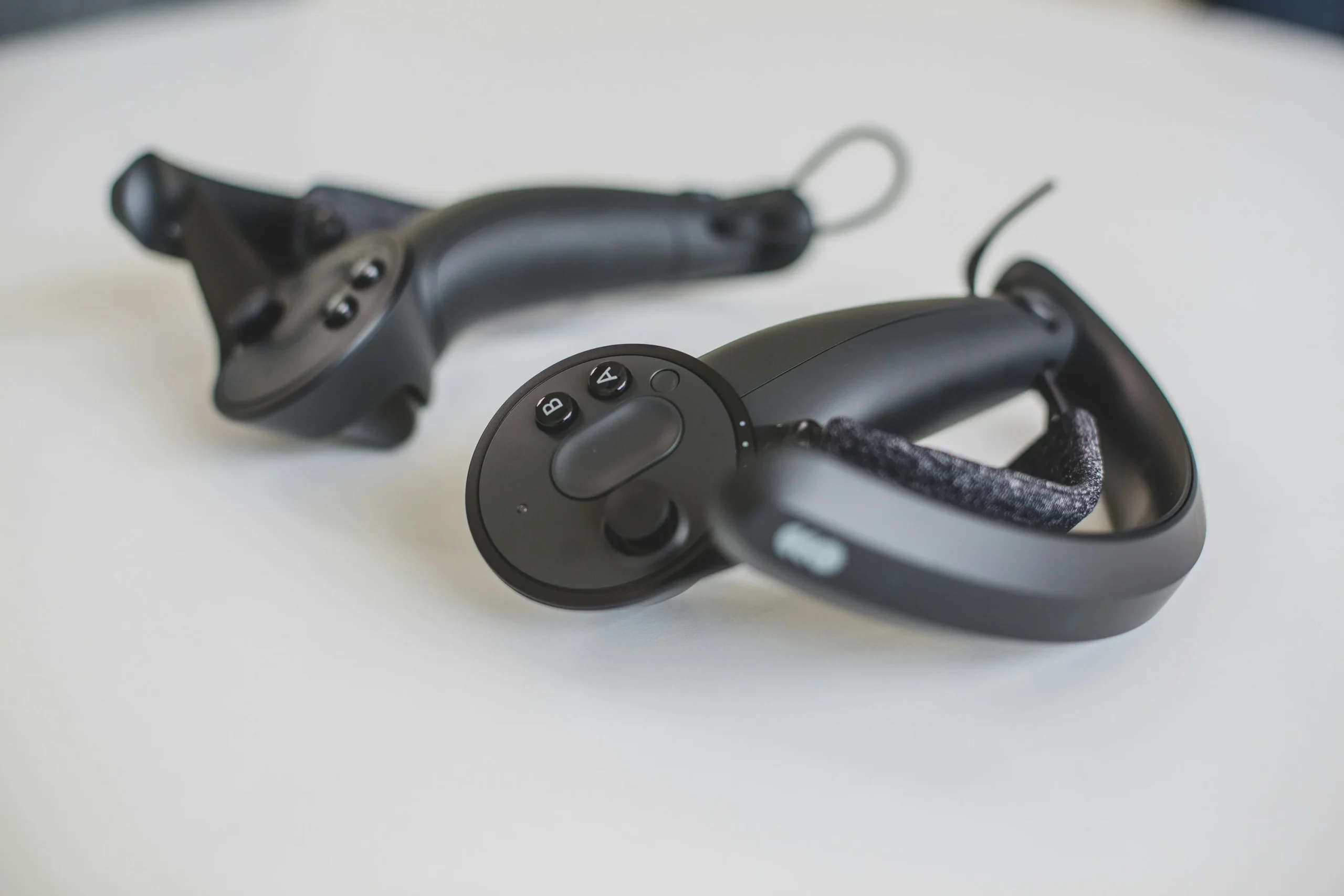
Successfully refining wearable haptic devices into breathable, machine-washable, and affordable everyday peripherals remains essential before mainstream home users embrace full-body tactile hardware.
Acoustic noise generated by miniature air pumps or high-frequency mechanical motors can also distract users unless engineers isolate vibrations inside acoustic damping enclosures.
When will standardized haptic ecosystems reach mainstream maturity?
Industry consortia working closely under the OpenXR specification actively define unified haptic APIs that let game engines trigger standardized tactile events across brands.
Recent advances in soft robotics and flexible printed electronics continue shrinking actuator footprints steadily while lowering power demands for lightweight consumer gloves and wristbands.
Read more: Top Wearable Tech of 2025: Smartwatches, Fitness Trackers, and Beyond
Market analysts expect mid-range force-feedback peripherals to enter prosumer markets steadily as micro-compressor miniaturization and solid-state actuators scale up in production volume.
Broader widespread adoption will accelerate once headset manufacturers bundle native finger-tracking and standardized tactile feedback protocols directly into mainstream spatial computing platforms.
Cross-platform middleware tools now allow sound designers to convert audio waveforms automatically into synchronized haptic vibration patterns without writing custom low-level firmware.
Conclusion
Integrating wearable haptic devices directly into spatial computing closes the critical sensory loop between what users see visually and what their hands feel.
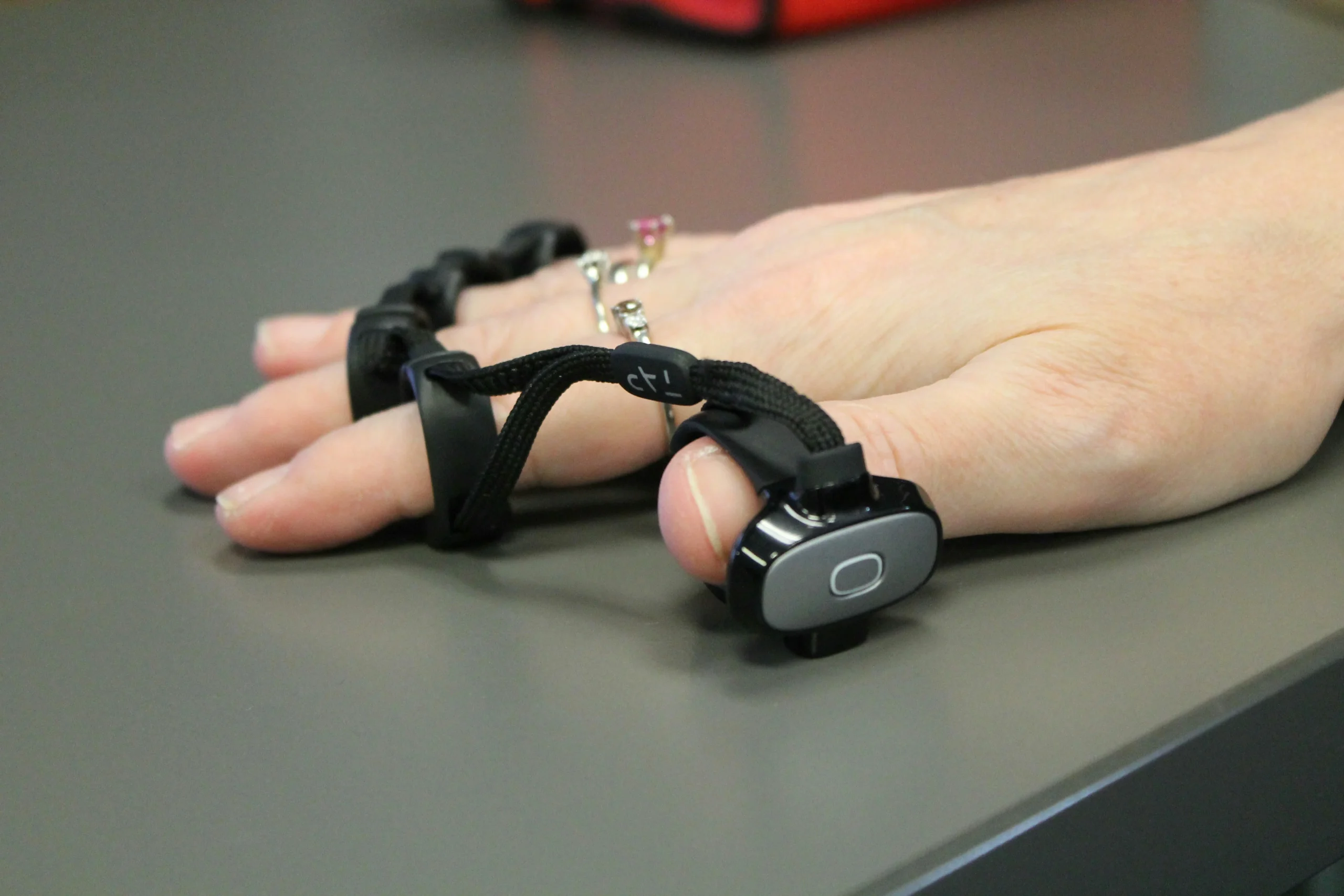
Across surgical rehearsal, industrial prototyping, and immersive entertainment, realistic touch feedback steadily elevates virtual environments into genuinely functional workspaces and interactive playgrounds.
Continued progress in soft actuators, battery efficiency, and OpenXR standardization will steadily lower retail prices while improving ergonomic comfort for everyday home users.
Learn more: How Wearable Sensors Detect Early Learning Struggles (Attention, Motor Skills, Memory)
Evaluating tactile peripherals based on latency, force accuracy, and workflow compatibility ensures organizations invest wisely in hardware that delivers measurable operational training value.
Once tactile engineering converges fully with spatial audio and photorealistic rendering, digital interactions will finally honor the full richness of human sensory perception.
Frequently Asked Questions (FAQ)
What is the difference between vibrotactile and force-feedback haptics?
Vibrotactile systems use tiny vibrating motors to simulate surface buzzes or impacts, whereas force-feedback mechanisms physically restrict finger or joint movement against virtual objects.
Do wearable haptic gloves work with standalone VR headsets?
Many modern haptic gloves connect via Bluetooth or Wi-Fi to standalone headsets, though complex pneumatic systems still require a tethered workstation or backpack.
Are haptic suits safe for extended daily training sessions?
Certified commercial suits operate within strict thermal and electrical safety limits, though users should take regular breaks to prevent muscle fatigue or overheating.
How much latency can human touch detect in virtual reality?
Highly sensitive human mechanoreceptors perceive delays exceeding twenty milliseconds between visual contact and tactile response, so responsive haptic controllers target sub-ten-millisecond synchronization.
Which industries see the highest return from tactile VR hardware?
Healthcare simulation, aerospace assembly, automotive design, and hazardous-environment training achieve strong financial returns by reducing physical prototype costs and preventing costly human errors.
To explore ongoing human-computer interaction breakthroughs in tactile interfaces, review peer-reviewed publications hosted by the ACM Digital Library covering wearable haptic devices.
