
Voice-free smart home automation with scene logic
Voice-free smart home automation is the definitive evolution of modern living, shifting from reactive voice commands to proactive systems that anticipate user needs through sensor-driven logic.
The initial wave of smart home adoption relied heavily on speakers. However, the friction of repeating commands has led users toward voice-free smart home automation as a superior alternative.
True automation means the house acts without being told. By utilizing sophisticated scene logic, your home monitors environmental variables to execute complex routines silently and efficiently.
This shift prioritizes privacy and calm. In 2026, homeowners increasingly view “smart” as “invisible,” preferring devices that blend into the background rather than requiring constant verbal interaction.
Summary of Advanced Home Logic
- The transition from active voice control to passive automation.
- How presence sensors and mmWave technology redefine environmental triggers.
- Designing scene logic based on “If This, Then That” (IFTTT) architecture.
- The impact of Matter and Thread on ecosystem reliability in 2026.
- Strategic benefits of reducing auditory clutter in smart environments.
How does scene logic replace verbal commands?
Scene logic functions as the brain of your residence. Instead of saying “turn on the lights,” a motion sensor detects your entry and triggers a specific lighting profile.
These systems utilize Boolean logic to evaluate multiple conditions simultaneously. For instance, a “Coming Home” scene might only activate if the sun has set and the alarm is disarmed.
Advanced hubs now process these decisions locally. This ensures that your voice-free smart home automation remains functional even if your internet connection drops, providing much-needed reliability.
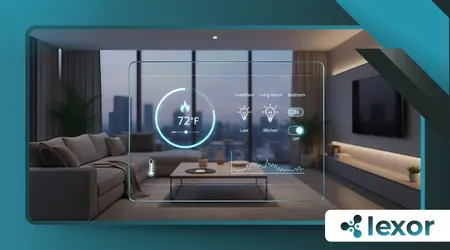
Why choose sensors over smart speakers?
Smart speakers often struggle with accents, background noise, or distance. Sensors provide a binary certainty that eliminates the frustration of “I’m sorry, I didn’t catch that.”
++Using Generative AI to Create Personalized Phonics Exercises for Early Readers
Presence detection has evolved beyond simple PIR sensors. Modern mmWave sensors can detect the slight rise and fall of a chest, knowing you are in the room even while still.
By integrating these into your voice-free smart home automation setup, you remove the cognitive load of management. The technology serves you, rather than requiring you to manage it verbally.
Which technologies enable seamless scene transitions?
The backbone of modern invisible tech lies in protocol interoperability. Matter 1.4 has standardized how devices communicate, allowing different brands to share data for complex logic strings.
Read more: Automating Heating & Cooling Based on Occupancy Sensors + Micro-Location Data
Ultra-Wideband (UWB) chips in smartphones also play a critical role. As you move through rooms, the house tracks your precise location to adjust audio and climate settings automatically.
According to technical standards from the Connectivity Standards Alliance, these local mesh networks reduce latency significantly, which is vital for high-performance voice-free smart home automation.
What are the essential components for a quiet home?
To build a functional system, you need three layers: triggers, conditions, and actions. Triggers are the “when,” such as a door opening or a specific time.
Conditions act as filters, such as “only if I am home.” Actions are the final result, like dimming the lights or starting the coffee machine without a word.
++Smart Kitchen and Laundry: Appliances That Automate Tasks for You
Investing in high-quality multi-sensors is the best starting point for voice-free smart home automation. These devices track temperature, humidity, light levels, and motion in a single, compact unit.
Comparison of Automation Methods (2026 Data)
| Feature | Voice Control | Scene Logic (Voice-Free) |
| User Effort | High (Verbal Input) | Zero (Passive) |
| Response Time | 2-4 Seconds | < 500 Milliseconds |
| Privacy Level | Lower (Always Listening) | Higher (Local Sensors) |
| Reliability | Dependent on Cloud | Local Processing |
| Complexity | Simple Setup | Advanced Configuration |
When is the best time to implement autonomous scenes?
The most effective time to transition is during a network upgrade. Implementing Thread-border routers provides the stability needed for dozens of sensors to communicate without clogging your Wi-Fi.
Start with your most repetitive daily tasks. Automating the “Good Morning” sequence—opening blinds and adjusting the thermostat—demonstrates the immediate value of voice-free smart home automation.
Explore more: Building the AI-powered local smart home
As you become comfortable with basic triggers, you can layer in complex variables. Using outdoor lux sensors to trigger indoor lighting ensures your home always feels perfectly illuminated.
How to optimize your home for presence-based logic?
Placement of sensors is the most critical factor for success. You must identify “dead zones” where motion might be missed to prevent lights from turning off prematurely.
Create “logic buffers” to handle brief absences from a room. Setting a five-minute delay on “lights off” commands prevents the house from plunging you into darkness during stillness.
Refined voice-free smart home automation uses “Bayesian probability” in some high-end hubs. This allows the system to guess your intent based on the sequence of sensors tripped.
What are the privacy benefits of eliminating microphones?
Reducing the number of microphones in your private spaces enhances security. Sensors generally collect metadata—like “motion detected”—rather than recording sensitive audio or video snippets.
Local-first platforms like Home Assistant or Hubitat ensure your data never leaves your four walls. This is the gold standard for secure voice-free smart home automation.
Homeowners in 2026 are prioritizing this “data sovereignty.” By moving away from cloud-dependent voice assistants, you regain control over your digital footprint and increase your home’s overall resilience.
A “Movie Night” scene can trigger when the TV turns on and the light level in the room is above 10%. The blinds close automatically, creating a perfect atmosphere.
During the night, a “Pathlight” scene uses dim, red-toned lighting if motion is detected in the hallway. This guides you safely without disrupting your circadian rhythm or waking others.
These nuances define the peak of voice-free smart home automation. The system understands context, ensuring that the automation is helpful rather than intrusive or startling for the inhabitants.
Future-proofing your automated environment
As AI agents become more integrated into local hubs, the ability to predict routines will improve. Your home will learn that Monday mornings require different settings than Saturdays.
Ensure your hardware supports firmware updates over-the-air. Keeping your sensors updated is vital for maintaining the security and efficiency of your voice-free smart home automation ecosystem.
Transitioning to voice-free smart home automation represents a shift from “gadgetry” to true ambient intelligence.
By leveraging scene logic and advanced sensors, you create an environment that supports your lifestyle silently. This approach eliminates the friction of voice commands while enhancing privacy and reliability.
As we move through 2026, the most sophisticated homes won’t be the ones that talk back, but the ones that understand exactly what you need before you even realize it yourself.
FAQ (Frequently Asked Questions)
Is voice-free automation more expensive than using voice assistants?
The initial cost can be higher because you need more sensors. However, the long-term value in convenience and privacy often outweighs the price of a few smart speakers.
Can I still use voice commands if I have a scene-based system?
Absolutely. Most people keep a few speakers for specific tasks like setting timers. The goal is to make voice an option rather than a daily necessity.
What happens if the sensors fail?
High-quality voice-free smart home automation systems include manual overrides. Smart switches allow you to control everything traditionally if the logic or sensors ever malfunction.
Does scene logic require professional programming?
While advanced setups benefit from professional help, many modern hubs offer “drag-and-drop” logic builders. This makes it accessible for tech-savvy homeowners to build their own routines.
Which sensor is best for detecting a seated person?
For total accuracy, mmWave (Human Presence) sensors are superior to standard PIR sensors. They detect micro-movements like breathing, ensuring the system knows you are still there.
