
Smart home automation real time context engines for actions
Deploying advanced real time context engines within residential environments transitions traditional smart home scheduling from rigid, rule-based programming into an adaptive, hyper-aware ecosystem capable of predictive automation.
Standard smart homes rely on static triggers like time or motion, which frequently fail to align with shifting human behaviors.
This technical analysis explores the architecture of context-aware automation, data ingestion pathways, privacy-centric edge computing, and how unified ecosystems interpret complex sensory inputs to execute seamless household actions.
What is a smart home context engine and how does it operate?
A context engine represents a centralized software layer or local gateway hub that aggregates, normalizes, and interprets simultaneous data streams from diverse internet of things (IoT) devices.
Instead of executing isolated commands, this system continuously builds a dynamic situational model of the household based on presence, ambient conditions, and historical patterns.
The processing core analyzes variables such as indoor air quality, ambient luminosity, acoustic signatures, and even the biometric states of residents.
By evaluating these inputs simultaneously, the framework determines not just if an event occurred, but the specific intent behind the activity.
This sophisticated data synthesis eliminates the need for manual smartphone intervention or repetitive voice commands throughout the day.
The property begins to anticipate occupant requirements, adjusting sub-systems smoothly before the individual notices a environmental discomfort.
How do localized edge processors manage complex multi-sensory data streams?
Processing massive volumes of telemetry data within cloud servers introduces problematic latency delays and severe user privacy vulnerabilities.
Modern automation topologies utilize robust local hardware gateways to keep sensitive behavioral tracking strictly confined inside the physical property walls.
Edge computing nodes evaluate complex environmental changes instantly, ensuring critical safety automations function perfectly even during complete internet service disruptions.
Localized algorithms filter out sensory noise, focusing strictly on high-value data changes that indicate genuine behavioral shifts.
By keeping the computing footprint local, real time context engines achieve near-zero latency execution when managing high-bandwidth sensor arrays.
This immediate responsiveness is vital for safety-critical integrations, such as identifying kitchen liquid spills or electrical overload patterns across local distribution panels.
Why does unified protocol interoperability dictate automated system accuracy?
The historical fragmentation of wireless communication standards previously restricted smart devices to isolated brand applications, blinding automation engines to broader environmental contexts. Modern ecosystems overcome this structural barrier by adopting unified, open-source application layers that standardize device telemetry across different hardware manufacturers.
When lighting controls, smart appliances, HVAC units, and security sensors share a common communication vocabulary, data silos disappear entirely. The context engine extracts maximum value from every sensor, utilizing a security door lock status to optimize climate zones simultaneously.
According to technical specifications managed by the Connectivity Standards Alliance (CSA), cross-brand communication stability directly impacts the operational reliability of advanced residential automated systems:
| Communication Protocol | Local Data Transfer Latency | Power Consumption Profile | Optimal Automation Use Case |
| Matter over Thread | Less than 15 milliseconds | Ultra-low (Battery optimized) | Grid-mesh sensor networks |
| Wi-Fi 7 (802.11be) | Less than 5 milliseconds | High bandwidth required | High-definition security video streams |
| Zigbee 3.0 | 20 to 40 milliseconds | Low operational overhead | Legacy lighting and wall switches |
| Z-Wave Long Range | 30 to 50 milliseconds | Low energy usage | Long-distance outdoor perimeter safety |
Which ambient sensors provide the highest contextual awareness for predictive actions?
Achieving seamless automation without relying on obtrusive camera tracking requires the deployment of advanced, privacy-respecting ambient sensors throughout living spaces.
Radar-based micro-space presence sensors track breathing patterns and subtle body movements, identifying occupancy even when a resident remains completely motionless.

Acoustic glass-break detectors, indoor air quality index monitors, and ambient light spectroradiometers add deep layers of situational awareness to the central processing hub.
Learn more: Creating Custom Routines with Your Smart Assistant
Merging these invisible data metrics allows the system to differentiate between a quiet afternoon reading session and an empty house.
Consequently, embedding reliable real time context engines into your property infrastructure avoids the systemic false triggers common to primitive infrared motion detectors.
The environment adapts intelligently, maintaining optimal climate and lighting states based on authentic human presence.
When do adaptive household automation routines transition into true predictive utility?
The transformation into true predictive utility occurs when the automated environment begins to adjust settings based on long-term historical behavioral trends.
By analyzing seasonal habits, sleep schedules, and work-from-home routines, the system optimizes energy consumption without human configuration.
Read more: Smart home automation predictive AI models for daily routines
If the engine notes a drop in outdoor temperature combined with a specific wake-up pattern, it pre-heats specialized living zones beforehand.
This proactive resource management drops utility overhead significantly, ensuring energy is channeled strictly where and when occupants require it.
Over extended operational horizons, these subtle adjustments build deep structural efficiencies across the entire residential footprint.
Predictive utility protects expensive mechanical hardware from unnecessary cycles, extending appliance longevity while maintaining absolute comfort for the household.
Designing the hyper-aware residential ecosystem
Shifting residential automation away from manual programming toward intelligent, context-driven infrastructure marks the defining evolution of modern smart home design.
Embracing localized data interpretation protects consumer privacy while unlocking unprecedented levels of energy efficiency and physical comfort.
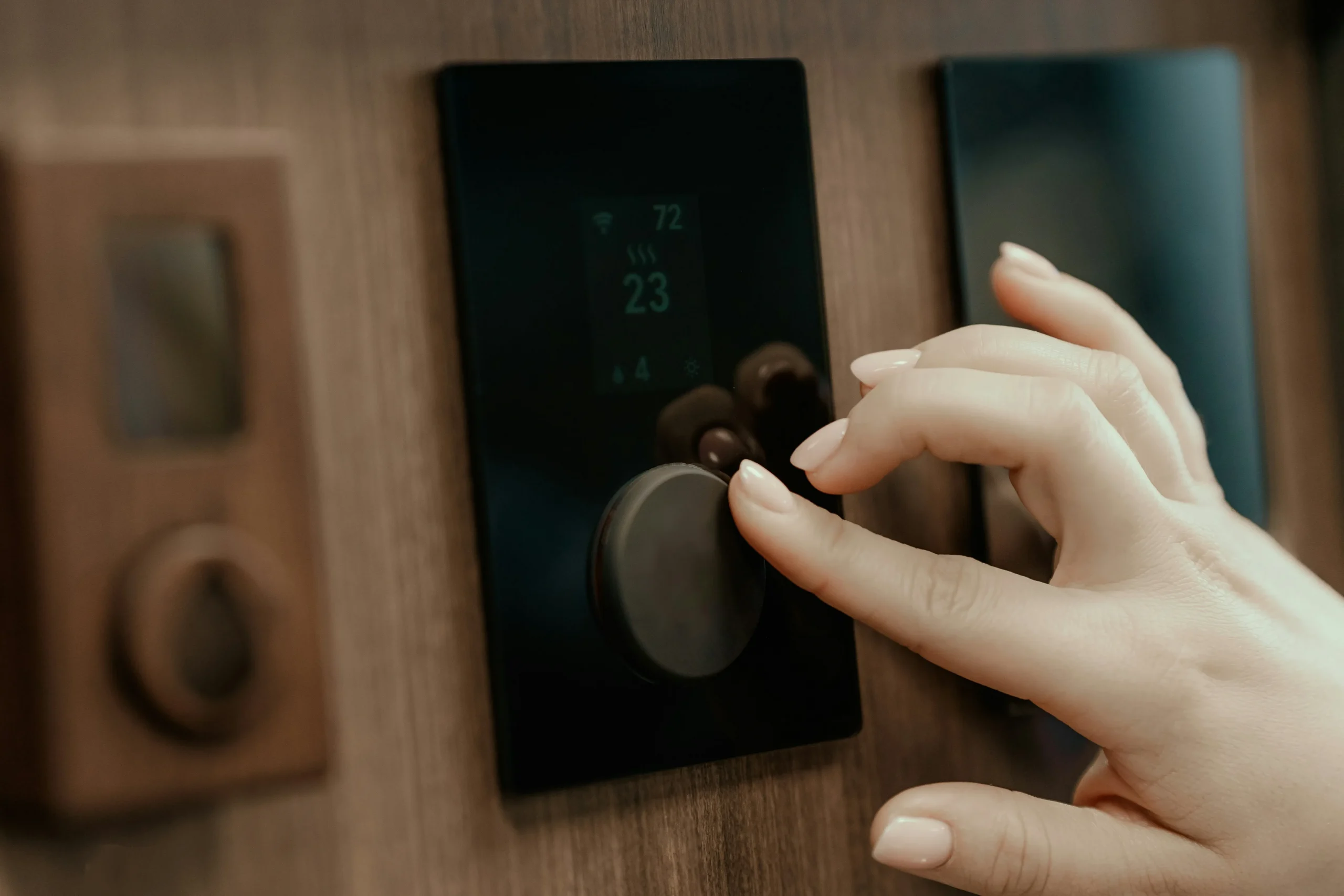
As sensor architectures and unified communication protocols continue to mature, the precision of these predictive environments will expand exponentially.
Learn more: Smart home automation biometric security systems for access
Investing in open, interoperable hardware foundations today ensures your residential property remains adaptable, secure, and ready for future intelligence layers.
For deep insights into technical standardization and consumer privacy protections within automated environments, review the foundational research compiled by the National Institute of Standards and Technology (NIST).
Frequently Asked Questions (FAQ)
Do these real-time context systems require an active internet connection to automate devices?
No, modern systems prioritize local edge processing, meaning all sensor interpretation and automation logic execute entirely within your local gateway hub. Your home remains intelligent and fully secure even if your external internet service provider experiences an outage.
How do context engines protect sensitive family behavioral data from external leaks?
By processing sensor telemetry locally on edge hardware and utilizing encrypted communication protocols, your daily behavioral patterns never leave the property. This structural barrier prevents external profiling, data monetization, or unauthorized cloud access to your private routines.
Can legacy smart home devices integrate into a modern context-aware engine?
Yes, legacy devices can connect via bridging hardware that translates older wireless signals into unified modern protocols. This software abstraction layer allows the central context engine to utilize telemetry from older hardware without performance penalties.
What happens if different sensors provide conflicting data to the automation hub?
The central software engine utilizes a mathematical weighting system called sensor fusion to resolve conflicting inputs logically. For example, if a motion sensor reports a vacancy but a radar sensor detects breathing, the system prioritizes the high-precision radar data.
