
Interactive learning cubes for collaborative preschool play
Integrating Interactive learning cubes into early childhood classrooms transforms traditional play into dynamic educational experiences, fostering teamwork, spatial reasoning, and communication skills among young children.
Modern early childhood educators increasingly prioritize hands-on technology that encourages physical manipulation alongside digital feedback, ensuring screen-free or low-screen engagement during foundational development stages.
These tactile manipulative blocks respond to touch, proximity, orientation, and connection, allowing preschoolers to solve puzzles, compose music, and build stories cooperatively with their peers.
Unlike passive digital devices that isolate individual learners, smart blocks require active peer coordination, speech negotiation, and shared problem-solving to complete multi-stage learning challenges.
Understanding the instructional design, technological frameworks, and developmental advantages of smart blocks helps educators select appropriate tools for modern early learning centers.
Examining classroom deployment strategies clarifies how these tactile devices bridge physical play and digital literacy without displacing essential early childhood social interactions.
Adopting structured group play protocols with smart blocks accelerates cognitive growth while establishing healthy collaborative habits in foundational educational settings.
What are interactive learning cubes in early childhood education?
Smart educational blocks combine physical manipulation with built-in sensors, wireless connectivity, microcontrollers, and audio-visual feedback mechanisms to support multi-sensory learning activities.
Childcare centers utilize these modular devices to turn abstract concepts into tangible interactions, letting young children physically arrange blocks to trigger sounds, lights, or digital stories.
| Cube Component / Feature | Operational Mechanism | Pedagogical Impact on Preschoolers |
|---|---|---|
| Proximity & Touch Sensors | Detects hand contact and adjacent blocks | Promotes fine motor control and spatial coordination |
| Wireless Mesh Connectivity | Communicates state changes across blocks | Encourages joint problem-solving and group communication |
| Multi-Sensory Audio/Visual | Emits adaptive sound effects and LED cues | Reinforces cause-and-effect learning through immediate feedback |
Curriculum standards and research guidelines regarding early childhood tech integration are maintained by the National Association for the Education of Young Children.
Deploying Interactive learning cubes requires selecting systems engineered specifically for preschool environments, where durability, non-toxic materials, and intuitive physical interfaces remain paramount.
Educators organize small-group play stations where children align blocks side-by-side to spell simple words, complete number sequences, or assemble color-coded musical rhythms together.
The physical nature of these manipulates ensures that preschoolers engage large muscle groups and fine motor skills simultaneously while experimenting with basic coding concepts.
Built-in rechargeable batteries and wireless charging bases simplify classroom management, allowing teachers to keep learning stations operational without managing complex cable setups daily.
How do smart cubes foster collaborative play among preschoolers?
Collaborative learning tools require design structures that mandate multi-child participation rather than single-user control, driving natural communication and shared decision-making during classroom tasks.
Smart blocks achieve this balance by requiring multiple sides or separate units to connect simultaneously before completing a story circuit or solving a math puzzle.
Children naturally divide responsibilities during play, with one student selecting numerical values while another manages operational blocks to observe cumulative light and sound responses.
Verbal negotiations emerge spontaneously as preschoolers debate which sequence to attempt next, strengthening expressive language skills and peer perspective-taking in inclusive groups.
Shared physical goals reduce individual frustration, enabling peers to model problem-solving strategies for one another when facing complex spatial or logical challenges.
Teachers observe increased social inclusion when introducing tactile smart blocks, as non-verbal or language-emerging students participate fully alongside their English-speaking peers.
Which developmental domains benefit most from interactive block play?
Cognitive development accelerates when young children physically manipulate objects that provide instant, non-judgmental feedback regarding structural balance, logical ordering, and pattern recognition.
Spatial awareness improves as preschoolers rotate, align, and stack cubes to observe how physical orientation alters output responses across linked blocks.
Social-emotional growth occurs naturally through turn-taking, resource sharing, and joint celebration when a group successfully activates a complex block sequence together.
Early literacy and numeracy skills develop through active play, as tactile cubes display letters, numbers, and symbols that react when arranged correctly.
Fine motor coordination strengthens through precise gripping, aligning, and stacking actions required to lock magnetic or sensor-based connection points cleanly into place.
Balancing digital feedback with physical manipulation protects healthy childhood sensory development while introducing foundational computational thinking concepts naturally.
When should educators integrate smart cubes into classroom routines?
Small-group learning rotations offer the ideal setting for introducing smart block activities, allowing educators to supervise interactions while encouraging student-led discovery.
Morning free-play periods provide opportunities for unstructured exploration, where children experiment with block combinations without rigid outcome expectations from adults.
Targeted STEM learning units benefit from structured block sessions, where teachers assign specific sequence challenges to reinforce concepts like cause, effect, and classification.
Inclusive classrooms utilize smart cubes during speech and occupational therapy sessions, leveraging tactile feedback to engage children with diverse learning needs.
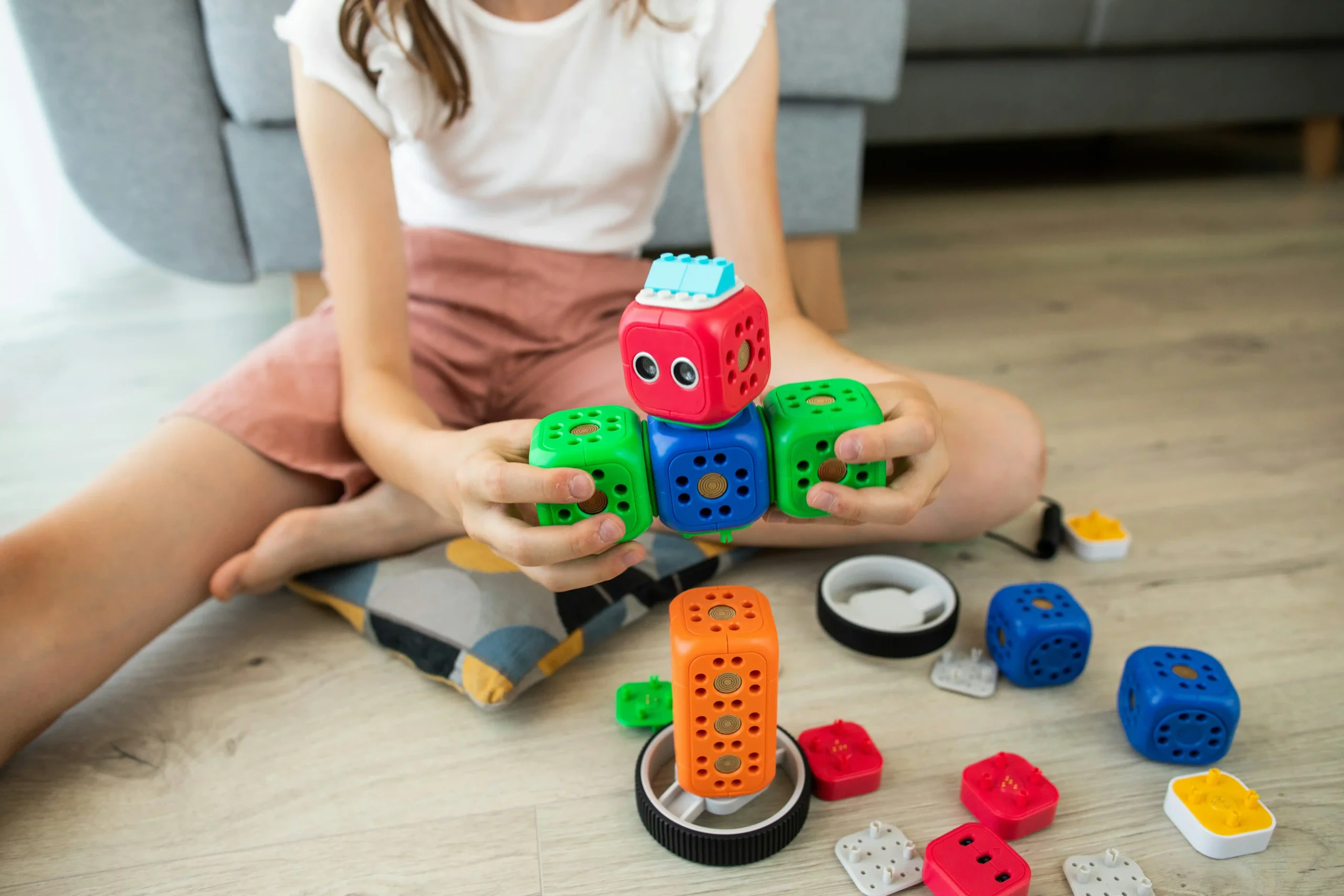
Transition times between major daily activities can feature short, guided block challenges that focus energy and promote cooperative focus before quiet tasks.
Learn more: Smart classroom furniture improving early learning outcomes
Rotating smart block kits across different interest centers ensures that all students gain regular access throughout the academic preschool year.
What criteria should schools evaluate before purchasing interactive cubes?
School administrators must assess hardware durability, battery performance, cleaning protocols, and software security before committing institutional funds to smart block systems.
Surfaces should withstand repeated drops onto classroom floors and allow sanitization with hospital-grade wipes without damaging internal sensors or display screens.
Open-ended systems that support customizable learning software offer greater long-term value than single-purpose electronic toys with rigid, unchangeable programming pathways.
System safety standards, digital privacy compliance, and educational technology benchmarks are detailed thoroughly on the public portal of the U.S. Department of Education.
Read more: Digital playground systems supporting active early learning
Evaluating Interactive learning cubes requires verifying that hardware complies with child privacy standards, ensuring no unencrypted audio or location data leaves classroom boundaries.
Prioritizing platforms with intuitive teacher controls allows educators to adjust difficulty levels, track group progress, and customize audio settings without technical friction.
Investing in comprehensive professional development empowers teaching staff to integrate smart manipulates seamlessly into existing early childhood curriculum frameworks.
Conclusion
Integrating Interactive learning cubes into preschool classrooms empowers young learners to build essential social, cognitive, and physical capabilities through cooperative, hands-on discovery.
Learn more: Children’s audio learning devices for independent listening
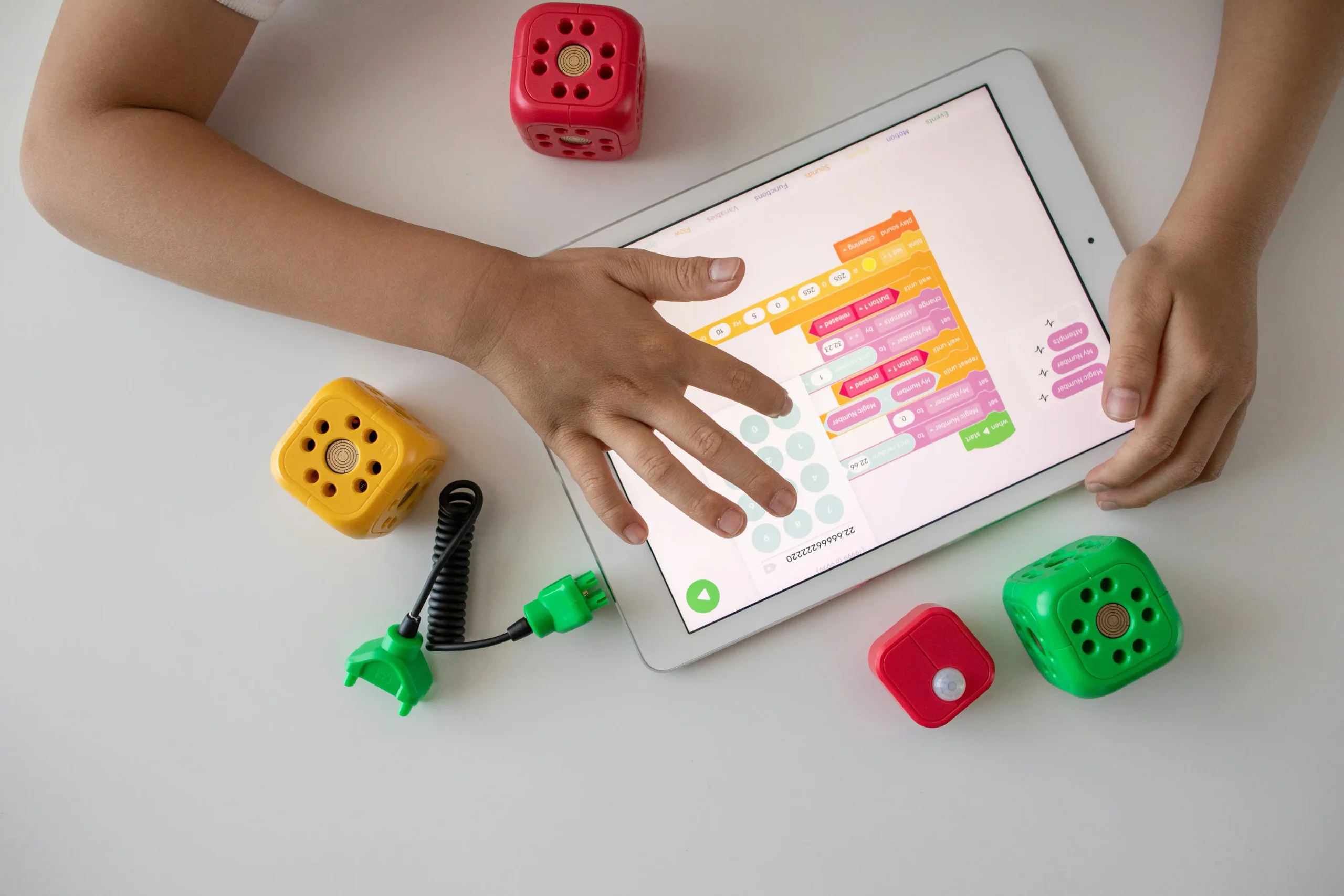
Combining physical manipulatives with intelligent feedback creates inclusive learning environments where children negotiate, communicate, and solve problems together with confidence.
Frequently Asked Questions (FAQ)
Are interactive learning cubes suitable for screen-free preschool classrooms?
Yes, many smart cube systems operate entirely without external screens, utilizing built-in LEDs, tactile textures, and audio prompts to deliver interactive learning experiences.
How do educators clean and sanitize smart cubes between classroom uses?
Most commercial educational cubes feature sealed, water-resistant enclosures that allow teachers to wipe them down quickly using standard disinfectant wipes between play sessions.
Can smart blocks help children with special educational needs or speech delays?
Yes, tactile feedback, visual lighting cues, and collaborative physical play provide alternative communication channels that support inclusive learning for non-verbal or delayed students.
