
Early education AI teaching assistants in preschool workflows
Integrating AI teaching assistants in preschool workflows represents a fundamental shift in how we balance administrative demands with the raw, human connection essential to early childhood.
By 2026, the debate has finally moved past whether silicon belongs near a sandbox; the real question is how these tools can serve the teachers who build our children’s first foundations.
Modern preschools are under staggering pressure to deliver personalized learning while navigating a labyrinth of safety and reporting standards.
This guide looks at how automated intelligence acts as a silent partner, handling the heavy lifting of documentation so educators can actually look a child in the eye instead of staring at a clipboard.
What is the role of AI in early childhood education today?
In 2026, AI has become a functional layer of classroom infrastructure, not a futuristic prop. Rather than replacing the teacher, these tools act as co-pilots that absorb non-instructional noise.
We are seeing a shift where the “tech” is becoming invisible.
Modern systems use ambient sensing and voice-to-text to capture those fleeting moments of discovery. Instead of a teacher stepping away to type, the system logs the milestone.
This ensures the flow of play, which is, after all, the work of a child, remains undisturbed.
There is also a profound impact on inclusive education. For kids with speech delays or neurodivergent traits, AI can spot subtle communication patterns.
It alerts teachers to specific supports early on, making intervention a proactive habit rather than a reactive scramble.
How does the integration of AI teaching assistants in preschool workflows improve teacher retention?
The burnout crisis in early education is often a result of the “hidden workload”, the grueling hours spent on meal tracking and compliance after the kids go home.
It is a weight that pushes talented educators out of the profession.
By automating these repetitive loops, schools are reclaiming staff morale.
When a teacher spends less time on a spreadsheet and more time on the floor building block towers, their sense of purpose returns. It’s a simple equation: less paperwork equals more presence.
There is something unsettling about a classroom where an adult is tethered to a tablet. This is often maligned as a lack of focus, but it is actually a systemic failure.
Intelligent automation doesn’t just “help”; it restores the teacher’s primary role as a mentor.
For detailed research on global standards and the ethical implementation of digital tools, the UNESCO Digital Learning resources offer extensive frameworks for international policy and school administrators.
Comparison of Workflow Efficiency: Traditional vs. AI-Assisted
| Task Description | Traditional Method Time | AI-Assisted Method Time | Impact on Educator |
| Daily Progress Reports | 45-60 minutes daily | 5-10 minutes (Automated) | Reclaims evening personal time |
| Lesson Planning | 3-4 hours weekly | 30 minutes (Curated) | Focuses on creative execution |
| Parent Communication | Constant interruptions | Scheduled, smart updates | Protects classroom focus |
| Observation Logging | Manual paper notes | Ambient voice recording | Captures authentic play |
| Health Tracking | Manual paper entry | Automated sensor alerts | Tightens safety protocols |
Why is data privacy the primary concern for parents and schools?
Implementing AI teaching assistants in preschool workflows demands a “privacy-first” mindset.
Since we are dealing with the developmental data of minors, security protocols cannot just be “good enough”, they must be ironclad and transparent.
Learn more: Blockchain AI integration use cases for data validation
Reputable providers now lean on edge computing. This means data is processed locally within the school’s walls rather than being sent to a vulnerable public cloud.
It’s a necessary hurdle to clear to ensure compliance with tightening global privacy laws.
Transparency is the only currency that matters here. Schools have a responsibility to show parents exactly what is being collected.
If an algorithm is “observing” a child, the school must be able to explain why and who has the keys to that data.
Which specific AI tools are revolutionizing the 2026 classroom?
Natural Language Processing (NLP) is currently the heavy hitter. It allows teachers to dictate observations or set reminders while their hands are covered in paint or glue.
It keeps the workflow hands-free, which is a requirement in a room full of toddlers.
Learn more: Storytelling With Interactive Projection Mapping in Early Classrooms
Computer vision is being used with more caution, focusing mostly on safety. It can track headcounts or flag hazards in real-time.
It acts as an extra set of eyes that doesn’t get distracted by a spilled juice box or a sudden tantrum.
Generative AI is also helping with bespoke content. A teacher can instantly generate a story about “a shy lion who likes broccoli” to mirror a specific classroom situation.
It provides a level of immediate, relevant scaffolding that was previously impossible.
How can schools ensure a balanced approach to screen time?
There’s a persistent myth that AI means more screens for kids. In practice, the best AI teaching assistants in preschool workflows are completely invisible to the children.
Read more: How to Set Screen Time Limits While Encouraging Learning
They operate in the background to empower the adults.
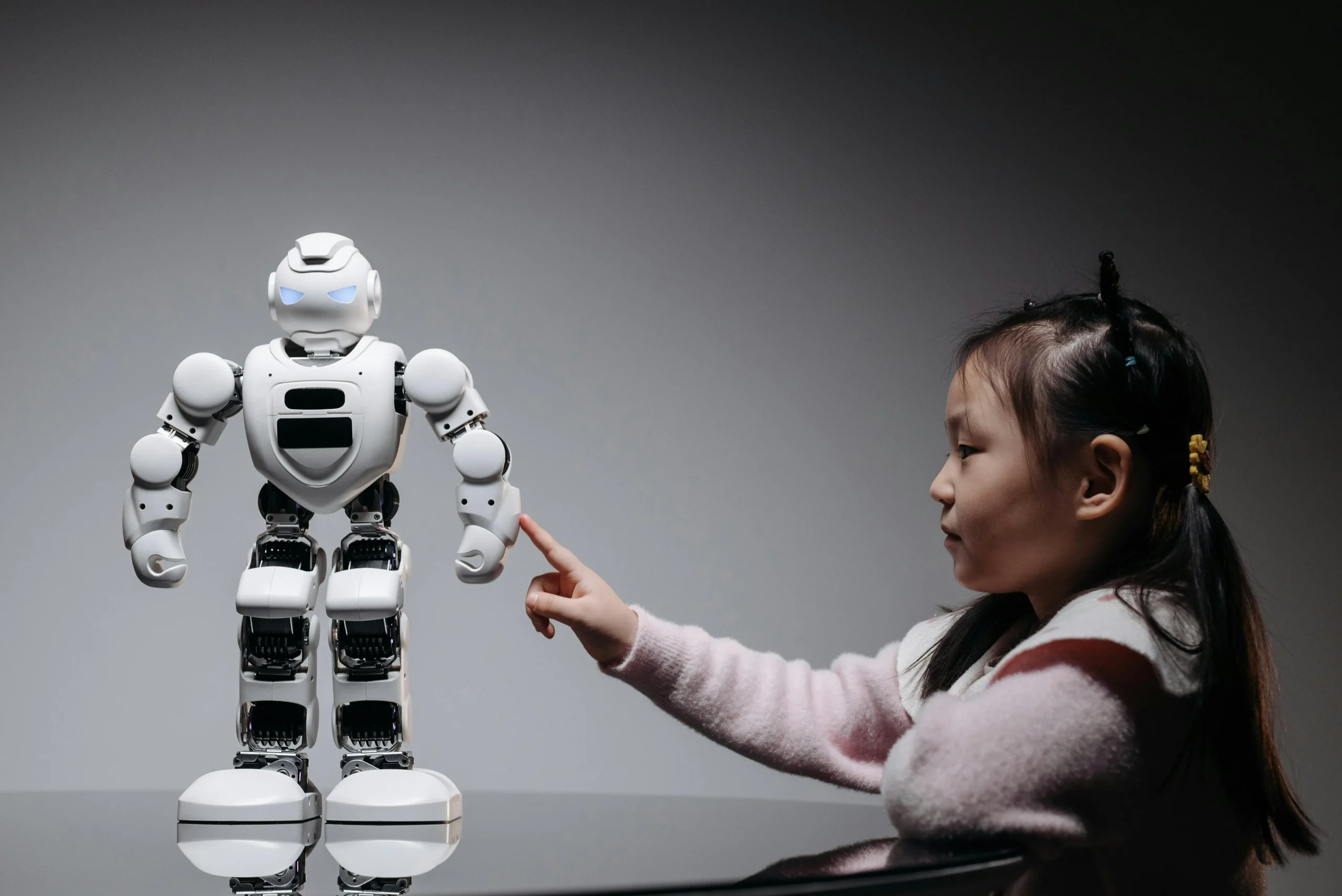
The goal is to enhance sensory-rich, tactile play, not to replace it with a glowing glass rectangle.
By giving teachers their time back, AI ironically facilitates more “unplugged” time, as the adults are more physically and mentally available for interaction.
Effective pedagogy in 2026 still relies on connection and creativity. Technology should only serve as a scaffold for these human-centric goals.
If a tool doesn’t result in more eye contact between teacher and student, it probably shouldn’t be there.
To stay updated on evidence-based practices regarding technology and its impact on the developing brain, visit the Harvard Center on the Developing Child for cutting-edge research.
FAQ: Common Questions on AI in Preschools
Does AI replace the need for human assistant teachers?
Never. AI handles the data, but it can’t offer a hug, wipe a nose, or understand the nuance of a child’s frustration. It makes the human staff more effective, but the “human” part is the entire point of preschool.
How do these systems handle children with different languages?
Modern models are incredibly proficient in translation. They can turn a teacher’s English observation into a detailed report in a parent’s native language instantly, closing communication gaps that used to leave families behind.
Is this only for elite, high-budget schools?
By 2026, the market has stabilized. Many systems are now offered in modular, affordable tiers. Often, the time saved on administrative overhead pays for the software within the first few months of implementation.
The evolution of AI teaching assistants in preschool workflows has fundamentally shifted the classroom landscape.
By stripping away the friction of administrative burdens, these tools have revitalized a profession that was on the brink of exhaustion.
As we move forward, the focus has to remain on the ethical application of these systems, ensuring technology serves the human heart of the school.
The preschools that find this synergy will be the ones that set the standard for early education. We aren’t just teaching children to live in a digital world; we are using that world to give them a more present, more attentive start in life.
The future of the classroom is undeniably smart, but its success depends on it becoming more human than ever before.
