
Virtual reality digital twin environments in product design
The adoption of virtual reality digital twin environments in product design represents a tectonic shift in how engineering teams conceptualize, iterate, and validate complex systems in 2026.
This convergence of high-fidelity spatial computing and real-time physics allows designers to inhabit their creations long before a single physical atom is manipulated on the factory floor.
What are virtual reality digital twin environments in product design?
A digital twin is more than just a 3D model; it is a dynamic, data-driven mirror of a physical object.
When we place these digital twin environments in product design workflows, we create a sandbox where gravity, friction, and thermal stress behave exactly as they do in the real world.
By 2026, the fidelity of these environments has crossed the “uncanny valley” of physics. Engineers can now test the tactile response of a vehicle’s dashboard or the airflow through an industrial turbine with frightening accuracy.
This creates a feedback loop where every virtual adjustment is backed by empirical data and real-time simulation.
There is something unsettling about the mountains of money wasted in the past on clay models destined for the scrap heap.
Today, the virtual twin acts as the “single source of truth,” evolving from the initial sketch to final manufacturing without losing a single byte of data integrity.
How does VR integration accelerate the prototyping phase?
Traditional prototyping usually hits a wall when waiting for parts to be machined or 3D printed. By using VR, designers perform “virtual assembly” to check for spatial interference or maintenance access immediately.
If a bolt is impossible to reach with a standard wrench, you find out in the headset, not on the multi-million dollar assembly line.
This immersion allows for a much more intuitive grasp of human factors.
A designer can “shrink” themselves to inspect the interior of a fuel cell or “grow” to look down at a city-scale infrastructure project. It’s a perspective shift that standard desktop software simply cannot replicate.
The speed of iteration is the most tangible win. In a single morning, a team can test twenty different venting configurations, run thermal simulations on each, and pick a winner by lunch.
This high-velocity development is why digital twin environments in product design have become the baseline for aerospace and automotive sectors.
To understand the foundational standards of these interconnected systems, the International Organization for Standardization (ISO) provides frameworks for digital twin data exchange.
These standards ensure that a twin created in one software ecosystem can actually talk to manufacturing systems globally.
Why is real-time data synchronization crucial for digital twins?
The “twin” part of the name implies a living umbilical cord. In a modern factory, IoT sensors feed data back into the virtual model.
This allows designers to see how a product is actually performing out in the wild and use that cold, hard data to inform the next design cycle.
Learn more: Blockchain AI integration use cases for data validation
If sensors indicate a specific component is vibrating more than expected in cold climates, the digital twin can simulate millions of variations to find a structural fix.
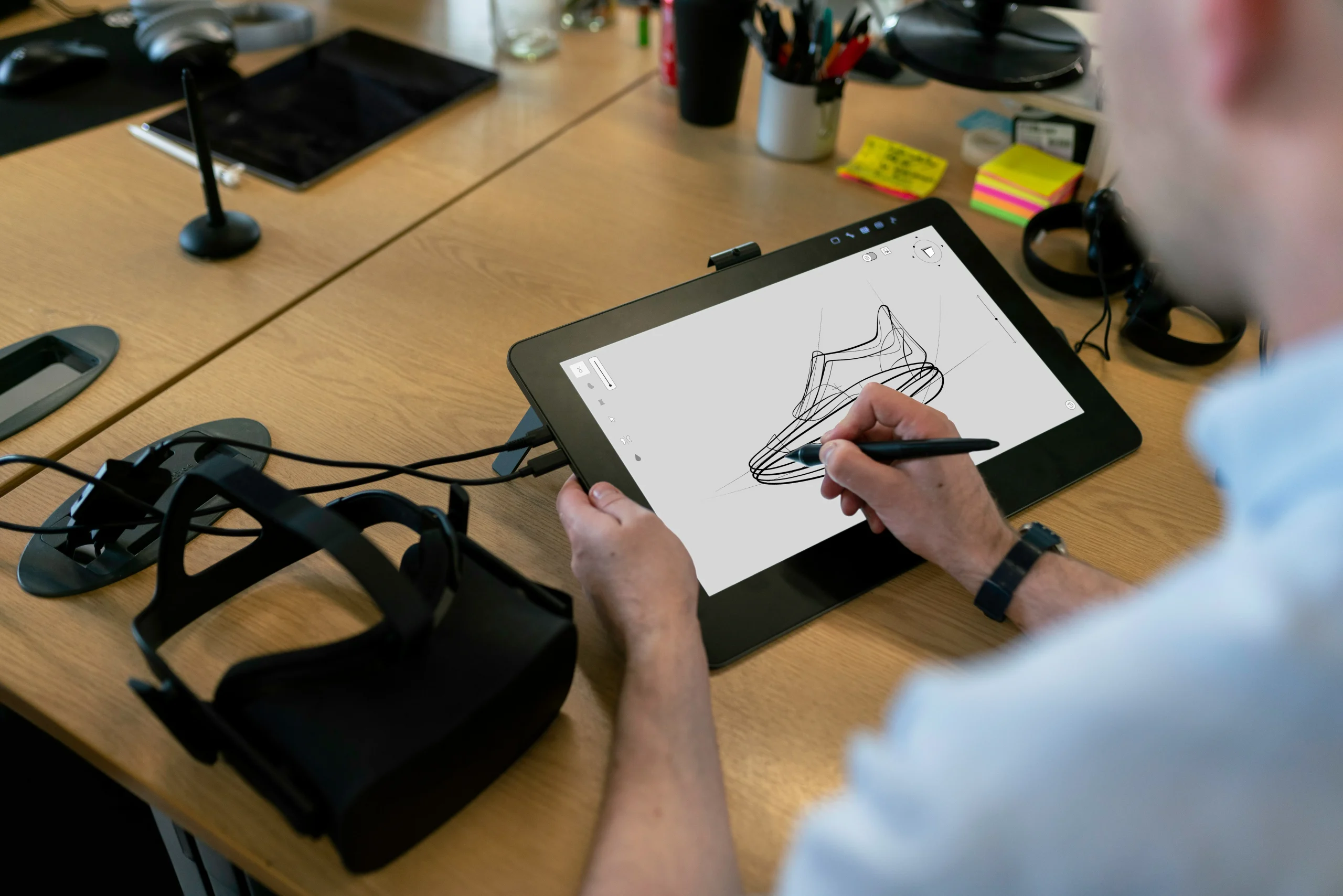
We are moving away from the old routine of “scheduled maintenance” toward “predictive design,” where the product’s virtual shadow tells us exactly when it is time to evolve.
This constant stream of information ensures that digital twin environments in product design stay relevant throughout the entire lifecycle.
It bridges the gap between the “as-designed” intent and the “as-used” reality, providing a level of transparency that was, frankly, impossible in traditional manufacturing.
| Feature | Traditional 3D CAD | VR Digital Twin (2026) | Design Impact |
| Scale | Desktop monitor (scaled down) | 1:1 Immersive Scale | Better ergonomic validation |
| Physics | Static or basic animation | Real-time multi-physics | Accurate stress/flow testing |
| Collaboration | Screen sharing/Video calls | Multi-user spatial presence | Faster consensus building |
| Data Link | Manual updates | Live Bi-directional IoT sync | Real-world performance data |
| Prototyping | Multiple physical versions | Infinite virtual iterations | 70% reduction in waste |
Which industries are leading the adoption of immersive twins?
Aerospace remains the pioneer, mostly because the cost of failure in flight is astronomical.
Companies are now “flying” virtual engines for thousands of hours in simulated storms before the first titanium blade is ever cast. It’s an incredible degree of safety optimization that protects both lives and capital.
Read more: Volumetric Video in VR: How Real People Are Scanned and Added to Immersive Spaces
The medical device industry has also jumped in, using VR twins to design surgical tools perfectly weighted for a surgeon’s hand.
By simulating haptic feedback, the feel of a tool against bone or tissue, designers refine ergonomics to reduce fatigue during those grueling twelve-hour procedures.
It is often misinterpreted that this technology is only for “big tech.” In reality, consumer electronics firms use these environments to test the drop-durability of smartphones.
The democratization of VR hardware means smaller design boutiques are now leveraging digital twin environments in product design to compete with global giants.
What are the sustainability benefits of virtualized design?
Sustainability is no longer a corporate buzzword; it’s a core requirement.
By shifting the majority of the “trial and error” process to virtual space, companies drastically reduce the carbon footprint associated with shipping parts, traveling for reviews, and disposing of failed prototypes.
When a product is designed as a digital twin, its end-of-life disassembly can also be simulated. Designers test how easy it is to recover rare-earth magnets from a motor or recycle a laptop casing.
This “cradle-to-cradle” planning is far more effective when you can physically walk through the recycling process in VR.
Read more: How to Use Technology to Teach Kids About Sustainability
The accuracy of these simulations also means products are “over-engineered” less frequently. By knowing exactly where stress points lie, engineers use less material without compromising safety.
This leads to lighter, more efficient products that require less energy to move and operate throughout their lifespan.
For a comprehensive look at how emerging technologies are shaping global production, the World Economic Forum (WEF) offers detailed reports on the “Fourth Industrial Revolution.”
Their research highlights how digital twins are a cornerstone of the transition toward more resilient global value chains.
Designing the future in a virtual shadow
The integration of digital twin environments in product design has moved us into an era of “perfect foresight.”
We no longer have to guess how a material will age or how a user will reach for a control dial; we experience it.
By blending the cold precision of data with the warm intuition of human presence, we are creating products that are safer, more efficient, and more deeply aligned with human needs.
FAQ: Frequently Asked Questions
Is VR design more expensive than traditional CAD?
The initial investment in headsets and high-end workstations is higher, but the savings in physical prototyping and reduced time-to-market usually provide a return on investment within the first year.
Do you need a constant internet connection for a digital twin?
For the initial design phase, no. However, to leverage the “live” aspect where the twin receives data from physical sensors, a high-speed connection is necessary to maintain real-time synchronization.
Can digital twins prevent product recalls?
They can’t eliminate every risk, but they allow for much more rigorous testing under extreme edge cases—like rare weather events or unusual user behavior—that are often missed during limited physical testing cycles.
What is the difference between a 3D model and a digital twin?
A 3D model is a static representation of shape. A digital twin includes physics properties, material behaviors, and a live data link to a physical counterpart, allowing it to react to its environment in real-time.
Will VR replace physical testing entirely?
Not yet. Regulatory bodies still require physical destructive testing for many safety-critical items. However, the virtual twin ensures that when you finally do the physical test, you are 99% certain of the outcome.
