
Reality warehouse training systems for logistics
Exploring Virtual Reality and Applications in the global industrial sector shows how modern training simulations transform basic workforce qualification metrics across international supply chains in 2026.
Global distribution networks leverage interactive software architectures to onboard floor operators rapidly, safely, and efficiently without interrupting active stock management workflows.
Traditional classroom environments fail to prepare personnel for high-density warehouse environments where precision movement dictates operational profitability margins.
Deploying immersive spatial training frameworks eliminates workplace safety hazards while accelerating individual muscle memory retention for complex sorting tasks.
This comprehensive technical study evaluates spatial software engineering, implementation costs, human resource optimization metrics, and equipment durability standards defining contemporary fulfillment operations.
What Is Immersive Spatial Simulation in Supply Chain Training Frameworks?
Immersive spatial simulation utilizes specialized head-mounted displays and spatial tracking hardware to place operators inside an exact three-dimensional replicate of an active distribution facility.
This software integration allows logistics personnel to interact with automated sorting belts, heavy forklifts, and inventory management scanners before stepping onto a physical floor.
Understanding the deep intersection of Virtual Reality and Applications requires observing how modern tracking algorithms translate physical body movements into digital space instantly.
This precise calibration prevents motion sickness while ensuring that the muscle memory acquired during simulation applies perfectly to physical fulfillment tasks.
These spatial environments simulate diverse variables including fluctuating lighting profiles, shifting floor obstacles, and high-volume seasonal ordering rushes.
Trainees adapt to changing workflow pressures systematically, building operational resilience long before encountering high-stress live commercial operations.
How Does Spatial Software Sincronize with Warehouse Management Systems?
The training platform operates by extracting live spatial coordinate mapping directly from the active database infrastructure of the enterprise management software.
This synchronization ensures that the placement of virtual storage racks, product categories, and weight parameters mirrors the actual physical building layout.
As inventory configurations update in the main office database, the training module revises its internal virtual paths automatically to reflect those precise structural changes.
This dynamic linking teaches operators optimal picking paths, minimizing physical step counts and eliminating internal delivery bottlenecks during shifts.
To explore certified technical parameters, global standards for interactive spatial computing design, and peer-reviewed research regarding workplace software optimization, consult the international repository of the Institute of Electrical and Electronics Engineers (IEEE).
Why Is Immersive Task Replication Far Superior to Traditional Industrial Onboarding?
Traditional onboarding methodologies rely heavily on dense paper instructional manuals, passive video lectures, and slow shadow training protocols on live, active machinery.
This old approach increases human error rates, bottlenecks active production areas, and risks damaging expensive fulfillment equipment during initial test runs.
Integrating Virtual Reality and Applications addresses these structural vulnerabilities by letting trainees commit operational errors without incurring negative real-world financial or safety consequences.
To evaluate the performance outcomes achieved through these spatial installations, analyze the factual training data compiled in the table below:
| Training Methodology Utilized | Average Onboarding Duration | Safety Incident Rate | Equipment Wear and Tear | Knowledge Retention Score |
| Traditional Paper & Video | 14 to 21 Working Days | 8% to 12% Floor Range | Not Applicable to Phase | 55% Retention Capacity |
| Live Machinery Shadowing | 10 to 15 Working Days | 5% to 7% Floor Range | Moderate Surface Damage | 68% Retention Capacity |
| Immersive Spatial Program | 3 to 5 Working Days | Under 1% Absolute Rate | Zero Equipment Contact | 92% Retention Capacity |
| Hybrid Continuous System | 2 to 4 Working Days | Near 0% Expected Rate | Zero Equipment Contact | 95% Retention Capacity |
The empirical records verify that spatial learning programs compress employee ramp-up times significantly while maximizing individual operational precision from day one.
Shifting the initial learning curve to digital environments protects enterprise hardware assets, ensuring long-term equipment value preservation across fulfillment hubs.
Which Industrial Operations Benefit Most from Interactive Spatial Modeling?
Heavy machinery operations, such as narrow-aisle forklift navigation and overhead crane control, realize the most immediate safety improvements from spatial model deployment.
Simulating complex kinetic counterweights and momentum physics teaches operators how to handle heavy pallets at variable heights without tipping hazards.
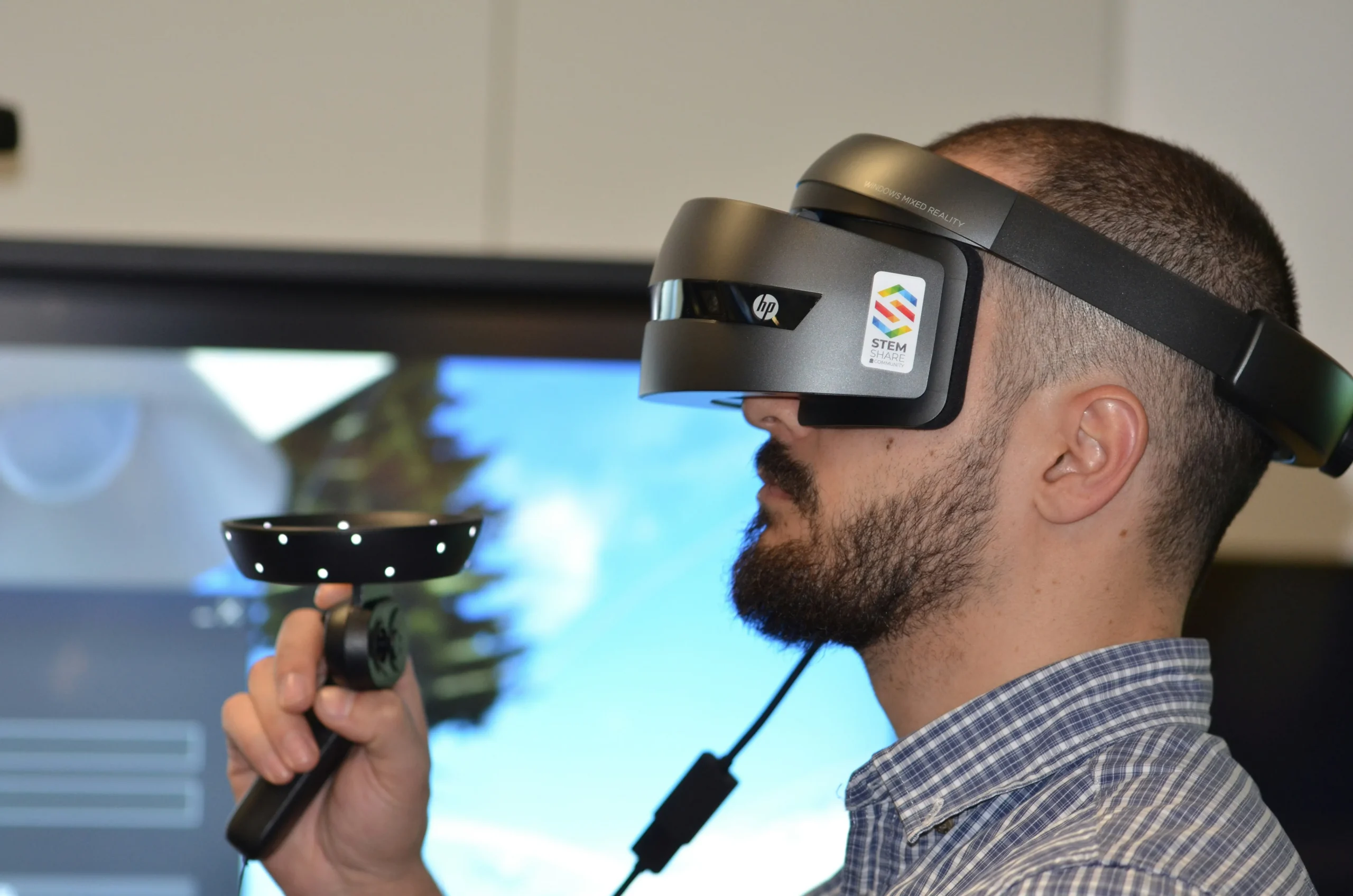
Furthermore, complex hazardous material handling protocols can be repeated indefinitely until the trainee executes every step with flawless procedural accuracy.
Learn more: VR Training for High-Risk Jobs: How Simulations Reduce Errors in Real-World Scenarios
The spatial system tracks eye movements and reaction speed, providing supervisors with objective data sheets detailing operator performance before authorization.
Investing in Virtual Reality and Applications allows organizations to build comprehensive, personalized training paths tailored to the unique physical limitations of every worker.
This analytical approach transforms corporate safety compliance from a administrative box-checking exercise into a responsive, data-proven operational discipline.
When Should Logistics Providers Transition to Hardware-Agnostic Training Software?
Logistics organizations should pivot to hardware-agnostic enterprise software architectures when scaling their training operations across multiple international regional distribution centers.
Relying on specialized, single-brand hardware vendor ecosystems complicates device replacement cycles and increases long-term maintenance costs during economic shifts.
Read more: Virtual reality behavioral training systems for soft skills
Deploying open-source development frameworks ensures the custom training simulation runs smoothly on diverse standalone headsets, tablets, and interactive projection screens.
This flexible infrastructure protects software development investments, allowing easy updates as new display hardware models enter the commercial market.
Modernizing Industrial Human Resource Management via Spatial Computing
Transitioning corporate industrial training programs toward interactive spatial simulation paradigms resolves long-standing inefficiencies inherent to high-turnover fulfillment environments.
Eliminating physical resource constraints allows human resource departments to scale qualification pipelines dynamically, meeting seasonal market demands with agility.

Learn more: Virtual reality industrial training systems for safety
Sustained breakthroughs across cloud rendering, haptic feedback design, and predictive eye-tracking analytics will continue refining training accuracy over the coming decade.
By embedding advanced spatial technologies directly into core operations, forward-thinking logistics networks secure a resilient, highly competitive workforce.
To review comprehensive international technological integration guidelines, digital equity frameworks, and global market development studies regarding industrial automation transitions, explore the resource databases of the United Nations Industrial Development Organization (UNIDO).
Frequently Asked Questions (FAQ)
How do standalone spatial headsets manage battery life configurations during long training shifts?
Modern enterprise standalone headsets utilize swappable hot-battery architectures or dedicated tethered power straps to sustain continuous operation throughout full training shifts.
This engineering setup allows instructors to replace drained batteries in seconds without shutting down the active simulation software environment.
Can spatial simulation software accurately recreate the exact tactile resistance of warehouse machinery?
Yes, advanced training controllers utilize precise haptic feedback motors that simulate the tactile resistance, vibration patterns, and mechanical weight of physical levers.
This sensory input helps operators internalize the precise physical force required to operate warehouse machinery components safely.
Is it difficult to modify the virtual environment when a physical warehouse undergoing restructuring?
Modifying the digital layout is straightforward when utilizing modern modular environment editors linked directly to updated architectural CAD files or WMS databases.
Developers can rearrange racks, change pathing nodes, and update warning signage parameters across multiple facilities simultaneously within hours.
Does spatial training cause eye strain or motion sickness for operators during prolonged sessions?
Contemporary high-resolution displays featuring refresh rates above 90Hz combined with ultra-low latency tracking algorithms have effectively eliminated spatial motion sickness challenges.
Instructors minimize eye strain by structuring modules into focused, twenty-minute active learning blocks followed by brief reviews.
