
Virtual reality applications using eye-tracking analytics

Virtual reality has moved past the novelty of simple visual immersion into a sophisticated, bidirectional feedback loop.
By using eye-tracking analytics, systems no longer just project images; they interpret the specific intent behind a user’s focal point.
Sensors embedded within the optic stack track pupil dilation and corneal reflections with startling precision.
This raw data provides a granular map of cognitive load, fatigue, and genuine interest during complex digital tasks.
This integration transforms static environments into responsive ecosystems.
Instead of broad, clunky interactions, the software reacts to subtle gaze shifts, making the digital experience feel intuitive and, for the first time, remarkably human-centric.
Summary of Contents
- The shift from visual immersion to biological feedback
- Foveated rendering: The silent engine of performance
- Diagnostic leaps in healthcare and neuro-assessment
- Behavioral heatmapping and the retail gaze
- Strategic implementation and the 2026 privacy horizon
How Does Eye-Tracking Analytics Improve VR Performance?
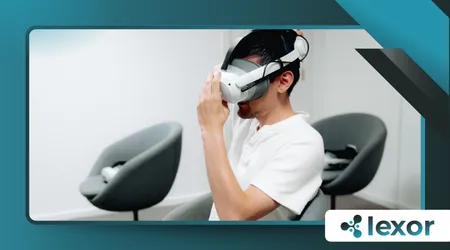
Computational demand remains the primary bottleneck for high-fidelity immersion.
By using eye-tracking analytics, developers have finally weaponized a biological shortcut known as foveated rendering to save processing cycles.
This process concentrates maximum graphical resolution only on the fovea—the tiny center of the retina—where our vision is sharpest.
Peripheral zones are rendered at lower quality, which drastically reduces the immediate GPU workload.
By optimizing resources this way, headsets achieve frame rates that were previously impossible on mobile hardware.
This efficiency is the hidden backbone of standalone devices, balancing long battery life with uncompromising visual fidelity.
Why Are Healthcare Providers Adopting Gaze Analytics?
In surgical and therapeutic settings, precision is the only metric that matters.
++Smart home automation powered by on-device LLMs
Surgeons are now using eye-tracking analytics to refine high-stakes maneuvers, identifying exactly where a student’s focus falters during a simulated crisis.
Gaze data often reveals what the conscious mind hasn’t yet processed.
It helps identify early markers of Parkinson’s or Alzheimer’s by monitoring saccadic movements—tiny, involuntary jitters that offer a window into neurological health.
Rehabilitation programs use these metrics to quantify a patient’s recovery curve. ]
Read more: Virtual reality applications in predictive medical simulation
Seeing how a patient interacts with visual stimuli allows for personalized therapy adjustments that move beyond guesswork and accelerate actual healing.
Comparison of Eye-Tracking Integration Across Sectors (2026 Data)
| Industry | Primary Use Case | Key Benefit | Adoption Rate |
| Retail | Consumer Research | Attention Heatmapping | High |
| Healthcare | Diagnostics | Neurological Assessment | Medium-High |
| Education | Training Labs | Skill Proficiency Tracking | Medium |
| Gaming | Social Interaction | Natural Avatars & Aiming | Very High |
What Are the Benefits for Marketing and Retail?
Retailers are quietly dismantling traditional consumer research by using eye-tracking analytics in virtual storefronts.
They have realized that what people say in surveys rarely matches where their eyes actually linger.
Brands now track which products survive the “three-second glance” and which are ignored.
++VR for rehabilitation and mental health: how immersive therapies work
They measure the friction between looking at a price tag and examining the packaging, providing objective data for shelf psychology.
This heatmapping capability allows for the creation of hyper-optimized layouts.
Marketing teams can stress-test different store configurations virtually, avoiding the massive costs of physical trial-and-error and stagnant inventory.
Which Training Programs Benefit Most from Gaze Data?
Aviation and defense sectors are consistently using eye-tracking analytics to ensure personnel don’t experience “target fixation” during emergencies.
It proves whether a pilot is actually scanning their instruments or just staring blankly.
When a trainee misses a critical cue, the system records the lapse with undeniable proof. Instructors then review the gaze playback to explain exactly where the visual search pattern broke down during the event.
Explore more: Eye-tracked Virtual Reality: A Comprehensive Survey on Methods and Privacy Challenges
This level of accountability ensures that muscle memory includes disciplined visual habits.
The result is a workforce that isn’t just “trained” in a general sense, but is resilient under intense, high-stakes psychological pressure.
How Do Social VR Platforms Utilize Eye-Tracking?
True social presence is built on the subtle dance of non-verbal cues. Platforms are using eye-tracking analytics to synchronize digital avatars with the user’s actual ocular movements in real-time.
This enables the nuanced communication we take for granted in person, like a lingering look or a knowing wink.
These cues are foundational for building trust in virtual boardrooms, making digital interactions feel far less robotic.
According to research from the Stanford Virtual Human Interaction Lab, these non-verbal signals are the bedrock of psychological safety.
Without them, virtual meetings remain exhausting exercises in misinterpreted intent.
When Should Businesses Invest in Eye-Tracking Hardware?
The decision to adopt this hardware depends on whether your business requires deep, actionable data or just a visual gimmick.
Most enterprise-grade headsets in 2026 now include these sensors as a baseline requirement.
If your roadmap involves user testing, specialized training, or high-end rendering, the window for early adoption is closing.
The cost of entry has stabilized as sensor technology has moved from lab experiments to commodity.
Smaller firms might wait for consumer-level devices to follow suit, but market leaders are already building proprietary datasets.
They are defining the standards of their niches while others are still trying to understand the hardware.
What Are the Privacy Implications of Gaze Tracking?
There is something inherently intimate—and perhaps unsettling—about a device that knows where you are looking before you do.
Companies using eye-tracking analytics must prioritize biometric privacy to maintain any semblance of user trust.
Gaze patterns reveal more than just interest; they can inadvertently leak health data or emotional vulnerability.
Consequently, transparent opt-in policies and local “on-device” data processing have become the only ethical path forward.
Responsible developers implement differential privacy layers to scrub identity from the data.
This protects the individual while allowing the aggregate insights that make the software better, ensuring the tech remains a tool rather than a surveillance state.
Final Perspective
The evolution of immersion is no longer about the pixels we see, but the intent behind how we see them.
By using eye-tracking analytics, we are unlocking a dimension of human-computer interaction that feels faster and more empathetic.
From the precision of a surgical theater to the psychology of a retail aisle, these applications are redefining the “reality” in VR. .
As 2026 unfolds, the integration of gaze data will separate truly transformative platforms from those that are merely toys.
FAQ: Frequently Asked Questions
Does eye-tracking work for people who wear glasses?
Most 2026 headsets feature enough eye relief for glasses. High-end sensors use infrared light, which passes through corrective lenses without significant loss of tracking fidelity or accuracy.
Can gaze analytics detect user fatigue?
Yes, by monitoring blink frequency and microsaccades, software identifies when a user is drifting. This is a vital safety feature in industrial training to prevent burnout-related accidents.
Is foveated rendering noticeable to the user?
When optimized, it is invisible. Our eyes only see high detail at the center of our gaze; the system simply replicates this biological limitation to save energy and processing power.
Is it possible to “cheat” an eye-tracking test?
It is nearly impossible because many ocular movements are involuntary. Natural saccades are extremely difficult to fake, and artificial patterns usually trigger “anomaly” flags in the data analysis.
