
Virtual reality applications in predictive medical simulation
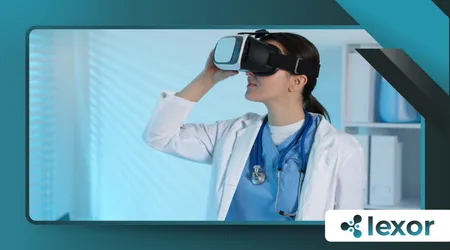
The use of VR applications in predictive medical simulation is currently revolutionizing how healthcare providers anticipate patient outcomes through immersive, data-driven environments and advanced real-time algorithmic processing.
Medicine has long been haunted by the “unforeseen complication,” yet we are finally moving past that era.
Predictive simulation essentially builds a high-stakes rehearsal space, creating a digital twin that mirrors a patient’s specific biological quirks.
By weaving together genomic markers and high-resolution scans, these environments allow a surgeon to fail in private so they can succeed in public.
It is a proactive pivot that transforms surgeons from reactive technicians into prepared strategists.
There is a tactile depth here that traditional imaging simply cannot replicate.
Visualizing how blood turbulence interacts with a specific arterial wall provides a spatial awareness that makes 2D charts feel like ancient history.
Summary of Contents
- The shift from reactive to anticipatory medicine
- Algorithmic engines defining 2026 clinical standards
- Beyond the headset: Surgical intuition vs. digital precision
- Benchmarking performance: A data-driven comparison
- The ethical weight of the digital twin
How Does Predictive Simulation Improve Patient Outcomes?

A predictive model is only as good as the data it breathes. When a surgical team enters a VR space, they aren’t looking at a generic anatomical chart; they are confronting the patient’s actual, messy pathology.
This level of intimacy with the target site leads to a noticeable drop in intraoperative surprises.
We are seeing surgeons report a sense of “déjà vu” during actual procedures, having already navigated the complexities hours earlier.
Personalization is the true victory here. In oncology, for instance, simulating the exact trajectory of radiation against a specific tumor geometry allows for a surgical strike that spares healthy tissue with almost surgical—well, literal—precision.
The software creates a dynamic feedback loop that feels startlingly honest.
++Smart home automation with autonomous decision loops
If a movement is too aggressive, the virtual tissue reacts, forcing the practitioner to refine their technique before a single drop of blood is shed.
Why is AI Integration Essential for Predictive Medical VR?
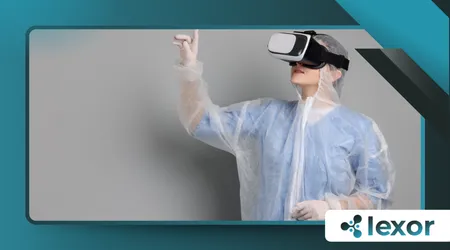
If VR is the eyes of the system, AI is the nervous system.
While the headset provides the view, the algorithms are doing the heavy lifting—calculating fluid dynamics, tissue resistance, and biological variables in real-time.
By 2026, the industry has moved beyond simple 3D models.
We now have machine learning layers that identify likely failure points during a procedure, highlighting them with a subtlety that assists rather than distracts the surgeon.
According to data curated by the National Institutes of Health, this synthesis of spatial computing and deep learning is the primary reason we are seeing a steady decline in post-operative readmissions.
++Virtual reality applications for real-time remote inspections
Without this analytical engine, VR remains a sophisticated toy. With it, it becomes a diagnostic partner, capable of crunching millions of data points to offer a statistical “best path” through a complex surgery.
Which Medical Fields Benefit Most from These Technologies?
Cardiology and neurosurgery have naturally claimed the spotlight.
In spaces where a millimeter is the difference between recovery and catastrophe, the predictive nature of these virtual maps is nothing short of a requirement.
Orthopedics is also seeing a quiet revolution. We are now modeling how a prosthetic joint will settle into a specific bone density over a decade, rather than just checking if it fits the socket on day one.
In the chaotic theater of emergency medicine, predictive VR is used to simulate the “black swan” events.
It forces teams to manage resources under simulated stress, predicting where bottlenecks in patient care will likely occur.
++VR for rehabilitation and mental health: how immersive therapies work
Pediatric surgery offers perhaps the most emotional use case.
Scaling a neonatal heart to the size of a basketball allows surgeons to master delicate repairs that would otherwise be nearly impossible to visualize clearly.
Comparative Analysis: Traditional Training vs. Predictive VR
The data from the last two years reveals a widening gap between those using static models and those leveraging predictive environments. The following figures reflect 2026 institutional benchmarks.
| Metric | Traditional Simulation | Predictive VR (2026) | Impact Level |
| Procedural Accuracy | 78% | 94% | High |
| Pre-operative Planning Time | 120 Minutes | 45 Minutes | Efficient |
| Complication Rates | Standard Baseline | 22% Reduction | Significant |
| Data Integration | Manual/Static | Automated/Dynamic | Transformative |
| Learning Curve | 15 – 20 Repetitions | 5 – 8 Repetitions | Rapid |
What Are the Technical Requirements for Medical Simulation?
Predictive accuracy demands a brutal amount of processing power.
To make a simulation believable, the hardware must synchronize eye-tracking, haptic feedback, and complex physics without a millisecond of perceptible lag.
Haptics are the unsung hero of this equation. A surgeon needs to “feel” the difference between a healthy vessel and a calcified one; if the digital resistance is off, the muscle memory developed becomes a liability.
++A model for predicting the GEARS score from virtual reality surgical simulator metrics
The heavy lifting is increasingly moving to the cloud.
By offloading the massive computational requirements of predictive modeling, we can finally use headsets that don’t cause neck strain during a three-hour planning session.
Security, however, is the elephant in the room.
As we feed more intimate biometric data into these systems, the pipelines must be armored with encryption that satisfies both medical ethics and stringent global privacy laws.
When Should Hospitals Invest in Predictive VR Infrastructure?
The window for “early adoption” has effectively closed; we are now in the era of standard implementation. For trauma centers, waiting any longer risks a significant gap in the quality of specialized care provided.
Building a local data library is a long-term play. The more simulations a hospital runs, the more its specific AI models learn about the local population’s health trends, making the predictions sharper over time.
There is also the matter of talent. The next generation of specialists is being trained in virtual environments; hospitals that stick to 2D planning will find themselves struggling to recruit top-tier surgical talent.
Integration is the keyword. Rather than buying a standalone “VR gadget,” institutions must look for platforms that shake hands with existing Electronic Health Records, ensuring the simulation is fed by the patient’s full history.
Challenges and Ethical Considerations in Medical VR
There is a subtle danger in over-reliance. If a surgeon trusts the predictive model too much, they might lose that sharp, instinctive edge required when a biological system does something the algorithm didn’t expect.
Bias in data is another ghost in the machine. If the underlying models are trained on narrow demographics, the “predictions” might lose their edge when applied to a diverse patient base, creating a new form of clinical inequality.
We also have to consider the patient’s perspective. There is something inherently strange about having a “digital double” operated on first, and the industry must ensure that informed consent evolves alongside the technology.
Despite these growing pains, the direction of travel is certain. The focus is shifting toward a radical transparency where the “black box” of the human body is finally becoming a bit more translucent for those tasked with fixing it.
FAQ: Predictive Medical Simulation
How accurate are predictive simulations in 2026?
Current systems are hitting the 90% accuracy mark. They achieve this by layering real-time biometric data over physics engines that account for everything from blood viscosity to specific tissue elasticity.
Can VR replace traditional cadaver labs?
It is less about replacement and more about evolution. While cadavers offer biological reality, VR offers a “redo” button and the ability to practice on a living, breathing patient’s specific anatomy.
Is patient data safe within these VR platforms?
Standard protocols now involve local edge computing or highly encrypted cloud pipelines. Most systems anonymize the patient’s identity, leaving only the anatomical and physiological data necessary for the simulation engine.
How long does it take to create a patient digital twin?
The workflow has been streamlined significantly. In most modern facilities, a standard set of DICOM files can be converted into a functional, predictive VR model in roughly thirty minutes.
Does insurance cover surgeries planned with VR?
We are seeing a shift here. Because predictive planning reduces theater time and the likelihood of expensive post-op complications, many insurers are beginning to incentivize—or even mandate—VR planning for high-risk cases.
