
Smart home automation with autonomous decision loops
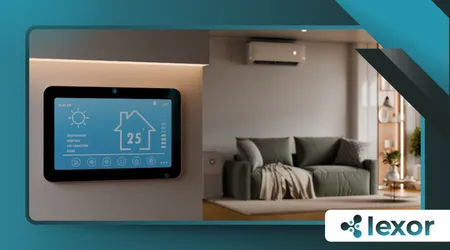
The integration of autonomous decision loops transforms a house from a reactive space into a proactive ecosystem capable of independent logic and real-time execution.
Unlike traditional automation, which relies on rigid “if-this-then-that” protocols, these loops utilize continuous sensory feedback to refine their behavior based on environmental changes.
Modern systems in 2026 prioritize intent recognition over simple motion detection.
By processing data locally, your home understands that a person sitting still in a chair requires different lighting than a vacant room.
This shift ensures that technology serves the inhabitant invisibly, reducing the “cognitive load” of managing dozens of different smart device applications.
True autonomy means the system learns from your deviations.
If you manually override a thermostat setting three days in a row, the autonomous decision loops update their internal model to reflect your new preference.
This self-correcting nature is what separates contemporary AI-driven homes from the primitive automation seen in the early 2020s.
Table of Contents
- Defining Autonomous Intelligence in 2026
- How Autonomous Decision Loops Function
- The Role of Edge Computing and AI
- Comparative Analysis: Static vs. Autonomous Systems
- Security and Privacy Frameworks
- The Future of Domestic Energy Efficiency
- Frequently Asked Questions
How Does the OODA Loop Apply to Modern Home Systems?
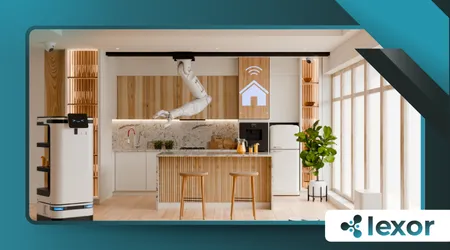
The technical foundation of these systems often mirrors the Observe-Orient-Decide-Act (OODA) cycle.
Sensors observe the environment, software orients the data against historical habits, the AI decides on an optimal action, and the hardware acts.
Effective autonomous decision loops require high-fidelity data to function correctly.
This involves a mesh network of air quality monitors, light sensors, and presence detectors working in unison to provide a holistic view.
Without precise “Observation,” the subsequent “Decision” phase fails to meet the actual requirements of the household.
Integration with Matter 1.4 and beyond has standardized how these devices communicate.
This interoperability allows a blinds controller from one brand to feed data into a HVAC system from another.
++Digital Portfolios for Preschoolers: How Schools Are Using Data Instead of Grades
Such synergy is vital for maintaining autonomous decision loops that manage complex variables like thermal gain and electricity pricing simultaneously.
Why are Autonomous Decision Loops Essential for Energy Savings?
Static schedules are inherently inefficient because they cannot account for the volatility of weather or fluctuating utility prices.
Systems utilizing autonomous decision loops analyze real-time energy markets to shift heavy appliance usage to periods of high renewable penetration.
By monitoring the specific thermal mass of a building, the AI predicts how long a room will stay cool. It then calculates whether to engage the AC now or wait for a predicted breeze.
These micro-decisions, repeated thousands of times, result in significant carbon footprint reductions and lower monthly utility bills.
++Voice-free smart home automation with scene logic
For a deeper look at global standards, the International Energy Agency provides extensive documentation on how smart grids rely on residential autonomy to balance national loads.
This macro-level integration proves that your home’s autonomous decision loops are part of a much larger, sustainable infrastructure.
Performance Comparison: Traditional vs. Autonomous Systems
| Feature | Traditional Automation | Autonomous Decision Loops (2026) |
| Logic Source | User-defined rules | Real-time machine learning |
| Adaptability | None (requires manual update) | Self-adjusting based on behavior |
| Hardware Focus | Cloud-dependent hubs | Local Edge Computing AI |
| Energy Impact | Estimated scheduling | Dynamic load shedding |
| User Interaction | Voice commands/Apps | Invisible/Passive interaction |
Which Technologies Power Local Intelligence and Privacy?
Privacy concerns have led to the rise of “Edge AI,” where the autonomous decision loops process all sensitive data within the home’s local network.
This architecture ensures that video feeds or occupancy patterns never leave the premises, satisfying strict data sovereignty requirements.
Powerful Neural Processing Units (NPUs) are now standard in high-end smart hubs. These chips allow for complex pattern recognition without the latency issues associated with cloud processing.
++How Matter 1.3 Is Changing Multi-Brand Smart Home Integrations
Consequently, your autonomous decision loops react in milliseconds, providing a seamless experience that feels natural rather than delayed or stuttered.
Reliability is the secondary benefit of this localized approach. Even if the external internet connection fails, the internal logic remains intact.
Your home continues to manage its climate and security because the autonomous decision loops are hosted on hardware physically located inside your pantry or equipment closet.
When Should Homeowners Upgrade to Fully Autonomous Systems?
The transition is most effective when upgrading core infrastructure like HVAC, lighting, or security.
Modernizing these pillars allows the autonomous decision loops to have the greatest impact on daily comfort and operational costs for the average household.
If you find yourself constantly adjusting “Smart” settings via an app, your current system is likely outdated.
The goal of 2026 technology is to remove the interface entirely. Moving to autonomous decision loops is the logical step for anyone seeking a home that truly manages itself.
Investing in Matter-certified hardware ensures that your ecosystem remains future-proof. As new AI models emerge, they can be deployed across your existing devices.
This scalability ensures that your autonomous decision loops grow more intelligent as software evolves, protecting your initial financial investment in the hardware.
Conclusion
The evolution of the smart home has reached a point where human intervention is becoming the exception rather than the rule.
By leveraging autonomous decision loops, we create environments that are not only more comfortable but also significantly more responsible in their resource consumption.
This technology represents the peak of domestic engineering, blending high-end data science with the simple desire for a peaceful, well-managed home.
As we move further into 2026, the distinction between “smart” and “autonomous” will only widen.
Embracing these systems today means preparing for a future where your home is a silent partner in your well-being.
To stay updated on the technical specifications of these evolving protocols, you can monitor the Connectivity Standards Alliance website for the latest industry benchmarks.
FAQ: Understanding Autonomous Home Logic
What happens if the AI makes a wrong decision?
Most systems include a “Manual Override” that temporarily pauses the autonomous decision loops. The AI then analyzes why the override occurred and adjusts its future logic to prevent repeating the same error.
Do these systems work with older “Smart” devices?
Compatibility depends on whether the older device supports universal protocols like Matter or Zigbee. If the device can provide data to the hub, it can usually be integrated into the broader autonomous decision loops.
Is a constant internet connection required for autonomy?
No, the most advanced systems in 2026 perform all critical logic locally. While internet is needed for remote updates or external data (like weather), the core autonomous decision loops function entirely offline.
How much energy can an autonomous home really save?
Documented cases show that homes using active autonomous decision loops for climate and lighting can reduce energy waste by 25% to 40%. This is achieved through precision cooling and predictive lighting.
