
Smart home automation powered by on-device LLMs
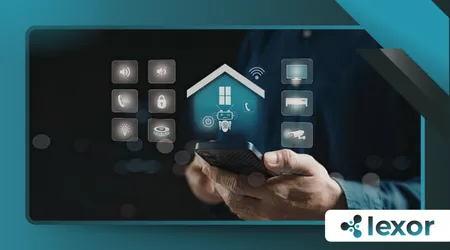
The integration of on-device LLMs represents the most significant shift in domestic technology since the invention of Wi-Fi, moving logic from the cloud directly into our living spaces.
This evolution ensures that your home remains intelligent, private, and functional even without an active internet connection.
Summary of Insights
- Definition of local AI processing in modern homes.
- Technical advantages of edge computing over cloud reliance.
- Privacy benchmarks and data security improvements.
- Hardware requirements for running local models.
- Future trends in autonomous domestic ecosystems.
What is the role of on-device LLMs in smart home evolution?
The transition toward on-device LLMs allows smart hubs to process complex natural language commands locally, eliminating the latency typically associated with sending voice data to remote server farms.
This architecture transforms a simple voice assistant into a sophisticated reasoning engine capable of understanding nuanced context.
Local models function as the “brain” of the house, interpreting intent rather than just matching keywords.
By hosting the Large Language Model on a local NPU (Neural Processing Unit), the system handles sensitive acoustic data without it ever leaving the four walls of your property.
Modern smart homes now prioritize autonomy, where the house learns user habits through localized patterns.
This shift reduces bandwidth costs and provides a seamless user experience that feels instantaneous, creating a truly responsive environment that respects user boundaries and digital sovereignty.
How does local AI improve home privacy and security?
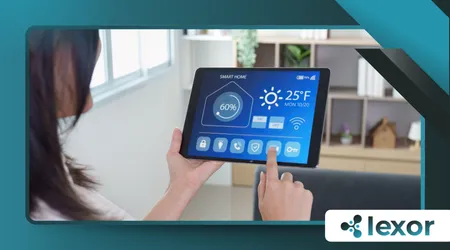
Privacy concerns have historically hindered the adoption of smart devices, but on-device LLMs solve this by keeping personal interactions strictly offline.
When data stays on your local hardware, the risk of massive cloud breaches affecting your daily life vanishes.
++Gesture-Based Learning Systems for Toddlers: Teaching Without Touchscreens
Encryption is inherently stronger when the attack surface is limited to a physical device rather than a global network.
Users no longer need to trust a third-party corporation to manage their most intimate conversations or routine schedules, as the intelligence resides within the silicon.
Furthermore, these systems mitigate the “always-listening” stigma by ensuring that trigger word detection and subsequent processing happen in a closed loop.
Security is no longer a feature added to the cloud; it is the foundational architecture of the hardware itself.
Why is low latency critical for automated environments?
Speed is the cornerstone of a natural human-machine interface, and on-device LLMs provide the millisecond response times required for fluid interaction.
Waiting three seconds for a light to turn on is a failure of modern engineering.
By removing the “round-trip” to the cloud, local execution allows for complex automation chains to trigger immediately.
++How to Use Home Assistant’s Voice (2025 Edition) to Replace Alexa and Google Home
If a sensor detects smoke, the AI can reason through the best exit strategy and alert the family without waiting for a server response.
This reliability is particularly vital for safety-critical applications like elderly care monitoring or leak detection.
High-speed local processing ensures that the home acts as a protective shield, responding to emergencies with the urgency that digital life demands in 2026.
Which hardware enables running on-device LLMs today?
Running high-parameter models requires specialized chips, and the rise of dedicated AI accelerators has made on-device LLMs accessible for consumer-grade smart hubs.
Read more: Voice-free smart home automation with scene logic
Current industry leaders are integrating powerful Tensor cores into routers and central home controllers.
| Component | Minimum Requirement | Recommended (2026) | Purpose |
| NPU Performance | 10 TOPS | 45+ TOPS | Real-time inference |
| Unified Memory | 8GB RAM | 16GB+ RAM | Model weight storage |
| Model Type | Quantized 3B | Finetuned 7B/14B | Reasoning quality |
| Connectivity | Matter 1.3 / Thread | Matter 1.4+ | Device interoperability |
These specifications allow for the deployment of “Small Language Models” (SLMs) that are specifically fine-tuned for home automation tasks.
Companies like NVIDIA and Qualcomm provide the Jetson and Snapdragon platforms that serve as the backbone for these intelligent local nodes.
What are the energy efficiency benefits of edge AI?
While training a model consumes vast amounts of power, performing inference via on-device LLMs is surprisingly efficient compared to the cumulative energy cost of global data centers.
Local processing optimizes the power-to-performance ratio for specific home tasks.
Smart homes utilizing local AI can manage their own energy grids more effectively by analyzing usage patterns in real-time.
The AI balances solar storage, EV charging, and appliance cycles locally, significantly reducing the carbon footprint of the modern household.
This localized intelligence also extends the battery life of peripheral sensors.
Instead of constantly transmitting raw data to the hub, sensors can use simple logic while the main hub handles the heavy lifting of linguistic interpretation.
How do on-device LLMs integrate with Matter and Thread?
Interoperability is the “Holy Grail” of smart homes, and on-device LLMs act as the universal translator for various protocols like Matter and Thread.
They bridge the gap between different manufacturer ecosystems without requiring proprietary cloud bridges.
A local AI can read the technical documentation of a new device and integrate it into the existing mesh network automatically.
This removes the frustration of “wall gardens,” allowing users to mix and match hardware from any reputable brand.
The combination of a unified protocol and a local reasoning engine creates a plug-and-play experience.
You simply tell your house to “add the new lamp to the reading scene,” and the LLM handles the backend configuration and logic.
When will cloud-independent smart homes become the standard?
The industry reached a tipping point in late 2025, making on-device LLMs the expected standard for premium home installations.
As the cost of NPU-integrated chips continues to drop, even budget-friendly hubs are adopting local-first architectures.
Widespread adoption is driven by the consumer demand for “resilient tech” that functions during internet outages.
A home that cannot unlock its front door or adjust the thermostat because the ISP is down is no longer acceptable to the modern buyer.
By 2027, the “Cloud-First” model will likely be relegated to low-end legacy devices.
The market is moving toward a decentralized future where every home is its own private, intelligent data center, capable of self-management and proactive maintenance.
The Future of Living with Local Intelligence
Embracing on-device LLMs is not just about faster voice commands; it is about reclaiming the digital hearth.
It represents a move away from the “Surveillance Capitalism” model toward a “Service Architecture” that prioritizes the user over the data harvester.
As we look toward the next decade, the sophistication of these local models will only grow.
They will transition from reactive assistants to proactive companions that manage our environments with an incredible degree of nuance, empathy, and technical precision.
The ultimate goal of smart home technology is to become invisible. ,
With local AI, the technology disappears into the background, leaving only the comfort, safety, and efficiency of a home that truly understands its inhabitants without ever compromising their privacy.
FAQ: Understanding Local Smart Home AI
Can I run on-device LLMs on my old smart hub?
Most legacy hubs lack the NPU (Neural Processing Unit) required for real-time AI. You likely need a 2025 or newer “Pro” hub specifically designed for local AI inference.
Does a local LLM require a constant internet connection?
No, the primary benefit is that it functions entirely offline. You only need internet for occasional firmware updates or to access remote services like weather forecasts and news.
Which brands are currently leading in local AI?
Companies focusing on privacy-centric hardware, such as Apple, Home Assistant (with Yellow/Amber), and certain specialized high-end integrators, are currently leading the charge in local-first AI development.
