
How Computer Vision Tracks Fine Motor Skill Development in Preschool Children
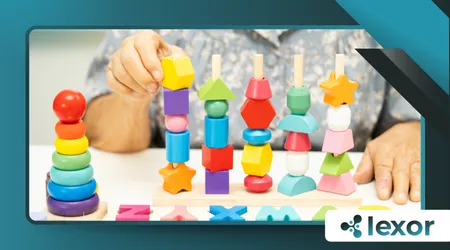
Computer Vision Tracks Fine Motor Skill Development in preschool children by utilizing advanced algorithms that analyze hand movements, grip strength, and spatial coordination during play.
The integration of artificial intelligence into classrooms has moved beyond simple software to sophisticated sensory systems that understand human physical behavior through cameras.
At its core, this technology uses high-speed image processing to identify and track specific anatomical markers on a child’s hand without physical sensors.
Summary
- Defining Computer Vision in Early Education
- How AI Analyzes Dexterity in Real-Time
- The Role of Benchmarks in Pediatric Growth
- Data Integration for Educators and Parents
- Comparison of Traditional vs. AI Methods
- Future Trends in Educational Assistive Tech
What is Computer Vision in the Context of Early Childhood Education?
By capturing video data at high frame rates, Computer Vision Tracks Fine Motor Skill Development through the identification of phalangeal joints and wrist rotation.
This non-invasive approach allows children to engage in natural activities like drawing or block building while the system gathers objective data.
Unlike manual observation, these systems provide a granular view of progress, detecting micro-movements that the human eye might miss during a busy classroom session.
++Aging in Place: Smart Home Automations Designed for Elderly Safety and Independence
This precision ensures that every subtle milestone in a child’s manual dexterity is documented accurately for future review.
How Does Computer Vision Identify Developmental Delays?
Automated systems function by comparing a child’s current movement patterns against large datasets of age-appropriate motor milestones.
When Computer Vision Tracks Fine Motor Skill Development, it identifies deviations in speed, precision, and the fluidity of pincer grasp movements.
Early identification is crucial because fine motor skills are deeply linked to cognitive growth and future academic success in writing and mathematics.
AI models are trained to recognize the specific “tremors” or “hesitations” that might indicate a need for occupational therapy intervention.
++Building a Hybrid Classroom for Preschoolers: Best Tech Setups for Ages Under 6
These platforms utilize Deep Learning architectures, specifically Convolutional Neural Networks (CNNs), to map 21 distinct points on the human hand.
This mapping allows the software to calculate the exact angle of a pencil or the pressure applied to a physical object.
Research published by the National Center for Biotechnology Information (NCBI) highlights how skeletal tracking algorithms have reached over 95% accuracy in clinical pediatric assessments.
This level of reliability transforms the classroom into a sophisticated diagnostic environment.
Why is Automated Tracking More Effective Than Manual Observation?
Traditional assessment methods rely heavily on periodic check-ins by teachers or specialists, which are often subjective and limited by time constraints.
When Computer Vision Tracks Fine Motor Skill Development, the data collection is continuous, longitudinal, and entirely free from human bias.
++Smart Toys vs Traditional Play: What’s the Right Mix for Young Learners?
Manual reports often suffer from “snapshot bias,” where a child might perform poorly simply because they are tired or distracted on assessment day.
In contrast, AI monitors progress over weeks, providing a holistic view of the child’s true capabilities.
Furthermore, educators are often overwhelmed by administrative tasks, leaving little time for detailed physical observation of every student.
Automating this process frees up teachers to focus on personalized instruction while the system generates comprehensive reports in the background.
What are the Key Metrics Analyzed by AI Systems?
To understand how Computer Vision Tracks Fine Motor Skill Development, we must look at the specific variables the software measures during a session.
++Detecting Children’s Fine Motor Skill Development using Machine Learning
These metrics provide a multidimensional view of a child’s physical and neurological maturity.
| Metric Measured | Description of Analysis | Developmental Significance |
| Pincer Grasp Precision | Distance between thumb and index finger. | Essential for writing and tool use. |
| Movement Velocity | Speed of hand transit between two points. | Indicates neurological processing speed. |
| Path Smoothness | Curvature and jitter in a reaching motion. | Signifies muscular control and intent. |
| Bilateral Coordination | Synchronized use of both hands together. | Critical for complex tasks like cutting. |
| Persistence Time | Duration of focus on a manual task. | Links physical skill to cognitive stamina. |
Which Tools are Currently Leading This Technological Shift?
Current market leaders are developing “edge-computing” devices that process data locally to ensure the highest standards of student privacy and security.
These devices often integrate with existing classroom tablets or smartboards to provide a seamless user experience.
When Computer Vision Tracks Fine Motor Skill Development, it often uses depth-sensing cameras like LiDAR to create 3D maps of the environment.
This prevents errors caused by lighting changes or overlapping objects, ensuring that the data remains consistent and reliable.
Companies are now focusing on “gamified” assessments, where the computer vision system monitors a child playing a digital-physical hybrid game.
This ensures the child remains engaged, providing better data than a sterile, formal testing environment would ever allow.
When Should Schools Implement Vision-Based Monitoring?
The ideal window for monitoring fine motor skills is between the ages of three and five, a period of rapid neurological pruning.
Implementing these systems early allows for interventions that can significantly alter a child’s long-term educational trajectory and confidence.
As Computer Vision Tracks Fine Motor Skill Development, it creates a “digital twin” of the child’s progress, which can be shared with pediatricians.
This collaborative approach ensures that medical and educational professionals are aligned in their support strategies for the student.
The scalability of these systems makes them particularly valuable for large school districts where specialist resources are spread thin.
By flagging only the children who show actual signs of struggle, schools can allocate their human resources more effectively.
Conclusion
The evolution of classroom technology has reached a point where we no longer need to guess about a child’s physical progress.
Because Computer Vision Tracks Fine Motor Skill Development with such high precision, we can now provide every child with a tailored developmental roadmap.
This technology represents a shift toward proactive rather than reactive education, ensuring that no student falls through the cracks due to missed observations.
As these AI systems become more affordable, they will likely become a standard fixture in every modern preschool.
By embracing these advanced tools, we empower educators, reassure parents, and most importantly, provide children with the specific support they need to thrive.
The future of early education is not just digital; it is observant, intelligent, and deeply attuned to human growth.
FAQ (Frequently Asked Questions)
Is the data collected by these systems private?
Yes, most modern systems use “on-device” processing, meaning images are converted into numerical data points and the original video is immediately deleted.
Does the child need to wear any special equipment?
No, the beauty of computer vision is that it is completely markerless; the child simply plays with standard toys while the camera observes.
Can this replace an occupational therapist?
No, the system is a screening and monitoring tool designed to provide therapists with better data, not to replace their professional clinical judgment.
How expensive is it to implement in a standard classroom?
While initial costs were high, the shift toward using standard tablet cameras and cloud-based processing has made this technology increasingly accessible for public schools.
Does it work for children with physical disabilities?
Yes, the AI can be calibrated to track progress based on a child’s unique baseline, making it an excellent tool for inclusive education.
