
Digital Storytelling Through Voice Assistants: How Kids Create Narratives Using Only Speech

Digital Storytelling Through Voice Assistants is transforming how the youngest generation interacts with technology, shifting the focus from passive screen consumption to active, imaginative oral composition.
Summary
- Defining the shift from screens to voice-driven narratives.
- The cognitive mechanics of how children build oral stories.
- Privacy standards and educational frameworks for AI integration.
- Data comparison of leading voice platforms for early literacy.
- Practical strategies for fostering creativity through speech.
What is Digital Storytelling Through Voice Assistants?
Modern education now embraces Digital Storytelling Through Voice Assistants as a bridge between traditional oral traditions and high-tech interaction, allowing kids to lead the creative process.
Unlike apps requiring fine motor skills for typing, voice interfaces remove physical barriers, enabling children to dictate plots, summon sound effects, and choose narrative paths instantly.
This medium leverages Natural Language Processing (NLP) to interpret a child’s intent, turning simple spoken commands into complex, branching adventures that exist entirely within the auditory realm.
++Automating EV Charging at Home Using Weather, Demand Rates and Solar Forecasts
By focusing on speech, these tools prioritize linguistic development over visual stimulation, encouraging children to visualize characters and settings internally rather than relying on pre-rendered graphics.
How Does Voice Interaction Enhance Early Literacy?
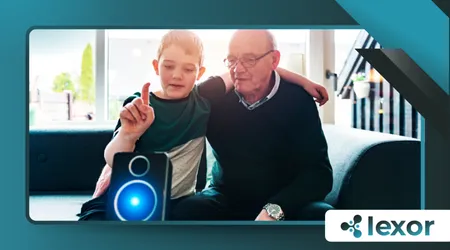
When children engage in Digital Storytelling Through Voice Assistants, they practice phonemic awareness and syntax without the frustration of handwriting, which often lags behind their cognitive abilities.
Vocalizing a story requires organizing thoughts logically, ensuring that a beginning, middle, and end are established so the AI can respond accurately to the user’s creative input.
++How Wearable Sensors Detect Early Learning Struggles (Attention, Motor Skills, Memory)
Research indicates that auditory feedback loops help children identify grammatical errors naturally, as hearing their own words repeated by a device highlights inconsistencies in their narrative structure.
Furthermore, this technology supports inclusive learning for neurodivergent students who may struggle with traditional literacy but possess rich, complex vocabularies that they can express through verbalization.
Why Is Speech-Based Creativity Better Than Screen Time?
Moving toward Digital Storytelling Through Voice Assistants reduces the “zombie effect” of passive viewing, as kids must remain mentally present to drive the story forward via speech.
Voice-only interactions prevent the sensory overload often associated with bright blue light and rapid visual transitions, fostering a calmer environment conducive to deep thinking and long-term memory.
++Using Voice Assistants in the Early Childhood Classroom
Children using voice tech tend to use more descriptive adjectives because they realize the assistant requires specific details to “understand” the world they are attempting to build.
According to current educational psychology, active participation in story creation strengthens the prefrontal cortex, helping kids develop better executive function skills compared to those watching static video content.
Which Platforms Lead in Safe Kids’ Voice Narratives?
The landscape for Digital Storytelling Through Voice Assistants includes specialized tools like Amazon’s “Explore with Alexa” and Google’s “Talk to PBS Kids,” designed specifically for younger audiences.
These platforms utilize kid-safe filters to ensure that the AI remains within age-appropriate thematic boundaries while providing prompts that encourage children to expand their vocabulary and logic.
For more information on how technology impacts childhood development, the American Academy of Pediatrics provides extensive guidelines on balancing digital tools with healthy growth.
Choosing the right platform involves looking for COPPA-compliant software that prioritizes user privacy, ensuring that a child’s creative recordings are never used for unauthorized data profiling.
Comparative Data: Leading Voice Narratives for Kids (2025)
| Platform | Core Narrative Feature | Educational Focus | Primary Privacy Layer |
| Alexa Kids | Story Explorer | Vocabulary Building | Parent Dashboard Control |
| Google Kids Space | Interactive Folk Tales | Cultural Literacy | Family Link Integration |
| Bamboo Learning | Narrative Challenges | Listening Comprehension | Voice ID Recognition |
| Novel Effect | Soundscape Integration | Reading Aloud | Non-Cloud Storage Options |
When Should Educators Introduce Voice AI in Classrooms?
Integrating Digital Storytelling Through Voice Assistants works best during the transitional years between ages five and eight, when language acquisition is peaking but writing skills are still developing.
Teachers can use these tools to facilitate collaborative “circle time” stories, where each student adds a spoken sentence to a collective digital tale managed by the AI.
This timing aligns with the development of social-emotional skills, as kids learn to take turns and listen to how others influence the direction of a shared digital story.
Starting early helps demystify artificial intelligence, teaching children that technology is a tool for human expression rather than a replacement for their own unique thoughts and creative agency.
What Are the Privacy Risks for Young Storytellers?
While Digital Storytelling Through Voice Assistants offers immense benefits, parents must remain vigilant about “always-on” microphones and how audio data is stored by large tech corporations.
The most secure systems process speech locally on the device, minimizing the amount of personal information transmitted to the cloud and reducing the risk of data breaches.
Responsible use involves teaching children to recognize when a device is listening, helping them understand the boundaries between private home life and digital interaction from an early age.
Transparent companies now offer “delete on command” features, allowing users to wipe their interaction history instantly, which is a vital component of modern digital citizenship and safety.
How to Optimize Home Environments for Voice Stories?
To maximize the impact of Digital Storytelling Through Voice Assistants, families should create a dedicated “story corner” free from background noise that might confuse the device’s voice recognition.
Encouraging children to use props or drawings while they speak helps bridge the gap between the digital voice and the physical world, making the narrative experience more multi-sensory.
Parents should participate by asking the child to explain why they made certain narrative choices, turning a solo tech activity into a meaningful conversation about logic and ethics.
Setting clear time limits ensures that voice-assisted play remains a special part of the day, preventing it from becoming a constant background presence that disrupts normal social interaction.
The Future of Narrative: Generative AI and Speech
The next phase of Digital Storytelling Through Voice Assistants involves generative AI that can create unique, real-time responses based on a child’s specific interests and previous storytelling history.
Soon, these assistants will remember a child’s recurring characters, allowing for multi-day story arcs that evolve as the child grows, providing a truly personalized educational companion for literacy.
We are seeing a shift toward “Ambient Storytelling,” where the physical environment—like smart lights—changes color to match the mood of the story the child is currently narrating.
As these systems become more sophisticated, the focus remains on ensuring the human child stays the “author,” using the AI only as a brush to paint their verbal ideas.
Conclusion
The rise of Digital Storytelling Through Voice Assistants represents a significant milestone in early childhood education, prioritizing the power of the human voice over the glow of a screen.
By empowering children to become creators rather than consumers, we foster a generation of thinkers who view technology as a collaborative partner in their own imaginative journeys.
As we move through 2025, the balance of safety, creativity, and technical literacy will continue to define how these vocal tools shape the minds of future leaders and writers.
For further exploration into the intersection of technology and early learning, visit the Joan Ganz Cooney Center for independent research on digital media for children.
FAQ (Frequently Asked Questions)
Is voice storytelling better than reading physical books?
It is not a replacement but a complement; physical books build visual literacy, while voice storytelling enhances oral composition, listening skills, and imaginative visualization without external cues.
Does the AI store my child’s voice permanently?
Most reputable platforms allow parents to manage data settings and delete recordings, but it is essential to check the specific privacy policy of each device or application used.
Can voice assistants help children with speech delays?
Yes, many speech therapists use these tools to encourage vocalization and clarity, as the device provides immediate, non-judgmental feedback when the child is understood correctly.
What age is appropriate for voice-driven storytelling?
Most experts suggest starting around age four or five, once the child has a basic grasp of sentence structure and can follow simple multi-step instructions.
Do I need a smart speaker for this?
While smart speakers are common, many of these interactive storytelling experiences are also available via smartphone apps and tablets that utilize the built-in microphone for input.
