
AI-Generated VR Worlds: How LLMs and Procedural Tools Build Immersive Scenes Automatically
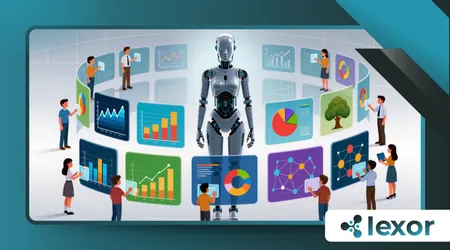
AI-Generated VR Worlds represent the most significant shift in digital architecture since the invention of real-time rendering engines like Unreal Engine and Unity.
This technological leap merges Large Language Models with advanced procedural systems to automate spatial creation.
Summary
- Defining the Synergy: Understanding how LLMs and procedural tools collaborate.
- The Technical Engine: Exploring the mechanics of automated scene generation.
- Economic Impact: How AI reduces development costs and deployment timelines.
- Future Horizons: The 2025 landscape of persistent, AI-driven virtual environments.
What is the Role of LLMs in Designing AI-Generated VR Worlds?
Traditional world-building requires thousands of manual hours, where artists meticulously place every polygon and texture.
Today, AI-Generated VR Worlds leverage Large Language Models to interpret complex natural language descriptions into structured 3D metadata.
LLMs act as the cognitive layer, translating a prompt like “a rainy neo-noir city” into specific environmental parameters.
These models don’t just write text; they generate JSON files or Python scripts that interface directly with game engines.
++Building a Hybrid Classroom for Preschoolers: Best Tech Setups for Ages Under 6
By interpreting spatial logic, LLMs ensure that generated rooms have doors and gravity functions correctly.
This semantic understanding prevents the chaotic, nonsensical structures often seen in earlier iterations of automated design.
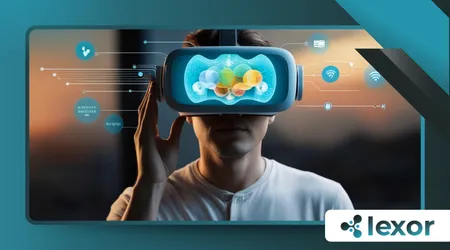
How Does Procedural Generation Power Immersive Environments?
While LLMs provide the blueprint, procedural generation tools act as the construction crew.
These algorithms use mathematical rules to create vast, detailed landscapes that would be impossible to build by hand.
In AI-Generated VR Worlds, procedural systems handle the “noise” of reality, such as the placement of pebbles or the fractal branching of trees. This ensures that every square meter of a world feels unique.
++Using VR Twins in Architecture: How Designers Validate Projects Before Construction
Modern tools like SideFX Houdini now integrate with AI to refine these outputs.
This combination allows for infinite variability, meaning two users might explore the same coordinates but experience slightly different atmospheric details.
Why is the Integration of Neural Radiance Fields (NeRFs) Essential?
One of the most authentic breakthroughs in 2025 is the use of Neural Radiance Fields. NeRFs allow developers to turn 2D photographs into high-fidelity, 3D volumetric scenes with realistic lighting.
When building AI-Generated VR Worlds, NeRF technology bridges the gap between synthetic assets and photographic reality.
It allows for the rapid digitization of real-world locations with unparalleled visual accuracy.
++Virtual Reality in Hospitality: Enhancing Guest Experiences
This shift toward Neural Rendering has revolutionized industries beyond gaming.
Real estate, historical preservation, and remote tourism now rely on these hyper-realistic, AI-driven reconstructions for professional VR applications.
What Are the Current Hardware Requirements for AI VR?
Processing AI-Generated VR Worlds in real-time demands significant computational power, often split between local GPUs and cloud-based clusters. This hybrid approach ensures low latency for the user.
Most modern headsets, such as the Meta Quest 3S or Apple Vision Pro, utilize foveated rendering.
This technique prioritizes processing power only where the user is looking, allowing for denser AI-driven environments.
2025 VR Development Metrics
| Feature | Manual Development (2020) | AI-Augmented Development (2025) | Impact |
| Asset Creation Time | 40+ Hours per Hero Asset | < 2 Hours via Generative AI | 95% Time Reduction |
| World Scale | Limited by Manual Labor | Theoretically Infinite | Boundless Exploration |
| Texture Resolution | Fixed at Export | Dynamic AI Upscaling | Consistent 8K Visuals |
| NPC Logic | Scripted Decision Trees | LLM-Driven Personalities | Emergent Gameplay |
Which Industries Benefit Most from Automated Scene Generation?
The medical sector uses AI-Generated VR Worlds to create surgical simulations tailored to specific patient anatomy.
Surgeons can practice complex procedures in a risk-free, AI-modeled environment before entering the operating room.
Education has also seen a massive transformation through automated history lessons.
Students can walk through a procedurally reconstructed Rome, where LLMs power the dialogue of digital citizens they encounter.
Corporate training programs now deploy these worlds to simulate high-stress scenarios. Whether it is a busy retail floor or an oil rig emergency, AI creates realistic, unpredictable variables for trainees.
How Do Multi-Modal Models Improve Spatial Audio in VR?
True immersion requires more than just visuals; it necessitates reactive soundscapes.
Multi-modal AI models now generate spatial audio that reflects the geometry of the AI-Generated VR Worlds they inhabit.
If a room is made of virtual marble, the AI calculates the acoustic reverb accordingly. This level of detail happens automatically, removing the need for sound engineers to manually tag every surface.
Users experience a profound sense of “presence” when audio cues align perfectly with visual depth. This synchronization is the hallmark of high-quality, modern virtual reality experiences in the current market.
What Are the Ethical Considerations of AI-Driven Virtual Spaces?
As AI-Generated VR Worlds become more convincing, issues regarding data privacy and mental health come to the forefront. Developers must ensure that AI-generated content remains safe and inclusive for all.
Veracity in historical reconstructions is another critical concern for the industry.
AI must be trained on accurate datasets to avoid “hallucinations” that could spread misinformation about cultural heritage or scientific facts.
Copyright ownership of AI-created assets remains a debated topic in legal circles.
Establishing clear frameworks for who owns a world generated by an algorithm is essential for the future of digital commerce.
When Will AI-Generated Worlds Replace Traditional Game Design?
We are currently in a transition phase where AI assists rather than replaces human creativity. Designers now act as “world-architects,” overseeing the AI as it handles the repetitive labor of construction.
By late 2025, we expect to see “zero-asset” games. These titles will generate AI-Generated VR Worlds on the fly based on the player’s unique choices, making every playthrough a completely different experience.
This evolution empowers indie developers to compete with AAA studios. With a small team and powerful AI tools, a single creator can now build a universe that previously required hundreds of employees.
Conclusion
The rise of AI-Generated VR Worlds marks a turning point in how we interact with digital media.
By combining the linguistic intelligence of LLMs with the infinite scalability of procedural tools, we are entering an era of truly reactive and boundless virtual spaces.
These technologies do not just make world-building faster; they make it more intelligent, personalized, and accessible.
As we look toward the future, the boundary between the physical and the synthetic will continue to blur, driven by the relentless innovation of artificial intelligence.
Explore the latest technical standards for immersive web environments at the W3C Immersive Web Working Group.
FAQ (Frequently Asked Questions)
Can I create my own AI-Generated VR Worlds without coding?
Yes, many modern platforms allow users to generate environments using simple voice or text commands. These tools translate your descriptions into 3D spaces automatically using backend LLM logic.
Is AI-generated content as high-quality as hand-made assets?
In 2025, AI-generated assets often match or exceed manual quality for environmental details. However, complex “hero assets” like main characters still benefit from human artistic refinement and polish.
Do these virtual worlds work on standalone VR headsets?
Most AI-Generated VR Worlds are optimized for standalone hardware. Cloud streaming technology allows mobile headsets to render high-fidelity scenes by offloading the heavy AI processing to remote servers.
Are AI-generated worlds permanent?
They can be both. Some worlds are “ephemeral,” generated for a single session, while others are “persistent,” stored on servers where changes made by users are saved for future visits.
