
VR classroom laboratories for science education programs
Deploying VR classroom laboratories within modern scientific curricula represents a paradigm shift that bridges the gap between theoretical textbook lectures and resource-intensive experimental practice.
Academic institutions globally struggle to fund physical research facilities, maintain expensive chemical inventory, and guarantee absolute safety during complex biological extractions.
By replacing traditional workbenches with standalone head-mounted displays, high schools and universities democratize access to advanced microscopic research, astrophysics simulations, and genetic engineering modeling.
This technological framework transforms passive observers into active participants, driving student engagement while ensuring complete physical isolation from industrial workplace hazards.
What are the technical components that define an immersive science workspace?
The architecture of an interactive science module relies on a synergy between specialized spatial software, high-refresh-rate optics, and precise sub-millimeter motion tracking.
Leading engineering platforms develop hyper-realistic physics engines that compute molecular weights, chemical affinities, and acceleration constants in real-time.
Students manipulate volumetric assets using spatial controllers that offer ergonomic tactile feedback, simulating the physical resistance of pipettes, burners, and microscopes.
High-density display panels minimize visual artifacts, preventing eye fatigue during extended multi-stage genetic sequence mapping or astronomical vector tracking sessions.
Implementing this advanced infrastructure proves that utilizing VR classroom laboratories requires careful alignment between institutional goals, digital asset licensing, and computing power requirements.
The software ecosystem must feature centralized dashboard tools, enabling professors to monitor student trial metrics, mistakes, and final assessment results remotely.
How do virtual science environments lower operational budgets for academic institutions?
The fiscal burden of equipping a modern chemistry facility includes specialized ventilation setups, hazardous waste disposal contracts, and the recurring purchase of volatile reagents.
Virtual workspaces eliminate these continuous supply costs entirely, allowing students to repeat complex chemical synthetic procedures indefinitely without consuming resources.
Furthermore, physical infrastructure restricts classroom capacity to a fixed number of workbenches, limiting the overall enrollment numbers for premium STEM majors.
Digital assets scale instantly across multiple institutional departments, enabling hundreds of students to conduct individual molecular research simultaneously without structural modifications.
To review peer-reviewed educational research, download comprehensive metadata analysis on digital pedagogical frameworks, and examine international standards for electronic learning environments, the U.S. Department of Education (ed.gov) hosts extensive official resource databases and federal documentation.
| Educational Laboratory Format | Initial Infrastructure Investment | Spatial Interactivity Level | Recurring Annual Material Cost | Student Physical Safety Level |
| Traditional Physical Lab | Very High (Ventilation & Plumbing) | Complete (Physical Touch) | High (Chemicals & Glassware) | Medium (Exposure Risks) |
| 2D Desktop Simulation | Low (Existing Computer Labs) | Low (Mouse & Keyboard Click) | Zero (Digital Software Assets) | Absolute (Zero Exposure) |
| Immersive VR Facility | Medium (HMD Headsets & Software) | High (Natural Spatial Gestures) | Minimal (Software Updates) | Absolute (Zero Exposure) |
Why does active spatial visualization improve long-term cognitive retention in STEM students?
Human brains process structural data more effectively when interacting with three-dimensional spatial objects compared to reading text files or watching flat instructional videos.
Immersive science environments exploit this cognitive trait by allowing students to shrink down to a cellular scale, observing active biological pathways from within.
Witnessing the spatial mechanics of DNA transcription or planetary orbit intersections creates deep neurological pathways, cementing abstract concepts into long-term functional memory.
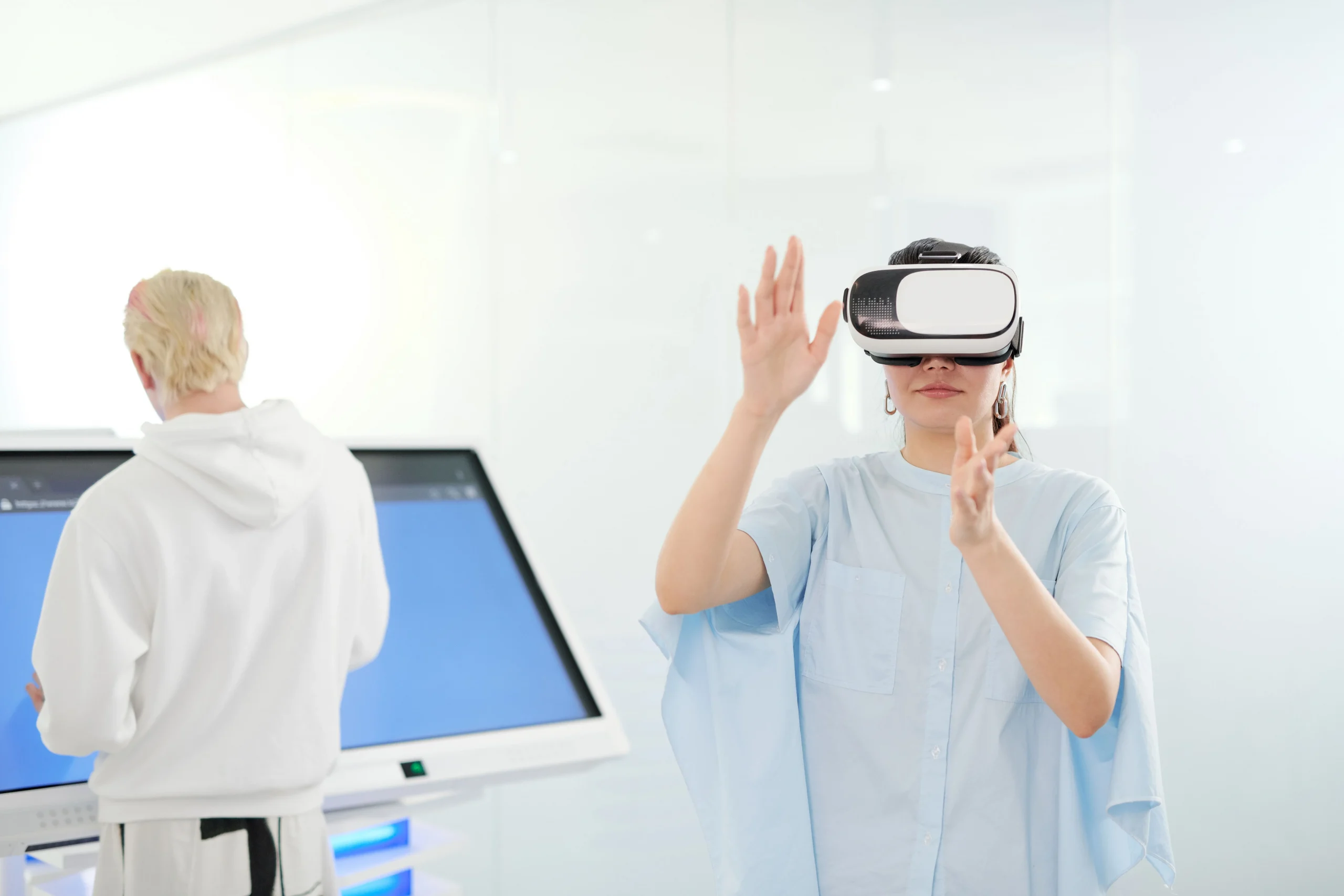
Learn more: Storytelling With Interactive Projection Mapping in Early Classrooms
This active learning approach drastically minimizes failure rates in challenging foundational disciplines like biochemistry, structural civil engineering, and organic molecular synthesis.
Integrating this experiential methodology demonstrates how VR classroom laboratories reshape the relationship between academic theory, digital innovation, and career preparedness for undergraduate researchers.
Students graduate with practical spatial awareness, having managed complex laboratory procedures inside simulated environments that mirror industrial research facilities.
Which software integrations are necessary to align virtual experiments with standard curricula?
The success of a virtual reality training program depends heavily on its seamless synchronization with existing Learning Management Systems used by global universities.
Single sign-on capabilities allow students to transition from reading syllabi to launching specialized spatial modules using their standard university digital identities.
Read more: VR Classroom Revolution: Complete Guide to Virtual Education
Furthermore, software solutions must adhere to regional accessibility guidelines, offering closed-caption options, verbal narration tracks, and adjustable controller mapping configurations.
This software optimization ensures that diverse student cohorts enjoy equal learning opportunities, regardless of prior technological familiarity or physical mobility variations.
To analyze data regarding technological market trends, evaluate comprehensive engineering reports on hardware adoption rates, and access public technical documentation concerning digital telecommunications, the National Institute of Standards and Technology (nist.gov) provides verified industrial guidelines and institutional frameworks.
Cultivating the next generation of global scientific researchers through spatial computing
Embracing spatial technologies within scientific training programs represents an ethical commitment to providing safe, accessible, and high-fidelity education to students worldwide.
Removing spatial, financial, and physical barriers allows academic institutions to cultivate brilliant scientific minds without being restricted by limited physical workspace square footage.
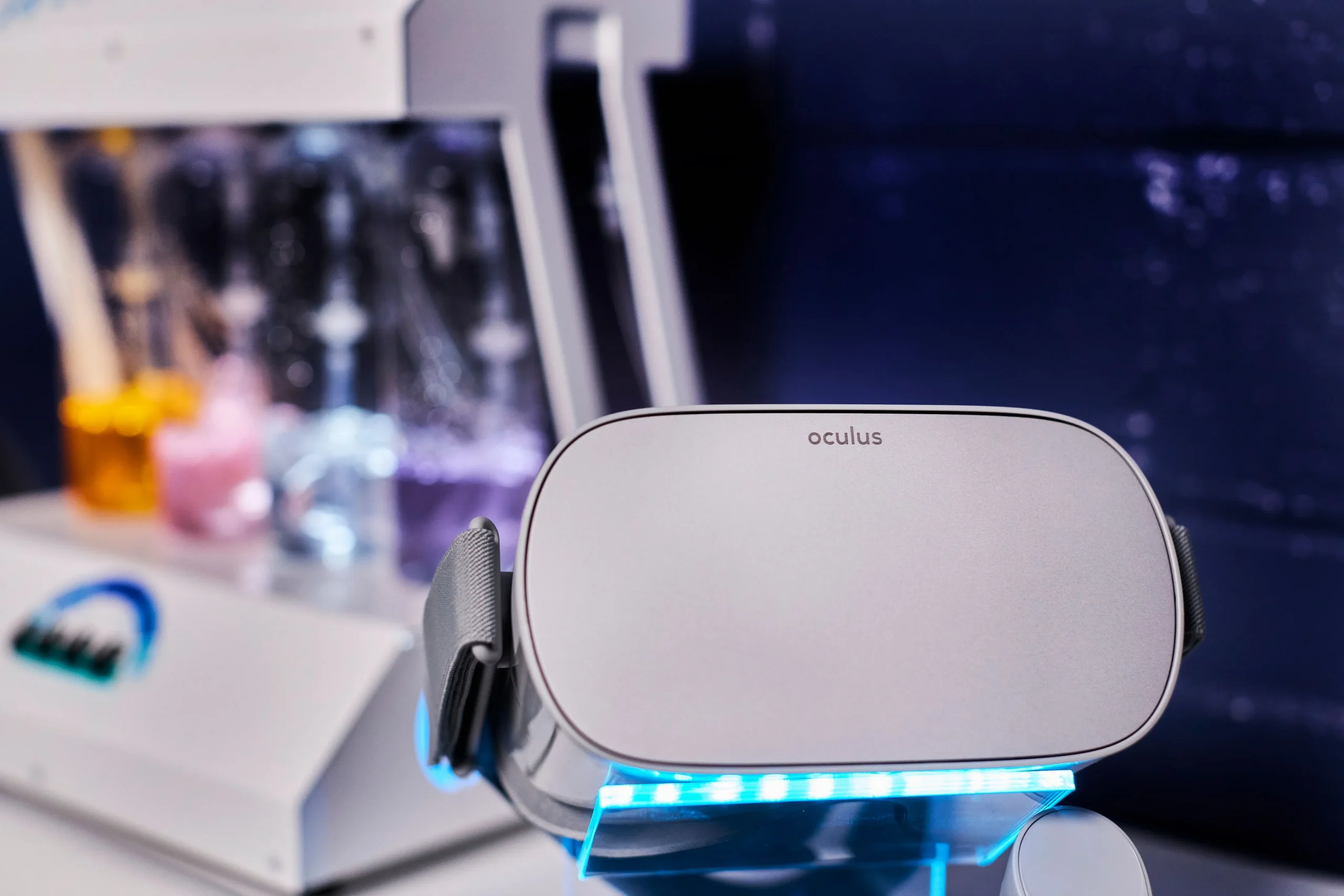
Learn more: How Schools Are Adopting VR Classrooms
Analyze the operational metrics highlighted in our laboratory format comparison table, upgrade your campus computing infrastructure, and select certified spatial science software packages.
By transforming your educational architecture through spatial modeling, you secure your institution’s position at the forefront of global technological innovation.
Frequently Asked Questions about Virtual Reality Science Laboratories
How do modern software platforms eliminate vestibular discomfort during simulation exercises?
Developers utilize fixed spatial horizons, maintain target frame rates above ninety hertz, and implement teleportation locomotion models to minimize user inner ear sensory mismatches.
Can professors design custom chemical reaction modules within virtual laboratory ecosystems?
Yes, premium enterprise science software suites include dedicated visual editor tools, enabling educators to input custom mathematical parameters and molecular behavioral properties.
What happens if a student mixes incompatible chemical reagents inside the virtual space?
The system calculates the chemical interaction data instantly, showing realistic visual consequences like virtual explosions or toxic gas emissions without any physical danger.
Do standalone head-mounted displays require continuous tethering to heavy desktop computers?
No, modern standalone enterprise headsets process the complex spatial science software locally on integrated mobile chipsets, granting students total physical freedom of movement.
