
Virtual reality applications beyond headsets and controllers
The evolution of immersive technology beyond headsets and controllers represents a fundamental shift in how we inhabit digital spaces.
We are moving away from mere visual isolation toward a seamless, multisensory integration of data and physical reality.
In 2026, the industry has finally realized that true presence isn’t just about tricking the eyes; it’s about engaging the skin, the ears, and even the nervous system.
What are the latest developments in immersive haptics?
Modern immersion has outgrown the solitary visual experience.
Today, we see full-body engagement through advanced haptic suits and ultrasonic mid-air feedback that allow users to feel texture and resistance without bulky peripherals.
There is something almost eerie about feeling the “weight” of a virtual object that isn’t there, yet the brain accepts it as reality.
Industrial training programs now utilize force-feedback gloves that simulate the exact tension of a mechanical wrench.
This level of physical realism is vital; muscle memory developed in a virtual environment must translate perfectly to high-stakes maintenance tasks in the real world. If the resistance feels wrong in the sim, the technician might fail on the job.
Therapeutic applications have also expanded, using haptic vests to help patients with sensory processing disorders.
By providing tactile cues that ground the user, these devices offer a level of stability and reassurance that visual-only systems, which often cause disorientation, simply cannot achieve.
How does spatial audio create presence without visual input?
Sound is the secondary pillar of immersion, often carrying the emotional and spatial weight of an experience when the eyes are focused elsewhere.
We often underestimate how much a sound reflection tells us about the size of a room. Advanced algorithms now simulate these reflections based on virtual geometry, allowing for pinpoint accuracy in distance and height.
This technology is transformative for the visually impaired, providing a “sonic map” for independent navigation through complex urban layouts.
By using bone conduction, users receive digital guidance while remaining fully aware of their actual physical surroundings, a necessary balance between digital assistance and real-world safety.
In architectural design, acoustic virtualization allows planners to hear exactly how a hall will sound before a single brick is laid.
This auditory simulation is far more practical for identifying dead zones than traditional blueprints. The precision of these systems depends on real-time HRTF (Head-Related Transfer Functions).
For deep technical research into these standards, the Audio Engineering Society remains the authoritative source for professional-grade sound implementation.
Why are neural interfaces considered the next frontier?
The most ambitious leap beyond headsets and controllers involves Brain-Computer Interfaces (BCI).
These systems translate neural intentions directly into digital actions, bypassing physical motor movement entirely.
Learn more: Virtual reality applications for simulation-based hiring
It’s a transition from “operating” a machine to the machine becoming an extension of our biological nervous system.
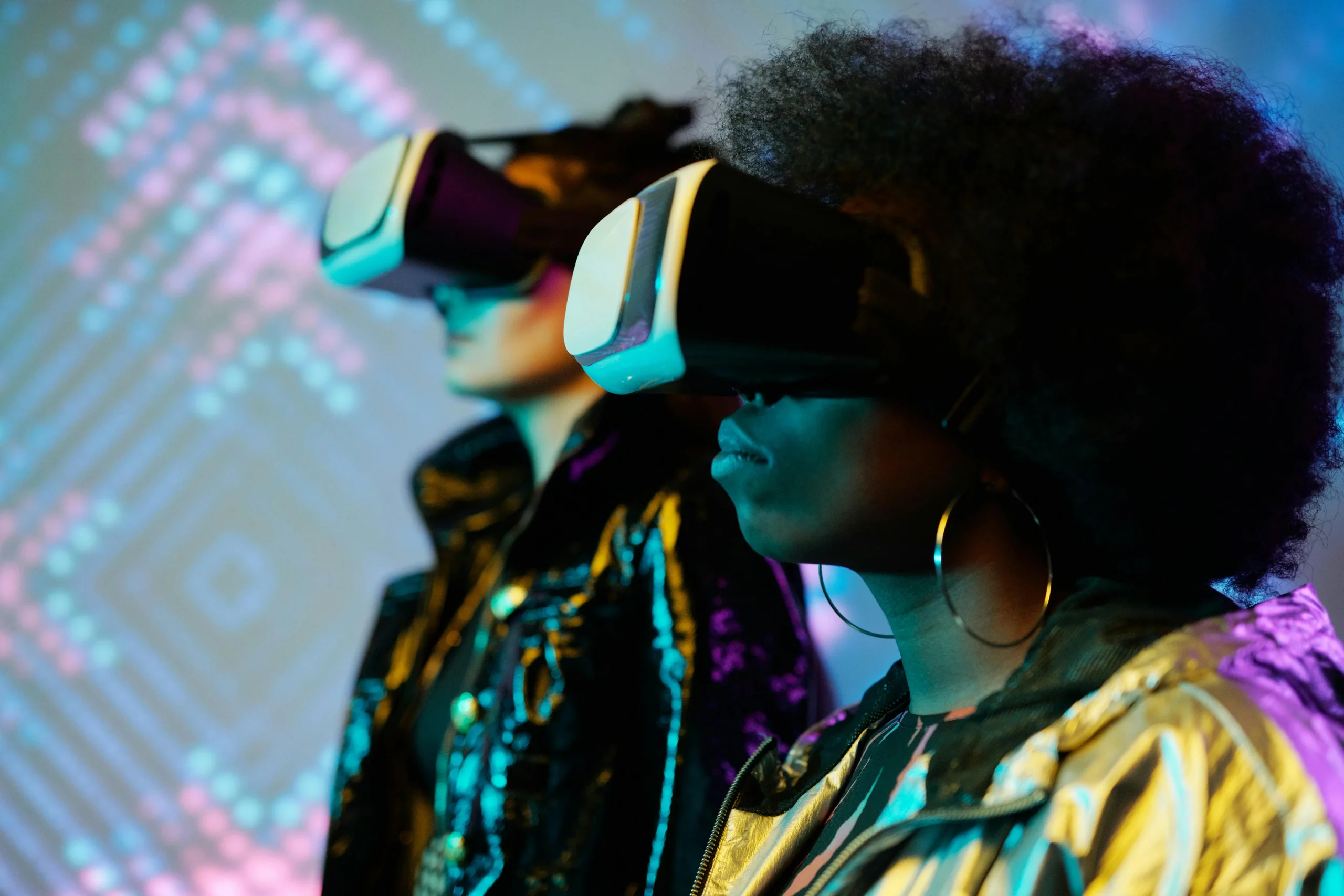
In 2026, non-invasive BCI headbands are being tested for productivity, allowing users to toggle through virtual windows or dictate text through focused thought.
While still in early consumer stages, the potential for reducing “input lag” between human thought and digital execution is immense. It’s no longer about how fast you can click, but how clearly you can think.
Which technologies dominate the tactile market today?
To understand the current hardware landscape, we must examine the response times and sensory range of the devices currently replacing traditional handheld inputs.
| Technology Type | Primary Input | Response Latency | Sensory Focus | Typical Use Case |
| Ultrasonic Mid-Air | Sound Waves | < 10ms | Light Texture | UI Navigation |
| Exoskeleton Gloves | Mechanical Resistance | < 15ms | Grip/Force | Surgical Training |
| Galvanic Skin Stim | Electrical Pulse | < 5ms | Temperature | Extreme Simulations |
| Smart Fabric | Piezoelectric Fiber | < 20ms | Pressure/Flow | Fitness Coaching |
| Neural EEG | Brainwaves | ~50ms | Intention | Accessibility Tech |
How do environmental sensors bridge the reality gap?
Beyond wearable tech, “smart rooms” equipped with lidar and depth-sensing cameras are turning entire physical spaces into interactive zones.
These sensors track skeletal movement with millimeter precision, allowing users to manipulate virtual objects using natural gestures without holding a single piece of plastic.
This “natural user interface” (NUI) is particularly effective in collaborative workspaces.
By removing the headset barrier, teams can maintain eye contact and non-verbal communication, the subtle nods and shrugs, while simultaneously editing a shared 3D model.
It makes the technology feel like a tool rather than a wall.
Retailers are also experimenting with these triggers in fitting rooms.
Customers can see how different fabrics drape or move under various lighting conditions without ever touching a physical garment.
It’s a streamlined experience that uses digital twins to solve the very physical problem of “will this fit?”
The risks of sensory-heavy VR applications
With deeper immersion comes a higher potential for sensory overload or “cybersickness.” When physical feedback doesn’t perfectly match visual input, the brain rebels.
Learn more: Virtual reality applications in cognitive behavior research
Maintaining perfect synchronization between the inner ear and digital stimuli remains the industry’s most significant technical hurdle.
Ethical concerns regarding data privacy are equally pressing. Haptic suits and BCI devices collect intimate biological data, including heart rate and neural patterns.
Protecting this “biometric signature” is not just a policy issue; it’s a fundamental requirement for the widespread adoption of these tools.
The IEEE Standards Association provides the necessary frameworks for the ethical development of these augmented systems.
The era of invisible technology
The transition beyond headsets and controllers suggests a future where the boundary between the digital and physical is no longer a screen we look at, but a world we inhabit.
By engaging the full spectrum of human senses, technology becomes less of a distraction and more of a functional layer of reality.
The mastery of haptics, audio, and neural input will eventually lead to the “invisibility” of the computer itself.
Read more: How Technology Supports Special Needs Education in Early Years
When we can feel, hear, and control our digital tools through natural intuition, the hardware becomes secondary to the creative and practical possibilities it enables.
Ultimately, the goal of immersive technology is to disappear.
By grounding digital experiences in the sensations we already understand, we move toward a more human-centric future that prioritizes presence over mere visual stimulation.
FAQ: Frequently Asked Questions
Can haptic suits really simulate temperature changes?
Yes, high-end suits use Peltier elements to create localized heating or cooling, allowing you to feel the warmth of a virtual sun or the chill of a digital draft.
Is brain-computer interface (BCI) technology safe for daily use?
Non-invasive BCI is generally considered safe as it only reads electrical signals from the scalp. However, clinical-grade invasive implants require rigorous medical oversight.
Will spatial audio work with standard headphones?
Most modern algorithms create a convincing 3D effect on standard stereo headphones through binaural processing, though high-end gear obviously offers better clarity.
Do environmental sensors replace the need for VR headsets?
In many collaborative or “Holodeck” style scenarios, yes. They allow for shared experiences without the isolation and physical discomfort of a headset.
How do haptic gloves handle different object weights?
They use mechanical resistance or string-based brakes to pull back on your fingers, simulating the tension and weight of an object being gripped or lifted.
