
Privacy-First EdTech: How Early Education Platforms Protect Children’s Data
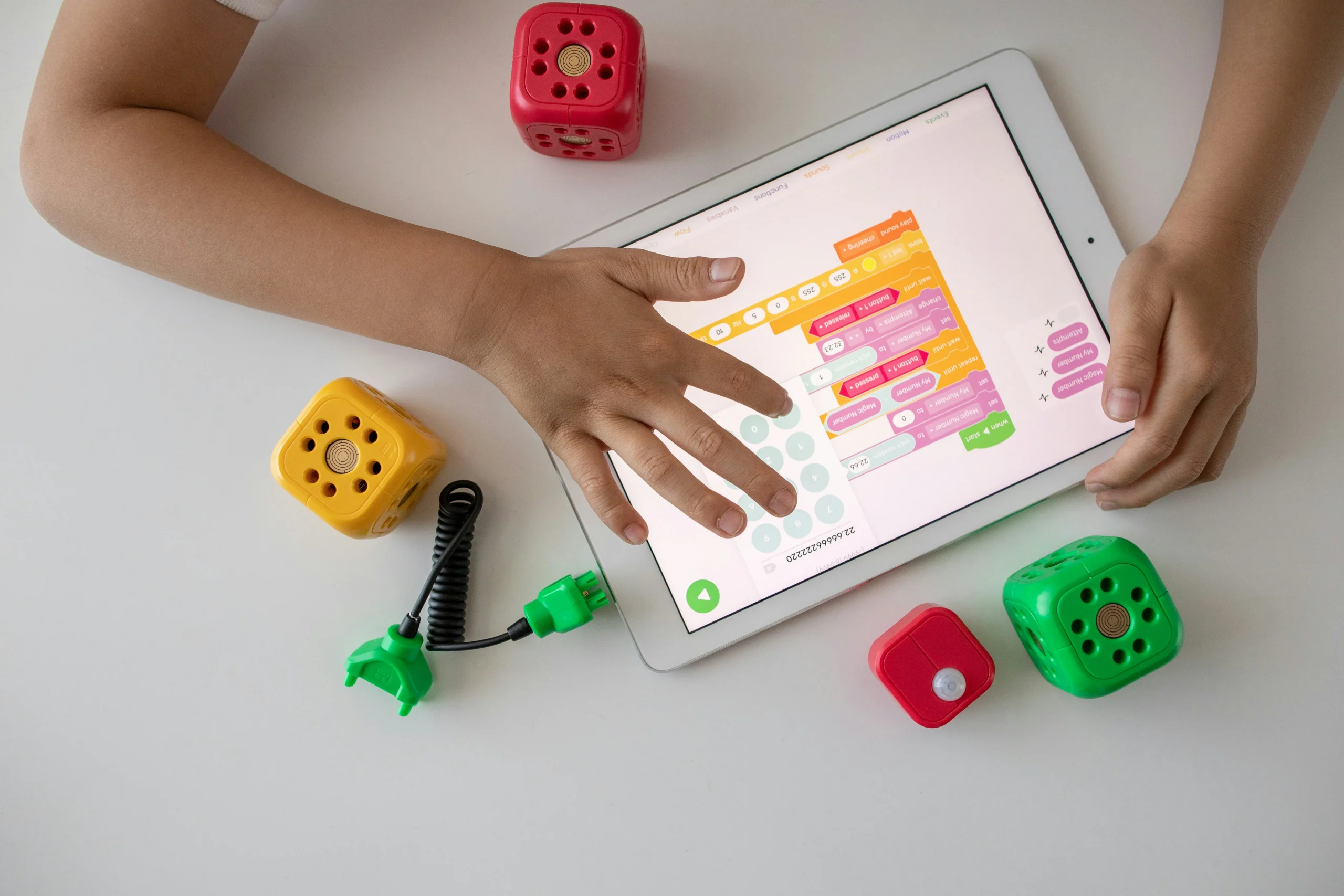
Privacy-First EdTech: How Early Education platforms handle sensitive information has become the cornerstone of digital trust in 2026.
As classrooms integrate sophisticated AI tutors and adaptive learning systems, the vulnerability of young learners, those under the age of 13, demands a radical shift from “compliance” to “privacy by design.”
This article explores the technical and ethical safeguards modern platforms use to ensure a child’s digital footprint remains as small as their physical one.
We analyze the shift from broad data collection to strict minimization, examining how the latest regulations are reshaping the tools used by our youngest students.
Why is Privacy-First Design Essential for Early Education?
In the current educational landscape, every tap, swipe, and voice command represents a data point. For a toddler using a phonics app, that data could reveal cognitive patterns or behavioral traits.
Without a privacy-first approach, these insights could be exploited for commercial profiling.
Educators now recognize that children lack the capacity to understand digital risks, making the platform’s architecture the primary line of defense.
There is something inherently protective about building software that assumes a child’s right to anonymity from the first line of code.
Privacy-first design ensures that protection is the default state, not an optional setting.
By stripping away tracking pixels and third-party advertising cookies, developers create a “walled garden” where learning happens without surveillance.
This approach doesn’t just protect the child; it builds the long-term institutional trust necessary for schools to adopt emerging technologies like augmented reality and personalized AI assistants.
How Does Mandatory Data Minimization Work?
Under the updated COPPA and GDPR-K regulations of 2026, the era of “collect now, analyze later” has ended.
Mandatory data minimization requires platforms to identify exactly which data points are functional necessities.
If a device identifier or geolocation isn’t required to teach a child to count, the platform is legally barred from capturing it.
This remains true even if a parent inadvertently grants blanket consent—the law now overrules convenience.
Modern EdTech engineering now utilizes “zero-knowledge” protocols where possible. This means the server verifies that a task was completed without ever storing the specific input details.
For instance, an app might verify a child recognized a letter “A” locally on the device, sending only a “success” signal to the teacher’s dashboard.
This keeps the most sensitive behavioral data out of the cloud entirely, acting as a digital shredder for personal details.
What are the New AI Consent Rules for Children?
The surge in AI-powered learning has brought about specialized regulations concerning interactive features.
In 2026, a standard “Terms of Service” agreement no longer covers AI. Any feature that processes a child’s natural language, like an AI story-time companion, requires a separate, verifiable parental consent flow.
This ensures parents are fully aware when their child is interacting with a machine learning model rather than a static program.
Read more: Top 10 Real-World Applications of Blockchain
Furthermore, platforms must now demonstrate that AI training data is fully anonymized. Student-generated content is routinely scrubbed of PII (Personally Identifiable Information) before it ever touches a training set.
This proactive vetting prevents the inadvertent “leakage” of a child’s unique writing style or voice into a public-facing model. You can see more on these evolving standards at the Federal Trade Commission (FTC).
Which Biometric Data Points are Now Protected?
A major development in 2026 is the classification of voice recordings and facial scans as “Personal Information” under global statutes.
Know more: Virtual reality applications in industrial safety validation
For early education, where voice-to-text is a vital accessibility tool, this change is profound.
Platforms must now treat a child’s voice snippet with the same level of security as a Social Security number, utilizing high-level encryption for every audio file generated during a session.
Biometric protection also extends to “emotion AI” or gaze-tracking software used to measure student engagement.
Many privacy-first platforms have pivoted away from these intrusive metrics, opting for privacy-preserving engagement indicators like task completion speed or interactive accuracy.
This shift respects the child’s right to a private emotional state, ensuring their learning journey isn’t micro-managed by an algorithm’s interpretation of a frown.
Comparison of Global Privacy Standards for EdTech (2026)
| Feature | COPPA 2026 (USA) | GDPR-K (Europe) | Age-Appropriate Design Code |
| Age Threshold | Under 13 | Varies (13-16) | Under 18 |
| Data Minimization | Strict (Function only) | High (Purpose specific) | Risk-based |
| AI Feature Consent | Separate Opt-in Required | High-risk DPIA needed | Best interest assessment |
| Advertising | Zero Targeted Ads | No Profiling | No Behavioral Tracking |
| Retention | Mandatory Deletion | Right to Erasure | Clear Expiry Dates |
What are the Best Practices for Data Retention?
“Data rot” is a significant security risk; the longer information is stored, the more likely it is to be compromised.
Current industry leaders implement “automated deletion cycles” that purge student data the moment a school year ends or a contract is terminated.
This prevents the accumulation of massive “honey pots” of data that attract malicious actors, effectively clearing the digital slate for the next term.
For educators, transparency is the new currency. Schools should demand a Data Processing Agreement (DPA) that explicitly lists every sub-processor involved.
Read more: Creating a Tech-Friendly Learning Space at Home for Young Kids
If a learning platform uses a third-party cloud provider, that provider must adhere to the same stringent privacy standards as the primary platform.
This chain of custody is essential for maintaining Privacy-First EdTech: How Early Education trust across the entire ecosystem.
How Can Parents Verify a Platform’s Privacy Claims?
While marketing materials often promise safety, parents can look for specific technical certifications.
The “ST4S” badge or the “CoSN Trusted Learning Environment” seal are strong indicators that a platform has undergone independent auditing.
Read more: How Technology is Helping Kids with Special Needs Learn Better
In 2026, these are no longer just “nice to have” they are prerequisites for most district-level procurement processes, separating the responsible players from the rest.
Parents should also check if a platform allows for “Data Subject Access Requests.” Even for a five-year-old, the right to see, correct, or delete data is fundamental.
A truly privacy-first platform will provide an easy-to-use portal where parents can view exactly what has been collected and request its immediate removal. For further guidance on vetting tools, visit the Digital Child Research Center.
The transition to Privacy-First EdTech: How Early Education represents a maturation of the digital classroom.
We have moved beyond the “Wild West” of data collection into a structured environment where a child’s rights are prioritized by the code itself.
By employing strict minimization, specialized AI consent, and rigorous retention policies, the platforms of 2026 are proving that innovation does not have to come at the cost of innocence.
For schools and families, the message is clear: the best technology is that which empowers the student while remaining invisible to the data broker.
FAQ: Frequently Asked Questions
What does “Privacy by Design” actually mean for a child?
It means the software was built from the ground up to protect the user. Privacy isn’t a feature you turn on; it’s the only way the system functions.
Are “Free” educational apps safe to use?
Often, no. If there is no subscription fee, the “product” being sold is frequently the user’s data. Always look for platforms with transparent, fee-based business models.
Can my child’s voice recordings be used to train AI?
In 2026, only if you provide explicit, separate consent. Even then, privacy-first platforms scrub all personal identifiers before the training process begins.
What should I do if a platform suffers a data breach?
Under 2026 laws, the provider must notify you within 72 hours. You should immediately exercise your “Right to Erasure” to remove any remaining data.
How is 2026’s COPPA different from the old version?
The 2026 update prohibits the collection of unnecessary data even if parents say “yes,” closing loopholes that previously allowed for excessive behavioral tracking.
