
Using VR Twins in Architecture: How Designers Validate Projects Before Construction
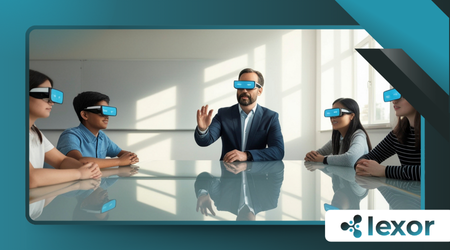
Using VR Twins in Architecture architects no longer rely solely on imagination or flat blueprints to convey complex spatial volumes to clients.
By immersing stakeholders in a functional twin, designers eliminate the ambiguity that often leads to costly mid-construction alterations or structural errors. Using VR Twins in Architecture
These environments allow for real-time manipulation of light, materials, and structural components.
This proactive approach ensures that every design choice undergoes rigorous testing within a simulated reality that obeys the laws of physics.
How often have we seen magnificent renderings fail to translate into comfortable, livable spaces? The digital twin solves this by providing a human-centric perspective early on.
What defines the role of Using VR Twins in Architecture today
Digital twins represent more than just visual models; they are sophisticated databases. Using VR Twins in Architecture enables a seamless bridge between conceptual art and engineering precision.
Every element within the VR twin carries specific metadata, from the thermal conductivity of glass to the acoustic properties of a hallway. This depth allows for precise validation.
Consider a hospital project where seconds matter for emergency responses. Designers use these twins to simulate staff movement, ensuring that corridors facilitate rapid, unobstructed transit during crises.
The process involves synchronizing Building Information Modeling (BIM) data with high-fidelity game engines. This synergy creates a playground where architects break things digitally to fix them physically.
++ VR for rehabilitation and mental health: how immersive therapies work
The 2024 AIA Technology in Architecture Practice report indicates that firms adopting immersive twins see a 25% reduction in RFI (Request for Information) during construction.
| Phase of Project | Primary VR Twin Function | Stakeholder Benefit |
| Pre-Design | Site Context Analysis | Environmental Impact Awareness |
| Schematic Design | Spatial Prototyping | Faster Iteration Cycles |
| Design Development | Material & Light Validation | Client Confidence & Approval |
| Pre-Construction | Clash Detection | Significant Cost Mitigation |
Why is spatial validation through Using VR Twins in Architecture essential
Validation is the cornerstone of modern safety and aesthetics. Using VR Twins in Architecture provides a laboratory for testing environmental variables like wind loads or solar heat gain.
Architects use these tools to perform “what-if” scenarios. If a structural beam moves six inches, how does that impact the natural lighting in the atrium?
++ How to Design VR Environments for Neurodiverse Users (Autism, ADHD, Sensory Sensitivities)
This level of scrutiny prevents the “ghosts” of design flaws from haunting the finished structure. It turns the design process into a rigorous scientific experiment.
Think of the VR twin as a flight simulator for a building. Just as pilots train for every possible failure, architects now simulate every possible structural interaction.
How does Using VR Twins in Architecture improve client communication
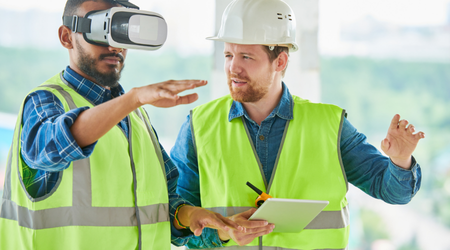
Effective communication is often the hardest part of any large-scale project. Using VR Twins in Architecture translates technical jargon into intuitive, visual, and spatial experiences for non-experts.
Clients often struggle to read floor plans correctly. VR removes this barrier by letting them walk through their future office, checking sightlines and ergonomic flow.
++ VR Training for High-Risk Jobs: How Simulations Reduce Errors in Real-World Scenarios
One notable example involves the redevelopment of historical districts in London. Architects used twins to show residents exactly how new shadows would fall on public parks.
This transparency builds trust. When a client “feels” the height of a ceiling, they make informed decisions that they are less likely to regret later.
By the time construction begins, the client has already lived in the building virtually. This psychological comfort is a powerful tool for project approval and satisfaction.
++ Virtual Reality in Construction: Redefining the Future with Immersive Tech
Which technical challenges does Using VR Twins in Architecture solve
Beyond aesthetics, these twins address the nightmare of “clash detection.” Using VR Twins in Architecture identifies when plumbing lines intersect with structural steel before it happens onsite.
In the past, these overlaps were often discovered during the framing stage. Fixing them then required demolition, re-ordering materials, and extensive delays that drained budgets.
Now, the digital twin acts as a final filter. It catches the discrepancies between the mechanical, electrical, and structural drawings that human eyes might overlook.
Furthermore, these models integrate IoT sensors for buildings already under renovation. They provide a live pulse of the structure’s health, energy consumption, and occupancy patterns.
A primary example is the renovation of large airport terminals. Designers simulate passenger flow during peak hours to optimize the placement of security checkpoints and retail.
Is Using VR Twins in Architecture the future of sustainable building
Sustainability demands precision, and precision requires data. Using VR Twins in Architecture allows for the simulation of a building’s carbon footprint over its entire lifecycle.
Architects can swap out materials in the twin to see which options provide the best insulation. They calculate energy needs based on real-world weather patterns.
This predictive power ensures that buildings are not just beautiful, but also responsible. It allows for the optimization of HVAC systems based on simulated occupancy.
As global regulations regarding building emissions tighten, the digital twin becomes a mandatory tool for compliance. It provides the proof of performance required by authorities.
The industry is moving toward a standard where the digital twin is delivered alongside the physical key. This “as-built” model serves the owner for decades.
How to implement these immersive workflows effectively
The transition to immersive validation requires a shift in firm culture. Using VR Twins in Architecture demands high-performance hardware and a commitment to maintaining accurate, clean data.
Training staff to think in three dimensions rather than two is vital. It requires a collaborative mindset where engineers and designers share the same virtual space.
The cost of implementation is rapidly decreasing. Open-source platforms and cloud-based rendering make this technology accessible to boutique firms, not just global conglomerates.
As we look toward 2026, the integration of AI within these twins will automate even more of the validation process. The future is clearly immersive.
Frequently asked questions
Does a VR twin replace traditional BIM models?
No, it enhances them. The VR twin uses the data from BIM to create a navigable, interactive environment for better human-scale analysis and testing.
What hardware is required for architectural digital twins?
High-end VR headsets and workstations with powerful GPUs are standard. However, many firms now use cloud-rendering to stream these models to mobile devices.
Can VR twins help with local building permit approvals?
Yes, providing city councils with an immersive view of the project helps them understand its impact on the urban fabric, often accelerating the approval.
Is this technology only for large-scale commercial projects?
While common in large projects, residential architects increasingly use it to help homeowners visualize custom builds, reducing changes during the expensive construction phase.
How does a digital twin differ from a standard 3D render?
A render is a static image or video. A twin is an interactive, data-rich model that responds to environmental changes and contains real engineering specifications.
