
VR Training for High-Risk Jobs: How Simulations Reduce Errors in Real-World Scenarios
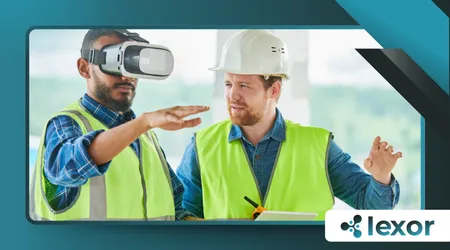
VR Training for High-Risk Jobs is fundamentally changing how industries prepare their personnel for dangerous and critical situations.
This innovative shift from traditional methods to immersive simulation promises a future of enhanced safety and performance.
High-stakes professions, like those in medicine, aviation, and energy, demand flawless execution. Mistakes aren’t just costly; they can be catastrophic, leading to injury or loss of life.
Traditional on-the-job training often presents unacceptable risks during the learning phase. Can we really afford a novice surgeon’s first complex procedure to be on a live patient?
The necessity for a safe, repeatable, and realistic practice environment is paramount for cultivating essential skills and decision-making capabilities.
Immersive technology is stepping up to meet this challenge.
How Does VR Training for High-Risk Jobs Work to Build Expertise?
Virtual Reality creates a digital twin of the real-world environment. Trainees operate within a safe, controlled space, yet the simulation feels genuinely threatening and challenging.
This psychological realism triggers the same stress responses as an actual emergency. This is key for muscle memory and maintaining composure under duress.
The system tracks every action and reaction, providing immediate, granular feedback. A trainee pilot, for instance, can repeatedly practice a complex engine failure without any real-world consequence.
++How AI-Adaptive Learning Models Personalize Education for Children Aged 3–7
The simulation allows for the deliberate introduction of rare, high-consequence events. These scenarios are too dangerous or impractical to replicate physically.
What Are the Core Advantages of Virtual Simulations Over Traditional Methods?
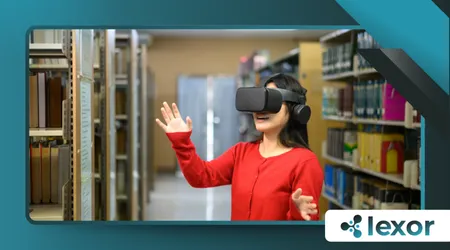
Simulations offer unparalleled scalability and standardization. Every single trainee, regardless of location, experiences the exact same curriculum and challenges.
This consistency ensures a uniform high level of preparedness across the entire workforce. The training experience becomes predictable, yet the outcomes are superior.
++VR for rehabilitation and mental health: how immersive therapies work
Moreover, the training is often far more cost-effective in the long run. There is no need for expensive materials, travel, or taking real equipment out of service for practice.
Repetition is another massive benefit. Users can fail, review their mistakes, and immediately try again, drilling until the correct procedure becomes automatic.
How Does Immersive Tech Optimize Cognitive Load and Retention?
The interactive nature of VR minimizes passive learning, which is a common failing of lecture-based training. Active engagement dramatically improves the rate of knowledge retention.
VR forces trainees to practice rapid information processing. They must synthesize multiple sensory inputs—visual, auditory, and haptic—just as they would in a real crisis.
++How Virtual Reality Is Impacting Event Planning and Conferences
The technology effectively bridges the gap between theoretical knowledge and practical application. It transforms abstract concepts into tangible, three-dimensional experiences.
What Real-World Examples Demonstrate VR’s Impact on Safety?
Consider the specialized field of offshore drilling. Simulating a sudden pressure surge or a blowout scenario is essential but impossible on a working rig.
Emergency Shutdown Procedure (Energy Sector).
A drilling engineer uses VR to practice the seven-step emergency shutdown sequence while simultaneously being bombarded with alarms and visual cues of fire.
This guarantees that they can execute the procedure correctly, even in sensory overload.
Complex Patient Triage (Healthcare).
A medical team practices triage in a massive virtual accident scene with multiple “patients” exhibiting varied, time-sensitive symptoms.
++11 Benefits of VR Training For Workers & Industires
The simulation stresses effective communication and prioritizing care under extreme pressure.
This focused practice directly translates into fewer mistakes when the stakes are real. It’s the ultimate low-risk environment for high-stakes learning.
Can VR Training for High-Risk Jobs Significantly Reduce Human Error Rates?
The ability to make mistakes safely is the ultimate learning tool. VR shifts the learning curve from the field to the virtual lab, minimizing the real-world error quotient.
Think of it like a flight simulator: would you prefer your pilot to learn how to land in a crosswind for the first time on a real plane with passengers, or inside a machine that perfectly mimics the physics?
The answer is obvious.
This simulation-to-reality transfer is what makes VR Training for High-Risk Jobs so powerful. It builds confidence and competence simultaneously.
One significant data point supporting this comes from PwC’s 2020 report, which found that VR training can make employees up to four times faster at learning new skills compared to classroom-based training.
Speed and precision are critical in crisis management.
| Training Method | Retention Rate (Estimated 1 Year) | Time to Competence | Safety During Training |
| Classroom/Lecture | $\sim 5\%$ | Slow | High (No Practical Risk) |
| On-the-Job (OJT) | $\sim 75\%$ | Variable | Low (Exposure to Real Risk) |
| VR Simulation | $\sim 80\%$ | Fast | Highest (Controlled Virtual Risk) |
The numbers clearly illustrate the superior efficacy of immersive, hands-on practice.
What’s Next for VR Training for High-Risk Jobs and Professional Development?
The integration of haptic feedback suits and more advanced physiological tracking (like heart rate monitoring within the headset) continues to deepen the immersion.
This pushes realism beyond mere visuals.
Artificial Intelligence is increasingly used to drive the virtual characters and scenarios, making the interactions more dynamic and less predictable.
The simulation adapts to the trainee, raising the bar for mastery.
The future of professional preparedness is here. With VR, we are not just training people; we are creating a more resilient and safer workforce.
Why should any organization settle for anything less than the safest, most effective training method available?
Conclusion: The Mandate for Simulated Preparedness
The era of merely adequate training for critical roles is over.
VR Training for High-Risk Jobs provides a robust, ethical, and highly effective pathway to proficiency and error reduction.
By mastering the crisis in the virtual world, professionals ensure their competence and safety in the real one. Investing in simulation is investing in life itself.
Frequently Asked Questions
Is VR Training a Complete Replacement for Hands-On Experience?
No, VR training is designed to supplement and dramatically enhance hands-on experience by ensuring core competencies and decision-making skills are mastered in a risk-free environment before a person handles real-world equipment or subjects. It is the perfect preparation, not the ultimate replacement.
How Much Does VR Training Typically Cost for Companies?
Initial setup costs for hardware and custom software development can be significant, but these expenses are often quickly offset by the reduction in costs associated with travel, material waste, equipment downtime, and, most importantly, the high cost of human error or accidents in the field.
What Industries Are Leading the Adoption of VR Simulation?
Aviation, Military/Defense, Healthcare (specifically surgery and emergency response), and the Energy sector (oil, gas, and nuclear power) are currently the leading adopters, as they have the highest stakes and the clearest need for repeated, high-fidelity practice of rare events.
