
Virtual reality applications in industrial safety validation
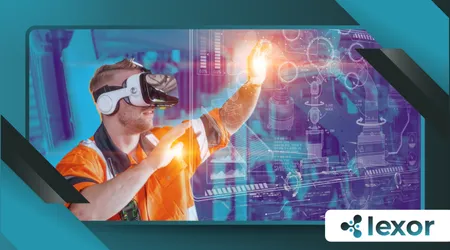
The modern landscape of industrial safety validation has shifted significantly toward immersive technologies, allowing engineers to simulate complex hazard scenarios within risk-free, high-fidelity virtual environments.
Summary
- The evolution of safety protocols through VR.
- Core benefits of virtual hazard identification.
- How VR enhances compliance and ergonomics.
- Real-world data on incident reduction.
- Future trends in industrial simulation.
What is the role of VR in industrial safety validation?
Industrial safety validationTraditional validation, often relies on physical prototypes or static 2D models, which frequently fail to capture the dynamic nature of human interaction within a busy factory.
Virtual Reality (VR) bridges this gap by providing a 1:1 scale environment where safety officers can test equipment layouts before a single bolt is ever tightened.
By utilizing VR for industrial safety validation, companies can identify “blind spots” in machinery placement that might lead to operator injury or restricted emergency egress paths.
This proactive approach ensures that safety is “baked into” the design phase, rather than being an afterthought that requires expensive retrofitting or dangerous on-site modifications later.
Integrating spatial audio and haptic feedback further enhances these simulations, allowing users to perceive auditory warnings and physical vibrations associated with potential equipment failures or malfunctions.
How does VR improve hazard identification and risk assessment?
Standard risk assessments often struggle with subjective interpretations of “likelihood” and “severity,” but VR provides objective, repeatable data points through integrated eye-tracking and biometric sensors.
When performing industrial safety validation, safety leads can track exactly where an operator looks during a simulated crisis, revealing if critical warning signs are being ignored.
These insights allow for the redesign of control panels and spatial layouts to prioritize the most vital information, effectively reducing the cognitive load on the industrial worker.
Furthermore, VR allows teams to simulate “Black Swan” events—rare but catastrophic failures—that are impossible or too dangerous to recreate in the physical world for testing.
Testing these scenarios virtually ensures that emergency shutdown procedures are intuitive and that the physical environment supports rapid, safe movement during high-stress industrial incidents or fires.
++ Virtual reality applications for real-time remote inspections
Why is VR essential for ergonomic safety validation?
Using VR for industrial safety validation enables digital twin integration, where a worker’s movements are mapped to a virtual avatar to calculate real-time joint stress levels.
This data helps engineers adjust workbench heights or tool placements to prevent long-term strain, ensuring the workplace is optimized for the diverse physical profiles of the workforce.
According to research from the Occupational Safety and Health Administration (OSHA), proactive ergonomic interventions are critical for maintaining a productive, injury-free industrial environment in high-output sectors.
By validating ergonomics virtually, firms avoid the “trial and error” phase on the factory floor, significantly reducing the risk of chronic injuries among their most experienced operators.
What are the primary technical requirements for VR safety systems?
Implementing a robust system for industrial safety validation requires high-resolution headsets, low-latency tracking, and software capable of handling complex physics engines for realistic object interaction.
++ Virtual reality applications using eye-tracking analytics
Enterprise-grade hardware, such as the Meta Quest 3 or Apple Vision Pro, provides the necessary visual clarity to read small labels and perceive depth accurately during simulations.
Software platforms must support OpenXR standards to ensure compatibility across different hardware, allowing for seamless updates as newer, more powerful tracking sensors become available to the industry.
| Metric | Traditional Validation | VR-Based Validation | Impact |
| Time to Identify Hazard | 4-6 Weeks | 2-5 Days | 80% Faster |
| Cost per Scenario | High (Physical) | Low (Digital) | 60% Savings |
| User Retention Rate | 20% (Manuals) | 75% (Immersive) | Higher Safety |
| Error Rate in Setup | 12% | 3% | Increased Accuracy |
Which industries benefit most from virtual safety testing?
While manufacturing is the most obvious beneficiary, the energy sector utilizes VR to validate safety protocols for offshore oil rigs and nuclear power plant maintenance operations.
In these high-stakes environments, industrial safety validation ensures that every valve turn and movement is choreographed to avoid exposure to radiation or high-pressure chemical leaks.
++ Virtual reality applications in predictive medical simulation
Aerospace firms also leverage VR to simulate assembly line safety, ensuring that technicians can safely maneuver large components without risking structural damage or personal injury during installation.
Even logistics and warehousing hubs use virtual tools to validate the safe interaction between human workers and autonomous mobile robots (AMRs) in increasingly crowded distribution centers.
When should companies integrate VR into their safety cycle?
The most effective time to implement VR is during the Front-End Engineering Design (FEED) stage, where changes to the physical plant layout are still relatively inexpensive.
Waiting until the commissioning phase to perform industrial safety validation often results in “work-arounds” rather than true solutions, which can degrade safety margins over the long term.
Regular intervals of virtual re-validation are also recommended when introducing new machinery or altering production flows to ensure that old safety protocols still remain effective and relevant.
This continuous improvement loop fosters a culture of safety where employees feel empowered to suggest virtual modifications based on their lived experience on the factory floor.
Ultimately, VR serves as a living document of safety, evolving alongside the physical facility to provide a permanent, accessible record of all risk mitigation strategies and tests.
Training for the future of industrial safety
Beyond mere design validation, VR provides a revolutionary platform for safety training, allowing workers to experience the consequences of mistakes without suffering any real-world physical harm.
Sophisticated modules for industrial safety validation can simulate equipment fires or chemical spills, forcing trainees to make split-second decisions that are later reviewed for accuracy and speed.
This “muscle memory” developed in the virtual world translates directly to better performance in the real world, as the brain treats the immersive experience as a genuine event.
As AI continues to integrate with VR, these simulations will become even more dynamic, with virtual “trainers” providing real-time feedback based on the specific actions of the user.
The result is a workforce that is not only better trained but also more confident in their ability to handle the complexities of the modern, automated industrial landscape.
Conclusion
The shift toward industrial safety validation using virtual reality represents a fundamental change in how we protect the most valuable asset in any factory: the human worker. By removing the physical risks of testing and providing deep, data-driven insights into human behavior, VR ensures that tomorrow’s factories are safer, more ergonomic, and more efficient than ever. As technology advances toward 2026 and beyond, the integration of digital twins and immersive simulations will become the global standard for excellence in industrial risk management.
For more information on the latest technical standards in immersive safety, visit the National Institute of Standards and Technology (NIST).
FAQ (Frequently Asked Questions)
Does VR replace traditional safety inspections?
No, it complements them. VR identifies design-related hazards early, but physical inspections are still required to ensure ongoing maintenance and compliance with local environmental and safety regulations.
How much does a VR safety validation system cost?
Initial setup for enterprise hardware and custom software can range from $10,000 to $50,000, but the long-term ROI is found in reduced insurance premiums and fewer workplace accidents.
Can VR simulate hazardous chemical leaks?
Yes, VR software can model gas dispersion and liquid spills using fluid dynamics, allowing safety teams to test the effectiveness of ventilation systems and emergency response paths accurately.
Is VR safety training effective for older workers?
Modern VR interfaces are highly intuitive. Studies show that workers of all ages benefit from the “learning by doing” aspect of VR compared to traditional classroom-based safety lectures.
What is the future of VR in safety?
We expect to see more “Augmented Reality” (AR) integration, where safety data is overlaid on the real world, providing workers with real-time hazard alerts as they navigate the plant.
