Virtual reality applications for real-time remote inspections
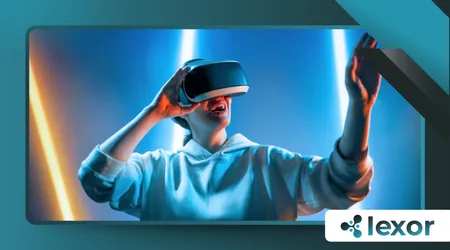
As the demand for operational efficiency grows, real-time remote inspections have evolved from a futuristic concept into a cornerstone of modern industrial maintenance and global safety protocols.
Virtual Reality acts as a digital bridge, allowing experts to inhabit a remote environment without the logistical hurdles, costs, or physical risks associated with traditional site visits.
By utilizing high-fidelity headsets and 360-degree camera arrays, inspectors can navigate complex infrastructures. This immersive experience ensures that no detail is overlooked during critical assessments.
Unlike static video feeds, VR provides spatial awareness. This depth perception is vital when evaluating structural integrity or identifying hairline fractures in pressurized systems or high-altitude energy assets.
Digital twins play a massive role here. These 3D replicas of physical assets allow for a seamless overlay of live sensor data during real-time remote inspections, enhancing decision-making.
Table of Contents
- What is the role of Virtual Reality in remote inspections?
- How does the technology enable real-time data synchronization?
- Why are industries transitioning to VR-based inspection models?
- Key sectors leading the adoption of immersive monitoring.
- The ROI of VR: Analyzing costs and safety improvements.
- What are the technical requirements for stable VR inspections?
- FAQ: Addressing common concerns about VR implementation.
How does the technology enable real-time data synchronization?
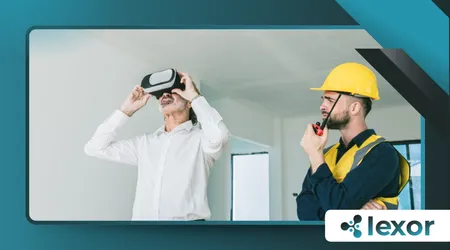
The synergy between 5G connectivity and edge computing ensures that latency remains below the threshold of human perception. This creates a fluid, lag-free experience for the off-site auditor.
Data packets from IoT sensors—measuring temperature, vibration, or pressure—are transmitted instantly to the VR interface.
Consequently, the inspector sees the physical asset and its biological “vitals” simultaneously.
Cloud-based platforms aggregate these streams, allowing multiple stakeholders to join the same virtual space.
This collaborative environment speeds up the verification process for complex, multi-disciplinary engineering projects.
Explore more: Voice-free smart home automation with scene logic
Modern spatial computing platforms, such as those developed for the Apple Vision Pro, have set new standards for clarity and intuitive hand-tracking in industrial settings.
Why are industries transitioning to VR-based inspection models?
Sustainability is a primary driver.
By reducing the need for international flights and specialized transport, companies significantly lower their carbon footprint while maintaining rigorous oversight of their global assets.
Safety is another non-negotiable factor. In environments like nuclear facilities or offshore oil rigs, real-time remote inspections keep human experts out of high-risk zones without sacrificing the quality of the audit.
++How Retail Brands Use VR to Replace Physical Showrooms
Furthermore, the speed of intervention is vastly improved. Instead of waiting days for a specialist to arrive, a local technician wears a headset, and the expert provides immediate guidance.
This transition also addresses the “silver tsunami” or the aging workforce. Senior engineers can now consult on multiple projects across different continents in a single afternoon from their home offices.
What are the key sectors leading the adoption?
The energy sector, particularly offshore wind and oil, utilizes VR to inspect subsea components and turbine blades.
These high-cost assets require frequent monitoring that is traditionally dangerous and expensive.
Manufacturing giants use VR for factory acceptance tests.
++VR Training for High-Risk Jobs: How Simulations Reduce Errors in Real-World Scenarios
Instead of flying a client to a facility, the manufacturer conducts a walkthrough, ensuring every specification meets the contract’s strict requirements.
Civil engineering firms leverage immersive tools for bridge and tunnel assessments.
Inspectors can use drone-mounted cameras to feed a VR headset, providing a bird’s-eye view of hard-to-reach structural joints.
Performance Metrics for Remote Inspection Technologies
| Feature | Standard Video Call | 360-Degree Live Stream | VR Digital Twin Integration |
| Spatial Awareness | Low | Medium | High |
| Data Overlay | None | Basic Text | Dynamic IoT Sensors |
| Latency (5G) | 50-100ms | 30-50ms | <20ms |
| Collaboration | 2D Screen Share | Limited View | Multi-user Avatar Presence |
| Risk Reduction | Moderate | High | Maximum |
What are the technical requirements for stable VR inspections?
Reliable real-time remote inspections demand a robust network backbone.
Without a minimum symmetric bandwidth of 50 Mbps, the high-resolution textures required for accurate visual assessments will suffer from pixelation.
Hardware must be capable of rendering complex 3D environments.
Professional-grade headsets like the Varjo XR-4 provide human-eye resolution, which is essential for spotting corrosion or identifying specific serial numbers.
Software security is equally paramount.
Since inspection data often involves sensitive intellectual property or national infrastructure details, end-to-end encryption and secure private cloud hosting are mandatory for enterprise-level deployments.
Integration with existing Building Information Modeling (BIM) software is the final piece. This allows the VR system to pull historical data, providing context to what the inspector sees in real-time.
Which challenges still face widespread VR adoption?
Initial setup costs can be high.
Investing in headsets, 360-degree cameras, and specialized training requires a significant upfront capital expenditure that smaller firms might find difficult to justify immediately.
Cybersecurity remains a persistent concern for many stakeholders.
Protecting the live feed from interception is critical, especially when inspecting utility grids or defense-related manufacturing facilities that are high-value targets.
Physical discomfort, often called “simulator sickness,” can affect some users.
However, as refresh rates improve and latency drops, this issue is becoming less frequent among professionals using high-end immersive equipment.
Standardization across different platforms is still evolving. The industry needs unified protocols to ensure that a digital twin created in one software is easily accessible across various VR hardware brands.
The Future: AI-Assisted Real-Time Remote Inspections
By 2026, Artificial Intelligence has become the co-pilot for remote inspectors. AI algorithms now scan the live feed for anomalies that a human might miss due to fatigue or lighting conditions.
Machine learning models can instantly compare the current state of a machine against millions of previous data points.
This predictive capability transforms inspections from reactive “fix-it” missions into proactive maintenance.
We are also seeing the rise of haptic feedback. Inspectors can now “feel” the resistance of a valve or the vibration of a motor through specialized gloves, adding another layer of sensory verification.
This fusion of AI and VR creates a “super-inspector” capable of processing vast amounts of data while maintaining the nuanced judgment that only a human professional can provide in complex scenarios.
Conclusion
The shift toward real-time remote inspections powered by Virtual Reality represents a fundamental change in how we maintain the world’s infrastructure.
It is no longer just about seeing; it is about being present.
By removing geographical barriers, companies can leverage global expertise instantly, ensuring that safety and quality standards remain high regardless of where an asset is physically located on the planet.
As hardware becomes lighter and networks more resilient, the “virtual site visit” will become the standard operating procedure. This evolution promises a safer, more sustainable, and highly efficient industrial future.
For those interested in the technical standards governing these immersive technologies, the IEEE Standards Association provides comprehensive guidelines on VR and AR interoperability and safety.
FAQ (Frequently Asked Questions)
Can VR inspections replace all physical site visits?
While VR covers approximately 80% of routine and specialized monitoring, some physical tasks, such as manual material sampling or hands-on repairs, still require a local technician’s physical presence.
How accurate are measurements taken within a VR environment?
When paired with LiDAR and digital twins, VR measurements are accurate within millimeters. This precision allows engineers to plan modifications or repairs with a high degree of confidence.
What happens if the internet connection drops during an inspection?
Most professional VR inspection platforms include “offline sync” features. These systems record data locally and upload it once the connection is restored, ensuring no critical information is lost.
Is specialized training required for staff to use these systems?
Yes, technicians need training on hardware calibration and software navigation. However, modern interfaces are designed to be intuitive, often requiring only a few days of hands-on practice.
