
Smart home automation using presence fusion sensors
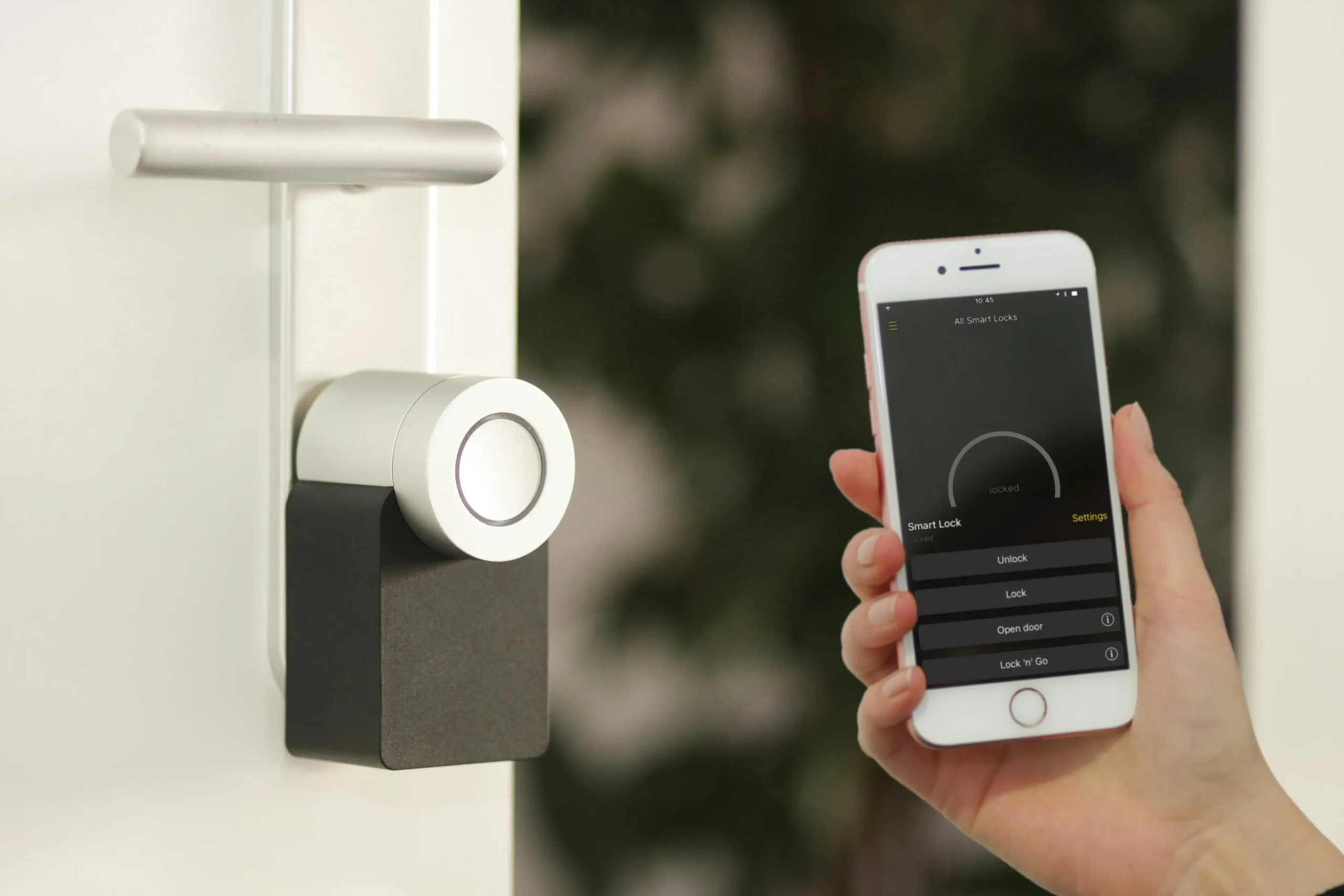
Optimizing your living environment using presence fusion sensors represents the definitive leap from reactive smart gadgets to a truly intuitive home that understands human behavior without needing voice commands.
This advanced automation strategy finally eliminates the common frustrations of basic motion detectors like those annoying moments when the lights cut out while you’re deep in a book or the thermostat ignores you just because you’re sitting still.
In this guide, we will explore how combining multiple sensing technologies creates a seamless experience, ensuring your home responds accurately to your presence, even when you aren’t moving a muscle.
What are presence fusion sensors and how do they differ from PIR?
Traditional Passive Infrared (PIR) sensors are essentially heat-trackers; they rely on significant movement to trigger actions, which often leads to “false negatives” the moment you lie down to rest.
Fusion technology solves this by merging PIR with mmWave radar and ultrasonic inputs, allowing the system to detect micro-movements like the rise and fall of a chest during a nap.
By using presence fusion sensors, your smart hub can distinguish between a stationary human and a blowing curtain, creating a reliable foundation for complex automation routines that actually work when needed.
These sensors act as the “eyes” of your processor, providing a constant stream of high-fidelity data that traditional, binary motion sensors simply cannot match in a modern household.
How does the integration of mmWave and PIR work in a home?
The magic happens when the system cross-references data points: the PIR sensor acts as the “scout” to detect initial entry, while the mmWave radar maintains the “occupied” status regardless of activity.
This dual-layer approach ensures that high-energy tasks happen instantly, while low-energy occupancy like reading or sleeping keeps the climate control active without requiring you to frantically wave your arms.
Modern hubs process these signals locally to reduce latency, ensuring your environment adapts in milliseconds. It feels less like a series of commands and more like the house is anticipating your next move.
Sophisticated algorithms can even map specific “zones” in a room, allowing different automations to trigger depending on whether you are working at your desk or lounging on the couch.
Why is presence fusion essential for energy efficiency in 2026?
Wasted electricity from lights or air conditioning running in empty rooms remains a significant cost for homeowners, often exacerbated by sensors that take far too long to time out.
Precise detection allows for “aggressive” energy saving. Instead of waiting for a ten-minute safety window typical of older systems, utilities can shut down the very moment you exit the room.
Automating your HVAC using presence fusion sensors ensures that heating or cooling is only delivered to occupied spaces, significantly reducing the carbon footprint of your daily residential operations.
For a deeper look into how these technologies are standardizing, the Matter Protocol official site provides technical insights into the interoperability of high-end sensors across different ecosystems.
Which sensor technologies are combined in a fusion device?
Manufacturers currently prioritize three main pillars: infrared for heat, microwave radar for distance and micro-vibration, and sometimes acoustic sensors to detect the subtle ambient sounds of human activity.
Some high-end models in 2026 also incorporate light level (lux) sensors, allowing the fusion device to decide if the presence actually requires artificial lighting based on the current natural brightness.
Now more: Smart Lights Explained: How They Work and Why You Need Them
By combining these inputs, the device creates a “certainty score” for occupancy, preventing that flickering effect that happens when a single-technology sensor loses track of the user.
This multi-modal approach is what elevates a “smart home” into the realm of “ambient intelligence,” where the technology becomes invisible and serves the resident without requiring any conscious input.
Comparison of Detection Technologies
Understanding the strengths of each component helps in placing them correctly within your home layout to maximize performance and avoid interference from appliances or pets.
| Technology Type | Best For | Main Weakness | Role in Fusion |
| PIR (Infrared) | Initial Motion | Stillness Blindness | Trigger / Wake-up |
| mmWave Radar | Micro-presence | Through-wall Triggers | Occupancy Maintenance |
| Ultrasonic | Hidden Areas | Airflow Interference | Depth Verification |
| Light (Lux) | Energy Saving | Cloud Cover Changes | Contextual Logic |
How can you implement presence fusion without compromising privacy?
Unlike cameras, fusion sensors do not “see” identifiable features or record images, making them the superior choice for private areas like bedrooms, bathrooms, or home offices.
The data remains as a series of distance and heat points processed on-device, ensuring that your daily movements are never uploaded to a cloud server unnecessarily.
Security-conscious users prefer using presence fusion sensors because they provide the benefits of high-resolution monitoring without the ethical or security vulnerabilities associated with visual recording devices.
Local processing through protocols like Thread or Zigbee further secures the home network, keeping all presence data within your walls and away from digital intruders.
When should you choose fusion sensors over standard motion detectors?
In transit areas like closets or laundry rooms, a cheap PIR sensor is usually sufficient since you are rarely stationary in those functional spaces for long.
However, in living rooms, offices, or kitchens, the investment in fusion technology pays off by preventing the “dark room” scenario while you are focused on a task.
Read more: Smart Home Automation for Beginners: Where to Start
If your automation goals involve complex logic, like dimming lights slowly when you leave rather than a sudden cut-off, the granularity of fusion data becomes a mandatory requirement.
The ability to track multiple people in a single room also allows for more nuanced scenes, such as adjusting the audio balance based on where everyone is actually sitting.
What are the installation challenges for high-precision sensors?
Placement is more critical with mmWave radar because it can “see” through thin partitions, potentially detecting a neighbor’s movement or a ceiling fan as a human presence.
Professional installers recommend mounting these units at a height that avoids direct line-of-sight with rotating machinery or vibrating appliances like refrigerators to maintain a clean signal.
Calibrating your system while using presence fusion sensors involves setting “exclusion zones,” which tells the software to ignore specific areas where non-human movement is expected.
Most 2026 models feature app-based heatmaps, allowing you to visually confirm what the sensor sees and adjust the sensitivity thresholds to match the specific layout of your room.
Establishing the Future of Residential Intelligence

The shift toward fused sensing marks the end of the “remote control” era of smart homes, moving us into a phase where our environments are truly responsive.
By removing the friction of manual triggers, we allow technology to fulfill its original promise: making our lives easier and safer without adding to our mental load.
As these devices become more affordable, the standard for a “smart” room will inevitably include the ability to know, with absolute certainty, if a human is present.
For those interested in the underlying hardware engineering of these microwave components, the IEEE Xplore Digital Library offers peer-reviewed papers on the latest radar and sensor fusion advancements.
FAQ: Frequently Asked Questions
Can pets trigger presence fusion sensors accidentally?
Yes, but most modern sensors include “pet immunity” settings that use AI to filter out signals from objects below a certain mass, preventing most false triggers.
Do these sensors work in total darkness?
Absolutely. PIR and mmWave technologies do not require visible light to function, making them perfect for navigating your home safely at night without searching for switches.
Will mmWave sensors interfere with my Wi-Fi signal?
No, these sensors operate on specific high-frequency bands (usually 24GHz or 60GHz) that do not overlap with standard 2.4GHz or 5GHz Wi-Fi channels used by routers.
How many fusion sensors do I need per room?
Generally, one well-placed sensor on the ceiling is enough for a standard room, though L-shaped spaces might require two to eliminate blind spots.
