
How AI-Adaptive Learning Models Personalize Education for Children Aged 3–7
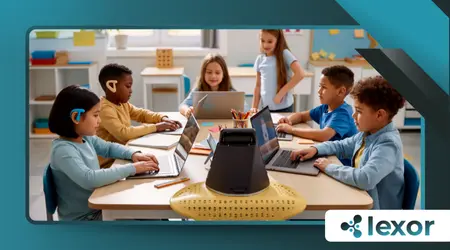
The frontier of early childhood education is being fundamentally reshaped by technology.
Specifically, AI-Adaptive Learning Models Personalize Education for Children Aged 3–7 by offering pathways tailored to individual cognitive rhythms.
These sophisticated systems move beyond static, one-size-fits-all curricula, recognizing the unique developmental trajectory of every young learner.
This shift promises a more effective and engaging start to formal education, directly impacting foundational skill acquisition.
The window between three and seven years old is paramount for brain development and skill formation.
During this period, children rapidly acquire language, mathematical reasoning, and social-emotional competencies.
Traditional classroom settings, even with dedicated teachers, often struggle to perfectly match content delivery speed to dozens of diverse needs.
This mismatch can lead to boredom for advanced students or frustration for those requiring more support.
How Do AI-Adaptive Learning Models Work in the Pre-K Setting?
AI-Adaptive Learning Models Personalize Education for Children Aged 3–7 using sophisticated algorithms that continuously analyze student interactions with digital content.
Imagine the AI as a highly observant, patient tutor capable of processing data points instantaneously.
Every tap, answer, and hesitation informs the system’s next move.
++How to Build an Entirely Offline Smart Home (Zero Cloud Dependency)
It gauges proficiency and preferred learning style in real-time.
Why is Personalized Learning Necessary for Young Children?

No two children, even identical twins, absorb information at the exact same pace or through the same medium.
Some children thrive with visual input, while others excel through auditory cues or tactile engagement.
An AI system dynamically adjusts the difficulty, presentation format, and scaffolding to maintain the optimal level of challenge.
This prevents students from being either overwhelmed or under-challenged, maximizing engagement and retention.
++Creating a Tech-Friendly Learning Space at Home for Young Kids
What are the Key Components of an Effective Adaptive System?
A robust AI-adaptive platform integrates several critical components.
It requires a comprehensive curriculum map, a strong engine for data collection, and algorithms designed to make pedagogical decisions.
Furthermore, the content itself must be high-quality, engaging, and developmentally appropriate for the target age group. Successful models also ensure a seamless and intuitive user experience for young users.
How Does the Technology Adjust Content Difficulty in Real-Time?
The system employs a continuous feedback loop. If a four-year-old masters counting to ten quickly, the AI might immediately introduce simple addition concepts.
Conversely, if a child struggles with letter recognition, the model provides additional, varied practice using interactive games or narrated stories before moving on.
++Top Tech Tools for Teaching Toddlers at Home
This constant optimization is where AI-Adaptive Learning Models Personalize Education for Children Aged 3–7 truly shine.
What Is an Original Example of AI Personalization in Practice?
Consider “Sam,” a five-year-old using an AI literacy app. Sam consistently excels at phonics but struggles with sight words.
The AI detects this pattern and temporarily reduces the phonics content.
Instead, it serves up a series of short, animated stories highlighting the sight words Sam missed, presenting them in multiple contexts (written, spoken, and pictured).
This targeted intervention addresses a precise skill gap without stalling overall progress.
How Do Adaptive Systems Maintain Teacher Oversight and Role?
The teacher’s role evolves from being the sole content deliverer to becoming a powerful facilitator and diagnostician.
++39 Examples of Artificial Intelligence in Education
The AI handles the immediate, moment-to-moment instructional adjustments, freeing the teacher to focus on social-emotional development, complex project-based learning, and small-group instruction for children with deep needs.
The AI provides teachers with rich, actionable data dashboards that spotlight individual student strengths and weaknesses.
Does AI Learning Support Diverse Learning Styles and Needs?
Yes, the very nature of adaptive learning is inclusionary. If a child learns best through song, the system prioritizes auditory activities.
If another needs hands-on manipulation, it suggests digital activities mimicking touch and movement.
AI-Adaptive Learning Models Personalize Education for Children Aged 3–7 by creating a multi-modal learning environment, effectively flattening barriers often encountered in a strictly linear, text-based curriculum.
What Is a Second Original Example Highlighting Mathematical Concepts?
“Lila,” aged six, is working on geometry. She understands shapes but struggles with spatial reasoning, specifically rotating objects mentally.
The AI platform observes her repeated errors on rotation tasks.
It responds by presenting a 3D interactive module where she can manually rotate virtual blocks to match a target image, providing immediate visual and kinesthetic feedback.
This deep, individualized practice in spatial reasoning significantly improves her conceptual understanding.
What Data Points Are Critical for Teachers to Review from AI?
Teachers need summarized data, not raw logs. The AI must clearly show mastery levels across domains, growth trajectories, and specific, high-priority intervention areas.
A practical display for a teacher might look like this:
| Domain | Average Class Mastery (%) | High Priority Students (#) | Suggested Intervention |
| Numeracy | 85% | 3 | Small-group re-teaching on number sense (11-20) |
| Phonological Awareness | 92% | 1 | Individualized support for blending CVC words |
| Fine Motor Skills | 78% | 5 | Digital tracing and guided drawing activities |
This data facilitates proactive and targeted instruction.
Data privacy is paramount when dealing with young children. Developers must ensure stringent security protocols and clear transparency about how data is collected and used.
Furthermore, concerns exist about screen time and the need to balance digital learning with physical, hands-on, and social play.
The best AI-Adaptive Learning Models Personalize Education for Children Aged 3–7 by recommending specific off-screen activities, integrating the digital with the physical.
Will These Models Replace the Essential Human Element of Teaching?
The goal of this technology is not replacement but enhancement. Can a machine replicate the warmth, empathy, and intuitive understanding of a dedicated educator?
Of course not. The most valuable element of a teacher’s interaction—the human connection, the emotional encouragement, and the ability to inspire a love of learning—remains irreplaceable.
Why would we use a teacher’s time for repetitive drilling when a machine can handle that, freeing the teacher for deeper human connection?
The Future of Personalized Early Education
The integration of AI-Adaptive Learning Models Personalize Education for Children Aged 3–7 marks a significant and positive disruption.
These tools ensure that foundational learning is not a race but a customized journey where every child receives the exact support they need, precisely when they need it.
The future of early education is dynamic, data-driven, and, most importantly, deeply personalized, securing better educational outcomes for the next generation.
Frequently Asked Questions
Q: Is the adaptive content purely digital, or does it integrate with the classroom?
A: The most effective models provide digital resources while also giving teachers personalized recommendations for off-screen, hands-on activities, ensuring a balanced and integrated learning experience.
Q: What is the minimum recommended age for using AI-adaptive tools?
A: While content varies, platforms designed for early education typically begin around age three, focusing on foundational skills like shape recognition, early language development, and counting.
Q: Do these models require specialized equipment beyond a standard tablet or computer?
A: No, most modern AI-adaptive learning platforms are designed to run on standard educational hardware, such as tablets, laptops, or desktop computers commonly found in schools and homes.
