Digital Portfolios for Preschoolers: How Schools Are Using Data Instead of Grades

Implementing digital portfolios for preschoolers has redefined how educators and parents track early development by moving beyond the limitations of traditional, binary grading systems.
The concept of digital portfolios for preschoolers refers to a dynamic, multimedia collection of a child’s work, social interactions, and developmental progress stored online.
Instead of a simple report card, these platforms use photos, videos, and voice recordings to document how a child solves a puzzle or interacts with peers.
This approach aligns with the National Association for the Education of Young Children (NAEYC) standards, emphasizing that assessment must be continuous, intentional, and highly contextualized.
By capturing the “how” and “why” of learning, teachers provide a much deeper narrative than a “meets expectations” checkbox could ever offer to families.
In this guide, we will explore:
- The fundamental transition from grades to data-driven insights.
- How modern documentation captures holistic developmental milestones.
- The strategic benefits of real-time parent-teacher collaboration.
- Security and ethical considerations for early childhood data.
How digital portfolios for preschoolers replace traditional grading
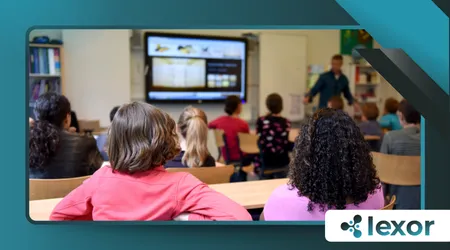
Traditional grades fail to capture the rapid, non-linear cognitive growth that occurs between the ages of three and five in a classroom.
Schools now use digital portfolios for preschoolers to track specific competencies, such as fine motor skills or emotional regulation, using evidence-based data points.
When a teacher uploads a video of a student building a block tower, they tag it with specific learning objectives and developmental markers.
This data-driven approach allows for personalized learning paths, ensuring that no child is left behind simply because they didn’t fit a standard mold.
Evidence suggests that qualitative data provides a more accurate forecast of future academic success than standardized testing ever could for this specific age group.
++ Using Generative AI to Create Personalized Phonics Exercises for Early Readers
Why data-driven documentation improves parent engagement
Parents often feel disconnected from their child’s school day, receiving only brief summaries during occasional meetings or through wrinkled papers in a backpack.
Utilizing digital portfolios for preschoolers bridges this gap by providing an “open window” into the classroom through secure, real-time mobile application updates.
Families can see exactly what their child is learning as it happens, fostering meaningful conversations at home that reinforce the school’s daily curriculum.
++ How Computer Vision Tracks Fine Motor Skill Development in Preschool Children
This transparency builds immense trust between the institution and the home, creating a unified support system that benefits the child’s long-term emotional well-being.
According to research found on Edutopia, meaningful family engagement is one of the strongest predictors of a student’s positive educational outcomes and social-emotional growth.
What are the key metrics tracked in preschool portfolios
| Developmental Domain | Data Captured via Portfolio | Impact on Learning |
| Cognitive | Problem-solving sequences, sorting logic | Identifies giftedness or delays early |
| Social-Emotional | Collaborative play videos, conflict resolution | Tracks empathy and peer interaction |
| Physical | Grip strength photos, balance videos | Monitors gross and fine motor milestones |
| Language | Audio recordings of storytelling/syntax | Documents vocabulary and phonetic growth |
How schools ensure data privacy and security
Protecting the digital footprint of a minor is the most critical responsibility for any educational institution adopting new classroom technology today.
Leading platforms for digital portfolios for preschoolers employ end-to-end encryption and strict access controls to ensure that only authorized guardians see the content.
++ Digital Storytelling Through Voice Assistants: How Kids Create Narratives Using Only Speech
Schools must comply with the Children’s Online Privacy Protection Act (COPPA) and FERPA regulations to maintain high standards of data integrity and safety.
Administrators should conduct regular audits of their software providers to verify that student data is never sold to third parties or used for advertising.
Educating parents about privacy settings is also a vital step in creating a secure digital environment for the next generation of young learners.
Which tools are leading the digital portfolio revolution
Several specialized platforms have emerged as leaders, each offering unique features tailored to the specific needs of early childhood educators and busy families.
Seesaw and Kaymbu are widely recognized for their intuitive interfaces that allow even the youngest students to begin documenting their own learning journeys.
These tools prioritize ease of use, allowing teachers to record observations quickly without detracting from their essential face-to-face time with the children.
By integrating these digital portfolios for preschoolers, schools can generate comprehensive reports that show progress over time, rather than just a snapshot in time.
The choice of platform often depends on a school’s specific curriculum goals and the level of technical literacy among its teaching staff and community.
How teachers manage the transition to digital documentation
Moving from paper-based folders to a digital system requires a shift in mindset and a commitment to professional development for all staff members.
Teachers must learn to be “curators of learning,” identifying the most significant moments that demonstrate a child’s mastery of a particular skill or concept.
The goal is not to record every single minute, but to capture high-quality evidence that tells a compelling story of a child’s unique growth.
When implemented correctly, digital portfolios for preschoolers actually save time by streamlining the reporting process and eliminating the need for manual filing systems.
Collaborative training sessions allow educators to share best practices for captioning and tagging evidence, ensuring consistency across different classrooms within the same school.
When should schools start implementing digital portfolios
Most experts agree that the best time to start is at the beginning of the academic year to establish a clear baseline.
Starting early allows for a robust comparison between a child’s abilities in the fall and their accomplishments by the following spring or summer.
However, schools can transition mid-year if they provide adequate training and clear communication to parents about the change in assessment methodology and goals.
The cumulative nature of digital portfolios for preschoolers means that the value of the data grows exponentially as more entries are added over months.
Ultimately, the transition should be a deliberate process that prioritizes quality over quantity to avoid overwhelming the teachers or the parents involved.
The shift toward digital portfolios for preschoolers represents a more compassionate and scientifically accurate way to view early childhood development in the modern era.
By focusing on rich data rather than arbitrary grades, we celebrate the individual journey of every child while providing educators with the tools they need.
As technology continues to evolve, these digital records will become even more essential for creating personalized, inclusive, and effective learning environments for everyone.
FAQ (Frequently Asked Questions)
Are digital portfolios better than traditional report cards?
Yes, because they provide visual evidence of a child’s progress across multiple domains, offering a much more comprehensive view than a simple letter grade.
Do digital portfolios take up too much of a teacher’s time?
Initially, there is a learning curve, but most teachers find that digital tools eventually save time by organizing observations and simplifying the report-writing process.
Can parents contribute to their child’s digital portfolio?
Most modern platforms allow parents to upload photos or comments from home, creating a more holistic picture of the child’s development outside of school.
Is my child’s data safe on these platforms?
Schools use professional-grade software that complies with federal privacy laws like COPPA and FERPA to ensure that all student information remains private and secure.
For more information on the evolving role of technology in early childhood, you can visit the Office of Educational Technology for official guidelines and resources.
