
Teaching Spatial Reasoning Through Mixed-Reality Sandbox Systems
Teaching Spatial Reasoning Through Mixed-Reality sandbox systems has fundamentally shifted how we approach cognitive development in 2026.
This isn’t just about playing with sand; it’s about merging physical manipulation with abstract geological data to bridge a gap that traditional textbooks have ignored for decades.
By integrating these tactile loops, we are finally allowing students to “feel” three-dimensional space, fostering a depth of understanding that static screens simply cannot replicate.
What is a Mixed-Reality Sandbox System?
At its heart, a mixed-reality sandbox is a high-tech conversation between physical matter and digital logic. It uses a 3D sensor and a top-down projector to track every grain of sand.
As you mold the surface, the system instantly projects a color-coded topographic map back onto it, contour lines appear, and simulated water flows through valleys you just carved with your own hands.
The beauty is in the immediacy. Build a mound, and it glows red to signify a peak; dig a trench, and the projector fills it with a shimmering blue digital tide.
This feedback loop makes invisible, daunting concepts like sea-level rise or watershed management physically tangible. It’s one thing to read about a flood plain; it’s another to watch your “town” submerge because you dug the wrong channel.
By 2026, these systems have migrated from university labs into mainstream elementary classrooms. They offer a rare opportunity for embodied cognition, where the brain and body solve problems in tandem.
This physical engagement anchors memory in a way that staring at a flat, two-dimensional PDF never will.
How does it strengthen spatial reasoning in students?
Spatial reasoning, the ability to rotate and manipulate objects in the mind’s eye, is the “quiet” foundational skill for everything from surgery to software engineering.
When Teaching Spatial Reasoning Through Mixed-Reality, educators provide a lab where children must predict how a physical change will alter a digital projection. It is, essentially, training for the imagination.
The mental gymnastics required to link a 2D contour line to a 3D hill is a complex cognitive feat that many adults still struggle with.
The sandbox demystifies this. By building the hill and seeing the map respond, students build the neural pathways necessary for advanced mathematical reasoning. It’s an intuitive leap facilitated by hardware.
Beyond the individual, these sandboxes are social hubs. You’ll often see a group of students arguing—and then collaborating, to stop a simulated flood.
They have to communicate spatial ideas under pressure. “Make this higher” or “dig a deeper bypass” becomes a shared vocabulary, refining their ability to describe the world around them with precision.
For a deeper dive into how these early spatial skills correlate with long-term success, the National Science Foundation offers extensive research detailing the link between early spatial training and achievement in high-stakes STEM careers.
Why are tactile experiences vital for modern digital learning?
We are currently drowning in “glass-only” interfaces. While tablets have their place, they lack the haptic feedback the human brain needs to truly “grasp” a concept.
Molding sand provides a sensory resistance that is essential for developing fine motor skills and a genuine sense of spatial scale.
Read more: Virtual reality applications beyond headsets and controllers
Mixed reality offers a compromise: the messy, tactile engagement of the real world layered with the informative power of data.
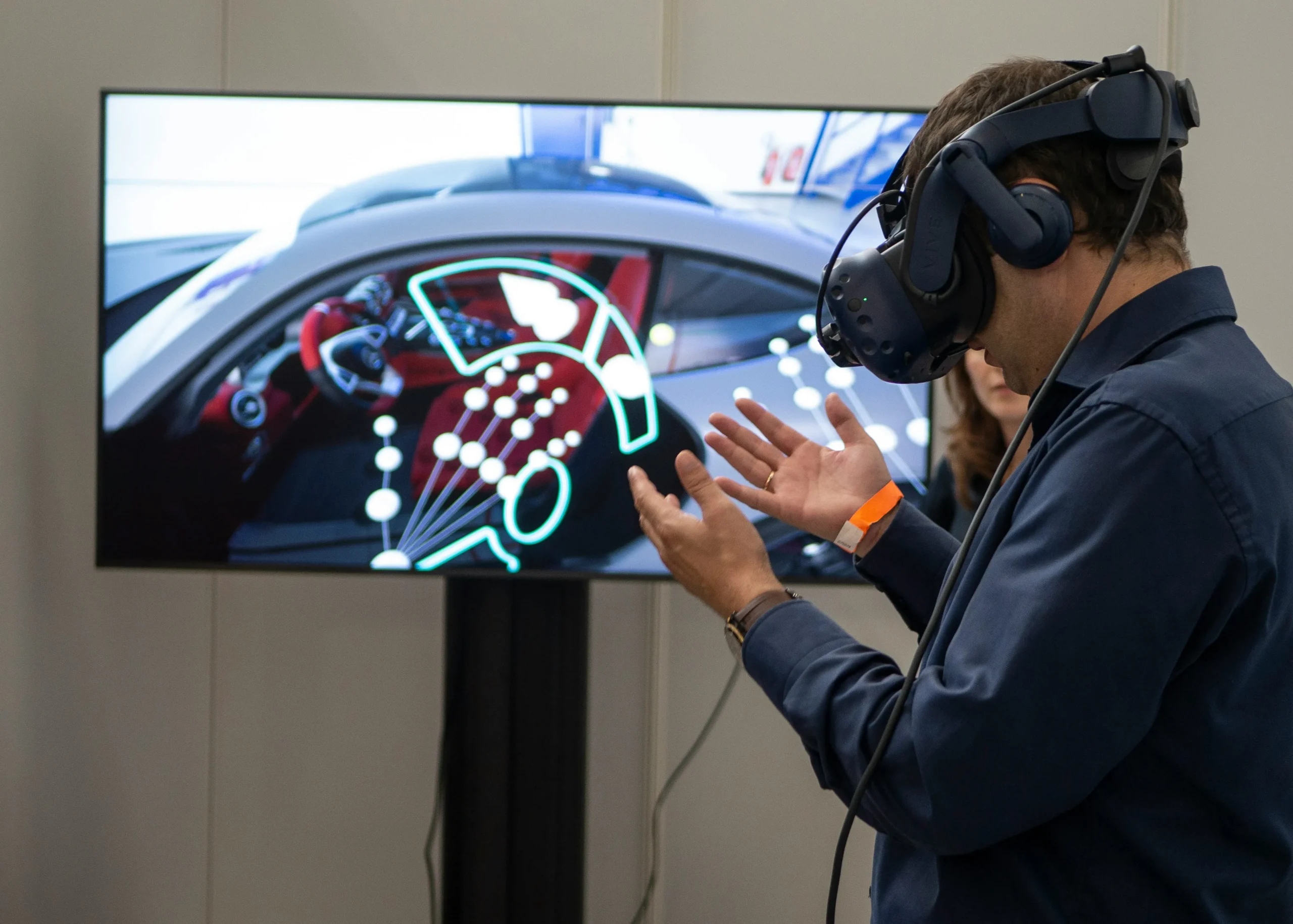
Students aren’t just learning geography; they are feeling the weight of the earth as they reshape it. There is something unsettling about how much we’ve ignored the sense of touch in education lately, and the sandbox feels like a necessary correction.
There is also a significant psychological shift when a child realizes they are the “creator.” That sense of agency, knowing they can change the environment and see the data reflect it, increases retention.
The lesson becomes a lived experience, something they remember because they felt it under their fingernails.
| Feature | Traditional 2D Maps | VR/AR Headsets | Mixed-Reality Sandbox |
| Tactile Feedback | None | Limited (Controllers) | High (Real Sand) |
| Collaboration | Low | Low (Isolated) | High (Group-based) |
| Spatial Conversion | Abstract | Virtual | Physical to Digital |
| Learning Curve | High for kids | Medium | Very Low (Intuitive) |
| Cognitive Load | High | High (Nausea/Weight) | Balanced |
Which subjects benefit most from this technology?
Geography is the obvious winner, but that’s just the surface. Concepts like tectonic shifts, erosion, and volcanic activity become active experiments rather than dry lectures.
Instead of memorizing how a river changes course, students physically block the stream and watch the erosion patterns happen in real-time.
Mathematics also finds a strange, effective home here. Understanding volume, area, and slope is much simpler when you can see them.
A teacher might challenge a class to “create a peak with a specific volume,” forcing them to apply logic to a physical object. It’s geometry you can touch.
Read more: Augmented Reality vs Virtual Reality: Which Fits Your Business Needs?
Environmental science is perhaps the most urgent application. By 2026, many units include climate change modules.
Teaching Spatial Reasoning Through Mixed-Reality allows students to simulate melting glaciers or rising tides on their own coastal cities.
It turns a terrifying, abstract global crisis into a manageable simulation where they can test real mitigation strategies.
What are the practical steps for school integration?
Adopting this isn’t just about the hardware; it’s about the space. Schools need a spot that can handle sand spills and a curriculum that prevents the tool from becoming an expensive toy.
Professional development is the real key, teachers need to know how to guide the play toward specific learning outcomes.
Learn more: Digital Portfolios for Preschoolers: How Schools Are Using Data Instead of Grades
Many schools are opting for mobile “all-in-one” units. These can be wheeled from the science lab to the art room, where they might be used for landscape studies.
This flexibility helps justify the cost, ensuring the tech isn’t sitting idle in a closet for half the semester.
Maintenance is surprisingly low-fuss. Kinetic sand is the standard now, as it holds shapes better and keeps dust to a minimum.
Regular calibration of the 3D sensor is a must, but once the system is dialed in, the illusion of “augmented sand” remains seamless and deeply immersive for the students.
For educators looking to design more inclusive classrooms, the Edutopia platform provides excellent guides on integrating high-tech, tactile tools into diverse environments, ensuring these experiences reach every student.
FAQ (Frequently Asked Questions)
Is the sandbox safe for children with sensory sensitivities?
Usually, yes. Many find kinetic sand quite grounding. However, the bright projections can be a bit much for some. It’s always best to have a way to dim the lights or let them interact with the sand alone first.
How much does one of these systems actually cost?
Commercial units can be pricey, but many schools go the DIY route. Using open-source software, a Microsoft Kinect, and a standard projector, a resourceful tech department can build one for under $1,500.
Can this work for remote or hybrid learning?
It’s difficult. You can stream the activity, but the remote student loses the tactile “soul” of the experience. It really is an in-person, collaborative tool designed for the classroom floor.
What is the ideal age group?
It’s most effective between ages 5 and 12. The younger ones love the cause-and-effect, while the older students can handle the complex mathematical and environmental modeling.
Does the sand need to be replaced?
If you keep it covered, kinetic sand lasts for years. You might need a small “top-off” once a year to account for the sand that inevitably hitches a ride home on someone’s sleeves, but it’s remarkably durable.
