
Smart home automation built on semantic home models
Smart home automation built on semantic home models marks the definitive move from remote-controlled gadgets to “thinking” spaces that actually grasp context, spatial nuances, and human intent.
We are finally stepping away from the era of isolated devices. Instead, our homes are evolving into unified digital twins where hardware doesn’t just react to triggers, it reasons through them to make life genuinely easier.
What is a Semantic Home Model and Why Does It Matter?
Strip away the marketing jargon, and a semantic model is essentially a machine-readable map of your life.
While a basic setup knows there is a “lamp” in the “kitchen,” a system built on semantic home models understands that specific lamp sits right above the cutting board and only needs to be at full brightness during dinner prep.
This distinction is the cure for “management fatigue.” Semantic frameworks allow a house to infer needs by looking at the interplay between occupancy and habit.
It stops being a collection of plastic and glass and starts behaving like a responsive environment that anticipates what you need before you reach for a switch.
These models use sophisticated graphs rather than flat lists to define your living space. By understanding that “the nursery is adjacent to the master bedroom,” the system gains a sense of spatial empathy.
This logic is what allows a robotic vacuum to stay silent when it knows someone is sleeping nearby.
How Does Semantic Logic Improve Device Interoperability?
The biggest headache in home tech has always been the “walled garden.” Brands used to build fortresses around their products, refusing to talk to outsiders.
Semantic modeling effectively tears these walls down by focusing on the meaning of an action rather than the brand of the hardware.
The 2026 maturation of the Matter protocol has finally given us a shared vocabulary. Systems built on semantic home models use this foundation to create a seamless experience across ecosystems.
You can track these technical shifts through the Connectivity Standards Alliance, the body currently steering the Matter ship toward universal compatibility.
Think of the semantic layer as the architect overseeing a crew of subcontractors. When you add a new sensor, the model doesn’t just see a “new device”, it assigns it a specific functional role based on where it is and what it sees.
This makes sophisticated automation accessible to normal people, not just coding enthusiasts.
| Feature | Traditional Automation | Semantic Automation (2026) |
| Logic Basis | Rigid “If-This-Then-That” | Contextual Probabilistic Reasoning |
| User Effort | Constant Manual Programming | Self-Correcting Digital Twin |
| Ecosystem | Fragmented Brand Silos | Unified Knowledge Graph |
| Awareness | Simple Binary Motion | Intent and Activity Recognition |
| Privacy | Cloud-Reliant and Exposed | Localized “Edge” Processing |
Which Technologies Power Semantic Reasoning in 2026?
Knowledge Graphs are the hidden engines here. Unlike a standard database that just stores numbers, a graph understands relationships, it knows that if a window is open, the air conditioner is essentially fighting a losing battle.

It allows the home to make executive decisions to save both energy and hardware life.
Natural Language Processing has also moved past the “robotic command” phase. Because the software is built on semantic home models, you don’t have to remember specific phrases.
Telling your home to “settle down for the night” can trigger a complex chain of dimming lights, locking doors, and adjusting temperatures effortlessly.
Edge computing is what makes this feel instantaneous. Hubs in 2026 are powerful enough to run these complex reasoning models locally.
This means your house doesn’t “die” when the internet goes out, and your private conversations don’t end up on a server halfway across the world.
Why is Contextual Awareness the Future of Domestic Comfort?
We have all experienced the “smart home” that is actually quite dim, turning off the lights while you’re still reading or failing to recognize a guest.
Contextual awareness is the long-awaited fix. It allows the system to distinguish between a quiet afternoon and an empty house, which is a massive leap forward.
Learn more: How to Automate Your Home Lighting for Maximum Comfort
By viewing sensor data through a semantic lens, the house stops relying on crude motion detection.
Systems built on semantic home models understand that “occupancy” is a state of being, not just a series of movements.
This prevents those frustrating moments where you’re forced to wave your arms to stay out of the dark.
The result is “quiet technology.” Your house starts managing the mundane details in the background, like running the dryer when solar panels are at peak production, without bothering you with notifications.
It becomes a partner in your routine, quietly smoothing over the friction of daily domestic life.
How Does This Approach Enhance Home Security and Safety?
Security in a semantic home is about more than just loud sirens; it is about pattern recognition. The model understands the “rhythm” of your household.
If a door opens at 3 AM when the model knows the family is upstairs, it can react with much more nuance than a standard alarm.
Read more: Home Security: The Best Smart Home Devices for 2025
Safety protocols also leverage this spatial logic. During a fire, the house doesn’t just beep; it can illuminate a specific exit path and unlock the front door for firefighters.
Because it is built on semantic home models, it can even relay which rooms are currently occupied to first responders, potentially saving lives.
This intelligence also kills notification fatigue. The semantic layer cross-references your cameras with your calendar and sensor history.
It knows that the person at the door is a scheduled delivery and not a stranger, sparing you from the constant, meaningless pings that make traditional smart doorbells so exhausting.
What Challenges Remain for Global Semantic Adoption?
The industry still struggles with a “universal ontology.” While Matter is a great start, there are still a dozen different ways for manufacturers to define what a “smart oven” actually does.
Until everyone agrees on a single way to describe home functions, we will still see occasional glitches in the matrix.
Energy consumption is another factor often ignored. Running a continuous digital twin of your home requires real processing power.
Learn more: Smart home automation using self-healing networks
Engineers are currently racing to develop specialized chips that can handle semantic reasoning without adding twenty dollars to your monthly electric bill.
Trust remains the final boss. Homeowners need to feel certain that a system built on semantic home models is a butler, not a spy.
Proving that this data stays local and serves only the inhabitant is the only way this technology moves from the early-adopter phase into the mainstream suburban home.
Final Thoughts
The real victory of smart living won’t be a house full of screens, but a house that works so well you forget the tech is even there. Semantic modeling is the bridge to that future.
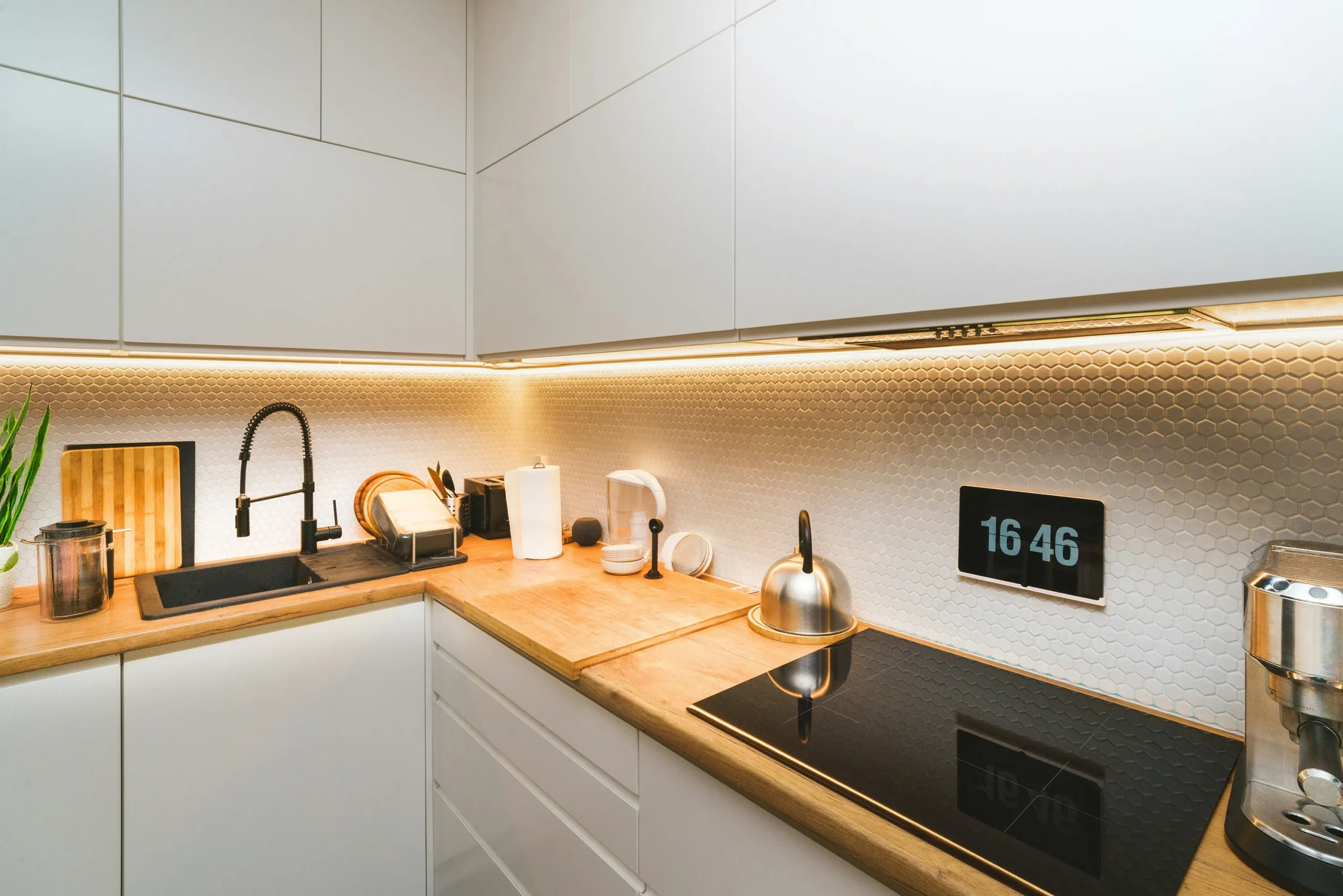
By giving our homes a brain instead of just a remote, we are finally creating spaces that adapt to us, rather than the other way around.
To dig deeper into how AI is being woven into the fabric of our walls, the IEEE Xplore Digital Library offers a wealth of peer-reviewed research on ambient intelligence and the future of domestic IoT.
FAQ (Frequently Asked Questions)
Is a semantic home harder to set up?
Actually, it’s easier. Because the system understands what devices are, it can often self-configure. You won’t have to spend hours building “If-This-Then-That” routines because the house already understands the logic of the room.
What happens if I use different brands?
Semantic models thrive on diversity. As long as your devices support Matter or a similar open standard, the semantic hub can translate their data into its own internal map, making brand loyalty a thing of the past.
Will this make my home more expensive to run?
In the long run, it saves money. By understanding the thermal dynamics of your home and the efficiency of your appliances, the semantic model can cut energy waste by up to 20% through smarter climate and light management.
Does the system “learn” my bad habits?
It learns your preferences, not your mistakes. You can set boundaries on the model so it knows that while you might leave the fridge open occasionally, that isn’t a “habit” it should accommodate or encourage.
Can I turn off the “learning” aspect?
Yes. Every reputable semantic platform includes a “manual mode.” If you want your house to stop thinking and just follow orders for a while, you can easily toggle the autonomous reasoning off.
