The Role of Oracles in Blockchain: How Off-Chain Data Gets Verified On-Chain
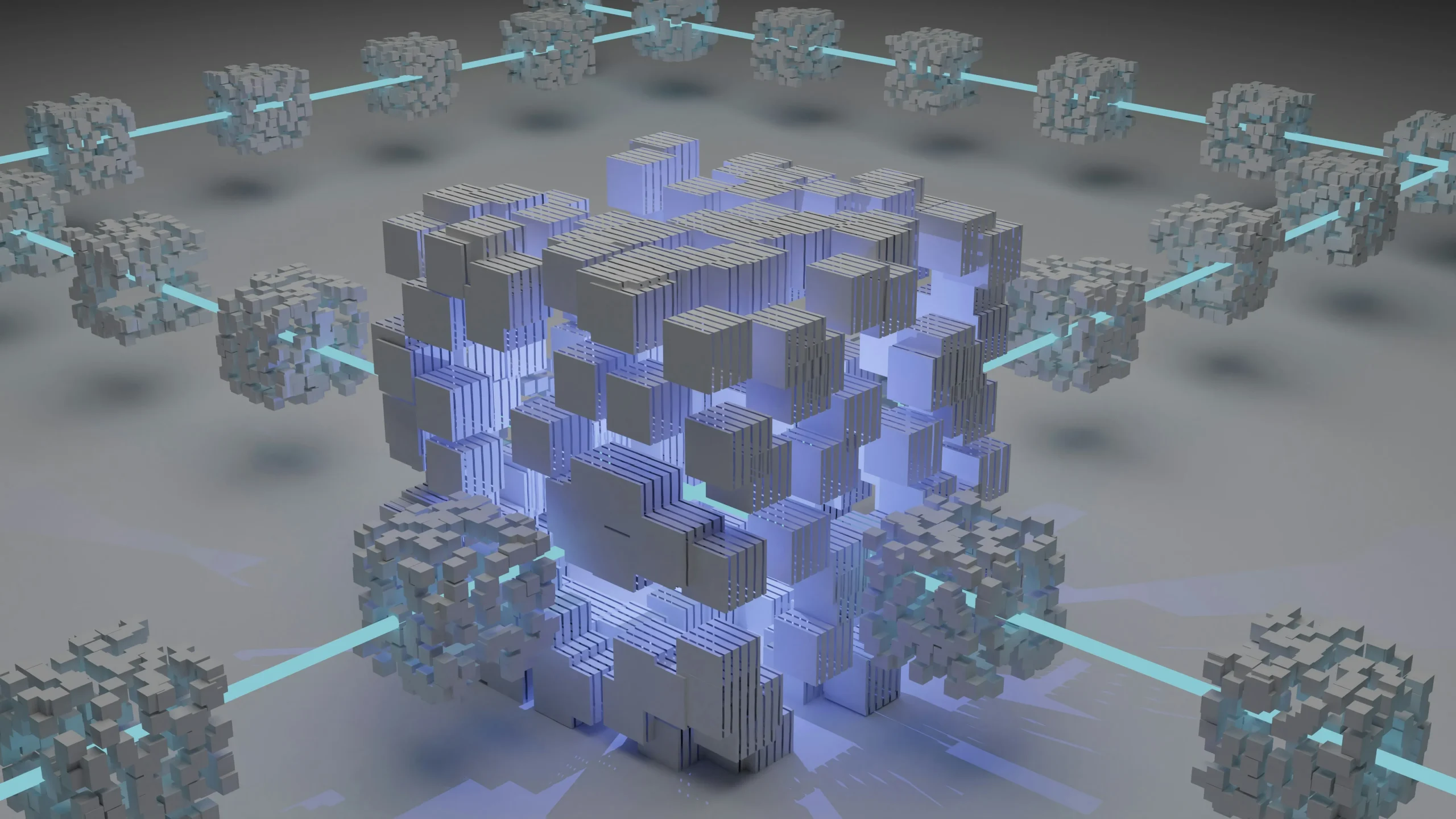
Understanding the Role of Oracles in Blockchain is fundamental to grasping how decentralized networks actually interact with the physical world.
Without these specialized data conduits, smart contracts would remain trapped in a digital vacuum, unable to execute actions based on stock prices, weather patterns, or election results.
As we navigate the Web3 landscape of 2026, oracles have evolved from simple data feeds into sophisticated, decentralized verification layers.
This guide explores the mechanisms of off-chain data validation, the mitigation of the “Oracle Problem,” and the diverse applications driving modern decentralized finance (DeFi) and automated insurance.
What is a blockchain oracle and why is it necessary?
A blockchain is, by design, a deterministic environment. It can only process information already recorded on its ledger to maintain perfect consensus across thousands of nodes.
If a smart contract needs to know the price of Ethereum in USD, it has no native way to “Google” that information; doing so would risk different nodes receiving different results, shattering the network’s unity.
This is where the Role of Oracles in Blockchain becomes indispensable. They act as the eyes and ears of the network.
Rather than being the data source themselves, they function as a translation layer that fetches information from APIs or sensors and reformats it into a language the blockchain understands.
How does off-chain data get verified for on-chain use?
Verification starts when a smart contract issues a request for specific data say, a flight delay or a commodity price.
A decentralized oracle network (DON) picks up this request and queries multiple independent data providers to ensure accuracy and prevent any single point of failure.
Once the data is retrieved, the oracle nodes must reach a consensus on the true value before submitting it.
Read more: How Blockchain Is Changing the World Beyond Crypto
This process often involves cryptographic proofs and economic incentives; nodes frequently stake tokens as collateral to guarantee the honesty of the information they provide.
If a node lies, its stake is slashed a brutal but effective financial deterrent.
Why is the “Oracle Problem” a risk for decentralized applications?
The “Oracle Problem” refers to a dangerous paradox: why build a decentralized blockchain if you rely on a single, centralized data source?
If a DeFi platform depends on one oracle for its price feeds, a hacker only needs to compromise that one feed to drain the protocol’s liquidity.
There is something unsettling about how often this single point of failure is overlooked in early-stage projects.
Solving this requires decentralization at every level: multiple data sources, multiple oracle nodes, and robust aggregation methods.
By distributing the Role of Oracles in Blockchain across a diverse network, developers ensure that the data remains as tamper-proof as the underlying ledger.
To explore the technical standards for these decentralized networks, the Ethereum Foundation offers deep dives into smart contract security and external integration.
Which types of oracles are most common in 2026?
Software oracles are the workhorses of the industry, interacting with web-based data like exchange rates or social media metrics.
They provide the high-speed information required for the vast majority of decentralized finance applications and prediction markets currently operating on layer-2 networks.
Know more: Top 10 Real-World Applications of Blockchain
Hardware oracles, meanwhile, interface with the physical world through IoT sensors.
These are increasingly vital for parametric insurance, where a payout is automatically triggered if a sensor detects a specific event, like a drought or a high-magnitude earthquake, without the need for a human claims adjuster.
Oracle Network Comparison (2026 Industry Benchmarks)
| Feature | Centralized Oracle | Decentralized Oracle (DON) | Hardware/IoT Oracle |
| Trust Model | Trust in a single entity | Economic incentives & consensus | Physical sensor verification |
| Data Latency | Low (Single trip) | Moderate (Aggregation time) | Varies by hardware |
| Security Risk | Single Point of Failure | Sybil attacks (Mitigated) | Physical tampering/Damage |
| Primary Use | Private/Enterprise chains | Public DeFi & DEXs | Supply Chain & Insurance |
| Transparency | Low | High (Audit on-chain) | High (Encrypted hardware) |
When should developers prioritize decentralized over centralized feeds?
Centralized feeds might suffice for internal testing or private enterprise chains where participants already trust one another.
However, for any public-facing application managing significant value, a decentralized approach is the only responsible choice.
The Role of Oracles in Blockchain is ultimately to preserve the trustless nature of the system.
If a developer uses a centralized oracle, they have effectively reintroduced a middleman, negating the primary security benefits of using a blockchain in the first place.
This often ends up being a costly shortcut that compromises the entire project’s integrity.
How are cross-chain oracles shaping the future of Web3?
Interoperability is the hallmark of the 2026 ecosystem. Cross-chain oracles allow data and assets to move between different networks by verifying the state of one blockchain and reporting it to another.
This enables complex multi-chain strategies and unified liquidity pools that were impossible just a few years ago.
Read more: Web3 Explained: The Future of Internet Technology
By facilitating communication between disparate networks, cross-chain oracles reduce the fragmentation that has long plagued the space.
They allow a smart contract on Polygon to react to a transaction on Bitcoin, creating a more cohesive global financial infrastructure.
For authoritative research on these protocols, the NIST Information Technology Laboratory provides critical frameworks on cryptographic standards and blockchain interoperability.
The evolution of the Role of Oracles in Blockchain has turned smart contracts from isolated scripts into powerful, real-world tools.
By bridging the gap between on-chain logic and off-chain reality with verified data, oracles provide the foundation for the next generation of global commerce.
As these networks become faster and more secure, the distinction between digital and physical agreements will continue to blur. Protecting the integrity of our decentralized world depends entirely on how we handle the data that feeds it.
FAQ: Frequently Asked Questions
Can oracles change the data they retrieve?
A properly designed oracle does not alter data; it merely translates and verifies it. However, a malicious or compromised node could submit false data, which is why decentralization and consensus mechanisms are non-negotiable for security.
Are blockchain oracles expensive to use?
Costs vary based on the frequency of updates and the underlying network’s gas fees. Developers usually pay a fee in the oracle’s native token to incentivize nodes to fetch and verify the requested information.
How do oracles prevent “garbage in, garbage out”?
Decentralized oracles use multiple data sources and aggregate the results, often using the median value. This filters out outliers and prevents a single corrupted source from ruining the integrity of the on-chain data.
Is it possible for a blockchain to work without oracles?
Yes, but only for tasks that are entirely self-contained, such as minting tokens or moving assets within the same chain. Any task requiring information from the outside world necessitates an oracle.
What is a “reputation system” in oracle networks?
Reputation systems track the historical accuracy and uptime of nodes. Those with high scores are more likely to be selected for high-value data requests, while dishonest nodes lose their financial stake.
