
Virtual Reality in Architecture: Designing Tomorrow’s Spaces

The integration of virtual reality in architecture is no longer a futuristic concept—it’s a transformative tool reshaping how we design, visualize, and experience spaces.
As the lines between the physical and digital worlds blur, architects and designers are leveraging VR to create immersive environments that push the boundaries of creativity and functionality.
This technology is not just a trend; it’s a revolution that’s redefining the architectural landscape.
The Evolution of Architectural Design Tools
Architecture has always been a field driven by innovation.
From hand-drawn blueprints to computer-aided design (CAD) software, each technological leap has expanded the possibilities of what we can build.
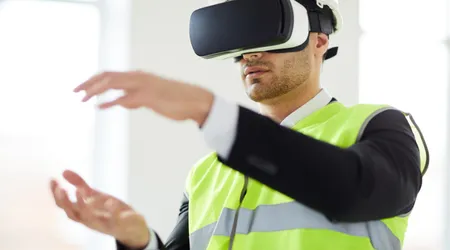
Today, virtual reality in architecture represents the next frontier, offering an unparalleled level of immersion and interactivity.
Unlike traditional 2D renderings or even 3D models, VR allows architects to step inside their designs, exploring every corner and detail as if it were already built.
This shift from passive observation to active participation is changing how professionals approach their work.
For instance, a 2022 study by the American Institute of Architects (AIA) revealed that 75% of architectural firms using VR reported improved client satisfaction due to clearer communication and faster decision-making.
+ NFTs demystified: introduction to digital evolution
Enhancing Collaboration and Communication
One of the most significant advantages of virtual reality in architecture is its ability to bridge the gap between architects, clients, and stakeholders.
Traditional design presentations often leave room for misinterpretation, as clients struggle to visualize complex plans from flat drawings or static models.
VR eliminates this barrier by providing a shared, immersive experience.
Imagine a scenario where a client can walk through a virtual representation of their future home or office, adjusting materials, lighting, and layouts in real-time.
This level of interaction not only fosters collaboration but also ensures that everyone is on the same page before construction begins.
Moreover, VR is proving invaluable for large-scale projects involving multiple teams.
By creating a unified virtual environment, architects, engineers, and contractors can identify potential issues early, reducing costly revisions and delays.
Pushing the Boundaries of Creativity
Virtual reality in architecture isn’t just about practicality—it’s also a powerful tool for creativity.
Designers are no longer confined to the limitations of physical models or software interfaces.
With VR, they can experiment with bold, unconventional ideas and instantly see how they translate into real-world spaces.
For example, Zaha Hadid Architects have embraced VR to explore fluid, organic forms that challenge traditional architectural norms.
By immersing themselves in their designs, they can refine every curve and angle, ensuring that the final structure is both aesthetically stunning and functional.
This creative freedom extends to urban planning as well.
Cities like Singapore are using VR to simulate entire neighborhoods, testing how new developments will impact traffic, energy consumption, and community dynamics.
These virtual simulations enable planners to make data-driven decisions that balance growth with sustainability.
Improving Sustainability and Efficiency
Sustainability is a pressing concern in modern architecture, and virtual reality in architecture is playing a key role in addressing it.
By creating detailed virtual models, architects can analyze a building’s energy performance, natural lighting, and ventilation before construction begins.
For instance, VR tools like Enscape and Twinmotion allow designers to simulate different environmental conditions, such as sunlight patterns throughout the year or the effects of wind on a high-rise building.
These insights enable architects to optimize their designs for energy efficiency, reducing the carbon footprint of new constructions.
Additionally, VR can streamline the construction process itself.
By identifying potential clashes or inefficiencies in the virtual model, builders can minimize waste and avoid costly mistakes.
According to a report by McKinsey, construction projects that incorporate VR and other digital tools are up to 20% more efficient than traditional methods.
The Human-Centric Approach
At its core, architecture is about creating spaces that enhance human experiences.
Virtual reality in architecture takes this principle to the next level by allowing designers to see their work through the eyes of the end-user.
For example, healthcare architects are using VR to design hospitals that prioritize patient comfort and staff efficiency.
By simulating workflows and patient interactions, they can create layouts that reduce stress and improve outcomes.
Similarly, retail designers are leveraging VR to craft immersive shopping experiences that engage customers and drive sales.
This human-centric approach is particularly valuable in residential design.
Homebuyers can explore different layouts, finishes, and furnishings in VR, ensuring that their new home reflects their lifestyle and preferences.
This level of personalization was unimaginable just a decade ago.
Overcoming Challenges and Limitations
While the potential of virtual reality in architecture is immense, it’s not without its challenges.
High-quality VR equipment can be expensive, and not all firms have the resources to invest in this technology.
Additionally, creating detailed virtual models requires specialized skills, which can be a barrier for smaller practices.
However, as VR technology becomes more affordable and accessible, these barriers are gradually disappearing.
Cloud-based platforms and collaborative tools are making it easier for architects to integrate VR into their workflows, regardless of their budget or expertise.
Another concern is the risk of over-reliance on virtual simulations.
While VR can provide valuable insights, it’s essential to remember that real-world conditions can differ from virtual ones.
Architects must strike a balance between digital innovation and hands-on experience to ensure the success of their projects.
++ Blockchain Technology Explained: A Beginner’s Guide 2025
The Future of Virtual Reality in Architecture
As we look to the future, the role of virtual reality in architecture will only continue to grow.
Advances in artificial intelligence, augmented reality, and haptic feedback are set to enhance the VR experience, making it even more immersive and intuitive.
For example, AI-powered design assistants could analyze user preferences and generate custom VR environments in seconds.
Augmented reality (AR) could overlay virtual elements onto physical spaces, enabling architects to visualize renovations or additions in real-time.
Haptic feedback, which simulates touch and texture, could add a new dimension to virtual interactions, allowing designers to “feel” their creations.
Moreover, the rise of the metaverse—a collective virtual shared space—opens up exciting possibilities for architecture.
Virtual buildings and cities could become hubs for social interaction, commerce, and entertainment, blurring the lines between the physical and digital worlds.
Tables: Key Insights on Virtual Reality in Architecture
| Aspect | Impact of VR |
|---|---|
| Client Communication | 75% of firms report improved satisfaction due to clearer visualization (AIA, 2022) |
| Sustainability | VR simulations can reduce energy consumption by up to 30% in optimized designs |
| Efficiency | Construction projects using VR are 20% more efficient (McKinsey, 2021) |
| VR Tools | Applications |
|---|---|
| Enscape | Real-time rendering and environmental simulations |
| Twinmotion | Visualizing urban planning and large-scale developments |
| Revit + VR Integration | Collaborative design and clash detection |
Conclusion
The integration of virtual reality in architecture is more than a technological advancement—it’s a paradigm shift that’s redefining how we design and experience spaces.
From enhancing collaboration and creativity to improving sustainability and efficiency, VR is unlocking new possibilities for architects and designers worldwide.
As this technology continues to evolve, its impact will extend beyond the profession, influencing how we live, work, and interact with our surroundings.
The future of architecture is not just about building structures; it’s about creating immersive, human-centric experiences that inspire and endure.
Virtual reality is the key to unlocking that future, one space at a time.
